




Heavy Duty Air Cooler for Extreme Heat Zones: Why Targeted Cooling Matters
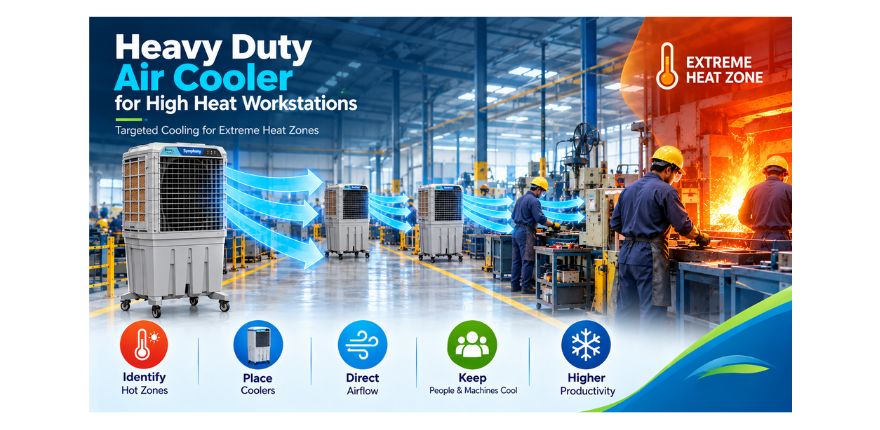
Process heat rarely spreads evenly. It builds around furnaces, kilns, ovens and presses, and workers at these high-heat workstations often hold one position for long periods. Cooling the entire factory volume treats space nobody occupies, while air may never reach the person beside the heat source. Targeted cooling concentrates on where people actually work. A heavy duty industrial air cooler is one way to deliver air to those points, and a heavy duty cooler with ducting can reach positions that a free-standing unit cannot. It supports occupied zones. It does not eliminate radiant heat or control the temperature of an entire building.
Heavy Duty Air Cooler Selection: What Should Be Assessed First?
Start with the heat source and the direction it radiates. Then record the workstation position, number of workers, exposure duration and shift length. Note machinery obstructions, the likely airflow route and where the cooler could be installed without affecting production or maintenance access. Confirm water and electrical availability, and measure dust, fumes and humidity, since evaporative cooling depends on the surrounding atmosphere. Complete these checks before choosing any model.
Targeted Cooling for Foundries and Casting Areas
A foundry concentrates heat in several places at once: the melting furnace, the ladle transfer route, pouring stations and the molding area where hot castings cool. Operators at pouring and tapping points stay close to molten metal and wear protective clothing that traps heat. Radiant barriers, refractory shields and required safety clearances around ladles and furnace doors often block the straightest path for air. Because pouring positions can be fixed while molding and shakeout crews move, the two groups may need different arrangements. Cooled air may be aimed at a designated pouring operator from outside the clearance zone, provided it does not disturb ladles, splash-prone areas or safety barriers.
Cooling Forging and Heat-Treatment Workstations
Forging shops combine furnaces, hammer and press stations and heat-treatment ovens, so heat rises and falls with the production cycle. Operators repeat a loop: pull a heated billet, position it at the hammer or press, then return to the furnace or a handling point. Each stop carries a different exposure, and recovery areas between cycles may be the only place workers step away from radiant heat. Loading points near furnace doors are usually the hardest to reach because of crane paths and handling equipment. Planning can treat these as separate stops, placing cooled air at the hammer or press operator and at a defined recovery point rather than along the whole route.
Cooling Steel Rolling and Hot Metal Processing Lines
Rolling lines stretch over long distances, with reheating furnaces, roughing and finishing stands, and cutting and finishing positions all releasing heat as hot metal travels through. Workers are spread along the line, often in pulpits, at inspection points or beside cooling beds, and shifts may run continuously. Line length is the defining problem. A cooler that suits one operator position can leave the next one untouched, so outlet distribution matters more than any single unit. Planning may divide the line into occupied stations, decide how many outlets each needs, and route ducts along walls or structures clear of moving product, cranes and roll-change access.
Cooling Welding and Fabrication Stations
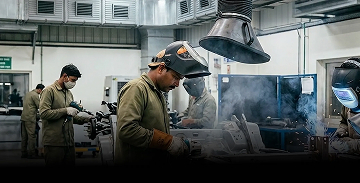
Welding adds localized heat and fumes to a workstation rather than a large process area. Welders wear heavy protective clothing and often work in booths, behind screens or inside fabricated structures, so layouts change as jobs change. The main complication is the airflow itself. Moving air can disturb shielding-gas coverage in some welding processes, and it can push fumes toward the welder or pull them away from an extraction arm. Cooled air should be positioned and angled with the fume-extraction design in mind, and tested against the welding process before installation. In some bays, cooling a preparation or resting position may suit the process better than cooling the arc area.
Heavy Duty Air Cooler for Glass and Ceramic Production Zones
Glass plants run furnaces continuously, so radiant heat is constant around furnace openings, forming machines, annealing lehrs and inspection stations. Operators at forming and handling points may face intense heat for whole shifts, and inspectors work at fixed positions along the line. Ceramic kilns behave differently. Heat peaks at loading and unloading, when doors open and hot ware is handled, and firing conditions and product quality can be sensitive to drafts. Cooled air aimed at a kiln opening could disturb that process, so placement usually favors handling and inspection positions set back from the kiln, with input from the process engineer or kiln supplier.
Heavy Duty Industrial Air Cooler for Ovens and Heated Production Lines
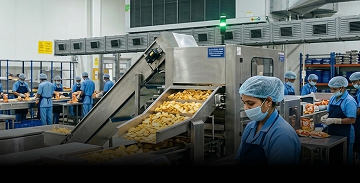
Baking, drying, curing and powder-coating ovens release heat mainly at doors, conveyor openings and unloading points, where operators handle hot product. Food production adds hygiene control. Air must not blow across open product, and it must work with exhaust hoods rather than compete with them. Industrial kitchens add steam and grease from frying stations and dishwashing. Curing and powder-coating lines add airborne particles and temperature-sensitive coatings, where uneven airflow may affect finish quality. In each case the practical question is where a worker stands relative to the opening, the hood and the product path.
Heavy Duty Air Coolers for Plastic, Rubber and Textile Processing Zones
Injection molding and extrusion machines heat barrels, molds and hydraulic systems, and operators stand beside them at control panels, guarding and take-out points. Extruder barrels radiate heat along their length, while rubber curing presses release heat when opened. Machine-side positions are often narrow, so airflow must pass guards, platforms and hoppers. Textile dyeing, drying and finishing areas differ: dryers, stenters and steam lines add moisture to already humid air, which can reduce the potential of evaporative cooling. Humidity should be measured at the workstation before any evaporative arrangement is considered, and some textile sites may need a different approach.
Cooling Considerations for Boiler and Utility Rooms
Boiler houses combine hot surfaces, steam lines, pumps and valves in confined rooms, and operators visit for inspection rounds and maintenance rather than staying at one station. Combustion air supply and room ventilation are designed around the boiler, so adding a cooler or ducting may change airflow patterns the equipment relies on. Clearances for access, valve operation and emergency exit also limit where equipment can stand. Because of these interactions, suitability must be judged by qualified technical staff, and no cooler should be placed here on assumption. A maintenance workstation or control position outside the immediate boiler zone may be a more realistic candidate than the boiler front.
Targeted Cooling for Warehouses and Loading Workstations
Metal roofs absorb sun and radiate heat downward, so packing tables, dispatch desks and loading bays can be hot even without any heat-generating process. Open shutters and doors let in outside air and dust, and vehicle movement creates changing drafts. Storage racks divide the floor and can block or redirect air, so a cooler that seems well placed may not reach staff behind a rack. Workers at fixed packing or dispatch positions are the natural target. Heavy duty air coolers may help direct air toward these occupied zones in large open or semi-open areas, provided vehicle routes and forklift aisles stay clear. Treat these as process-heat zones only where hot operations are present.
Heavy Duty Air Cooler Planning Table for Extreme Heat Zones
Extreme Heat Zone | Main Heat Challenge | Heavy Duty Air Cooler Planning Consideration |
Foundry furnace | Radiant heat near operators | Direct air toward occupied positions without affecting the process |
Forging station | Furnace heat and repeated handling | Review worker movement and air-delivery direction |
Steel rolling line | Continuous heat across workstations | Plan distribution across active operator positions |
Welding station | Heat, screens and fumes | Coordinate airflow with extraction requirements |
Glass furnace | Radiant heat and continuous operation | Focus on handling and inspection stations |
Ceramic kiln | Heat at loading and unloading points | Assess placement around operating clearances |
Industrial oven | Heat released during processing and opening | Review operator position and process restrictions |
Plastic molding | Heated machines and fixed control stations | Direct air around machinery toward occupied points |
Textile finishing | Heat, steam and humidity | Evaluate atmospheric conditions before selection |
Loading bay | Roof heat, open doors and vehicles | Plan airflow for fixed packing and dispatch positions |
Heavy Duty Air Cooler Airflow: How Should Cooled Air Reach Workers?
Work outward from the operator. Identify where people stand, then choose cooler placement, discharge direction, duct routes and outlet position that reach them past machinery and structures. Allow for workstation activity that changes during a shift, and keep service access clear for cleaning and water refilling. Airflow distance and cooling results depend on the actual layout, so confirm them with the manufacturer during a site inspection rather than assuming them.
Portable, Fixed or Ducted Heavy Duty Air Cooler Options
- Portable units suit changing stations and temporary operations, such as shutdown work or seasonal packing lines.
- Fixed installation suits stable production layouts where operators occupy the same positions every shift.
- Ducted arrangements suit multiple outlets, remote cooler placement and obstructed layouts, because air can be routed to defined positions instead of relying on line of sight.
Whichever option is considered, review air throw, duct resistance, bends, outlet count and service access with the manufacturer. Each duct bend and extra outlet changes how air reaches the workstation.
Heavy Cooler Price: What Affects the Complete Heavy Duty Air Cooler Project Cost?
Heavy cooler price is only one part of the budget. Total project cost depends on the cooler model, number of units, air distribution arrangement, ducting, installation location, structural work, water supply, electrical provision, controls and accessories, and maintenance access. These vary by site, so a reliable quotation follows an inspection, not a catalog listing.
Heavy Duty Air Cooler Site Assessment: What Information Should Be Collected?
- Layout marking heat sources and worker positions
- Number of workers and shift pattern
- Obstructions such as machinery, racks and screens
- Fume extraction and existing ventilation
- Dust, fume and humidity conditions
- Water and electrical availability
- Process, hygiene or safety restrictions
- Maintenance access
Symphony VentiCool Heavy Duty Air Cooler Options for Extreme Heat Zones
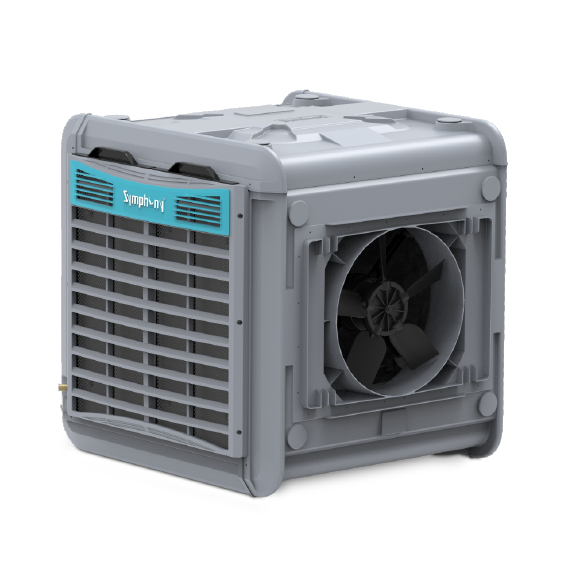
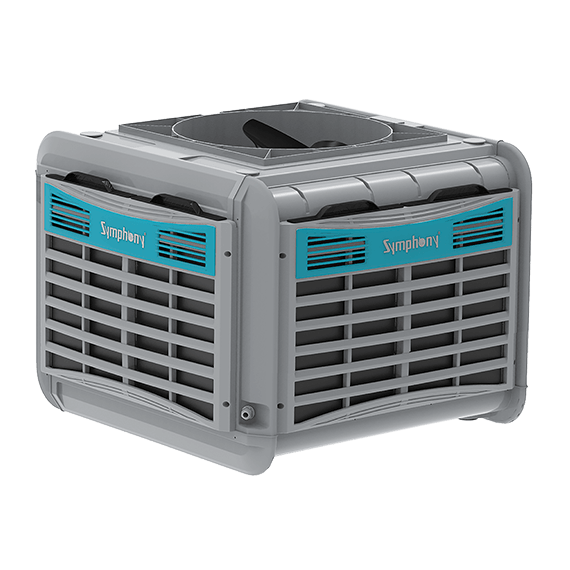
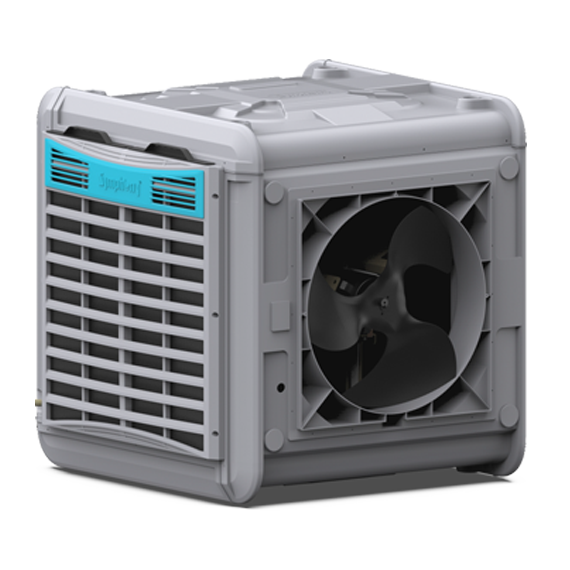
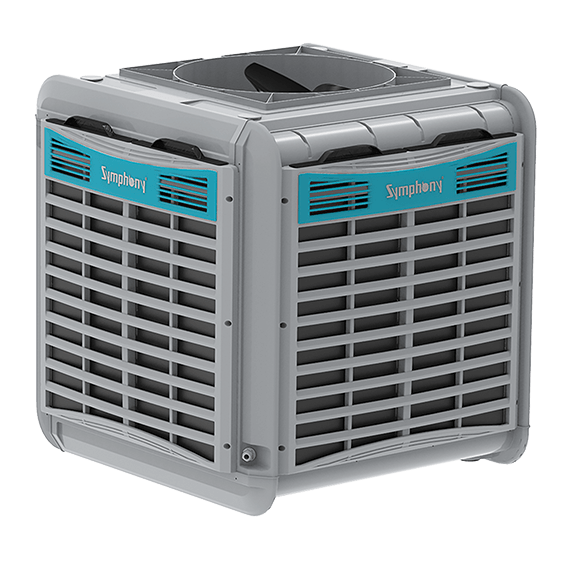
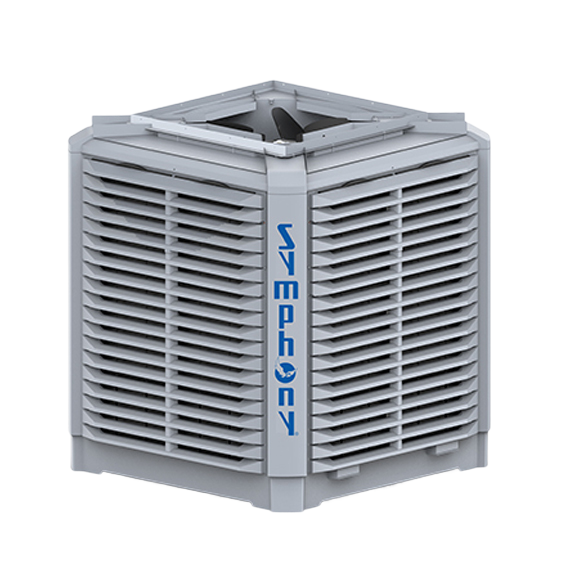
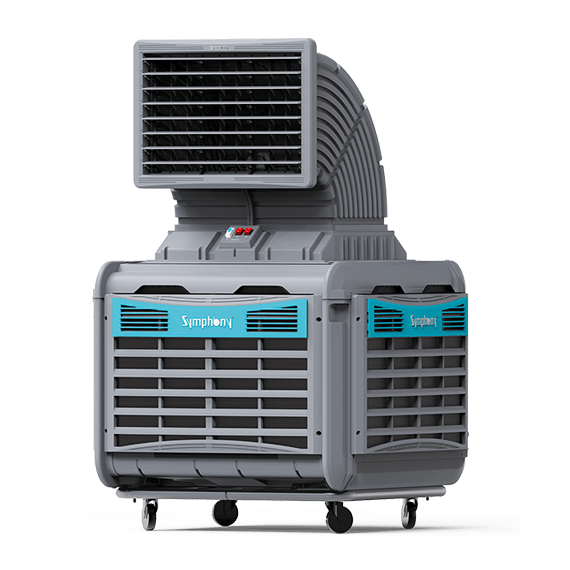
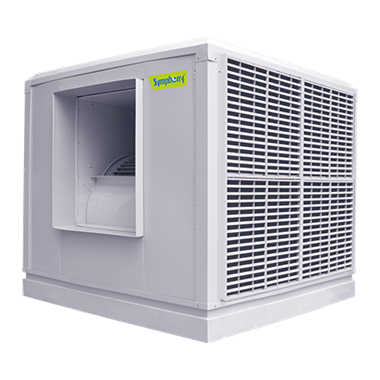
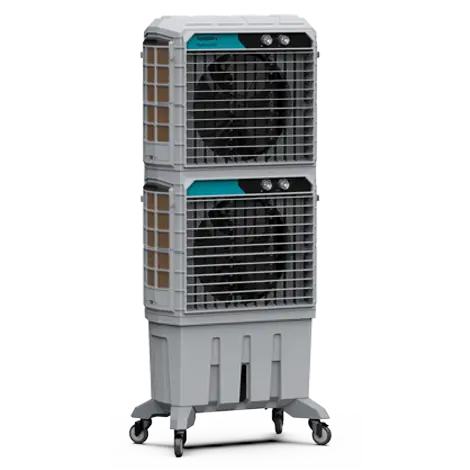
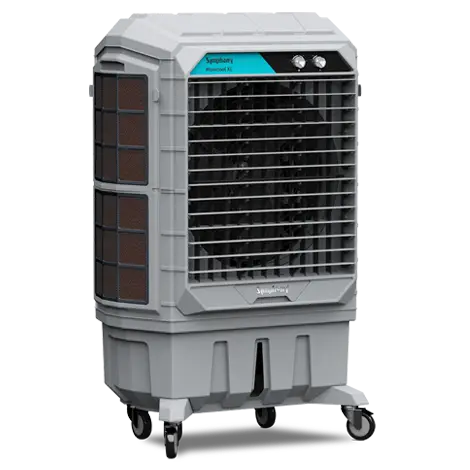
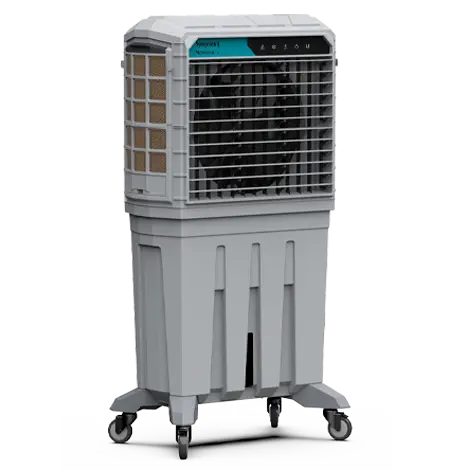
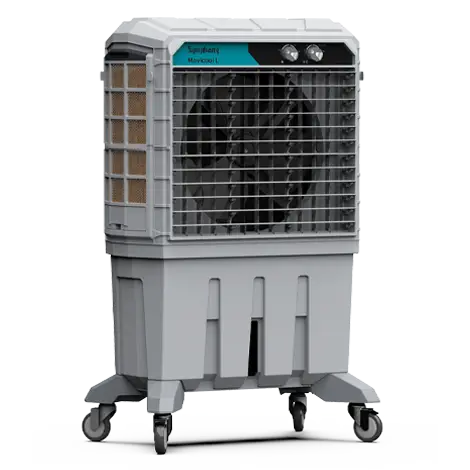
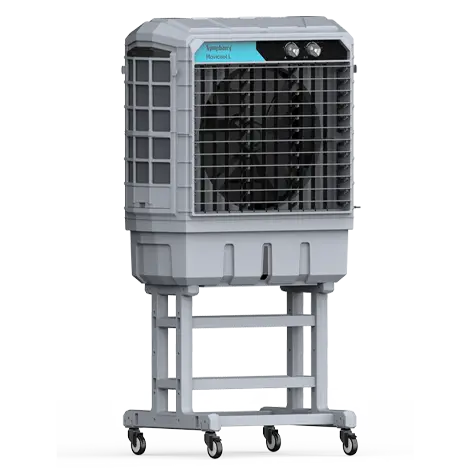
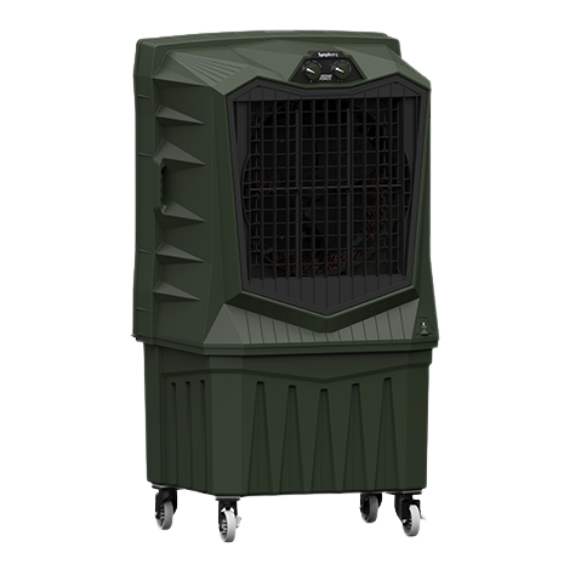
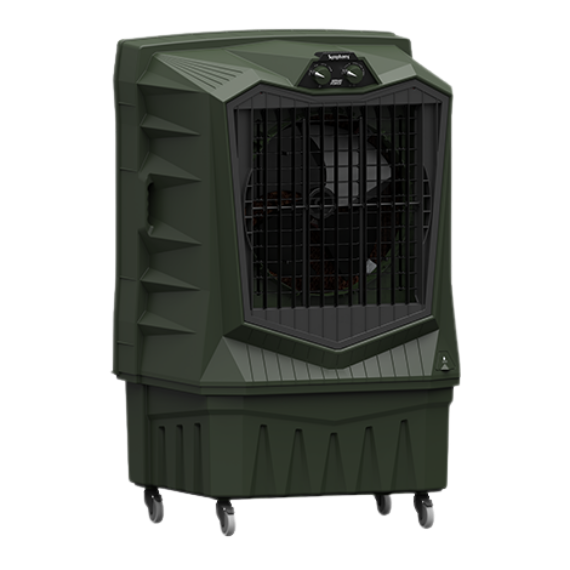
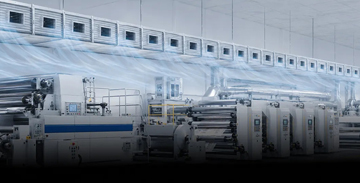
Symphony’s industrial ducting coolers are evaporative units positioned for large open and semi-open industrial spaces. Specifications belong to individual models and should not be transferred between them. The Movicool XXL is a portable, heavy-duty ducting cooler listed at 20,000 CMH with a 1.1 kW motor, adjustable louvers and flexible ducting. The Venti-Cool 22S lists ducting up to 70 feet with one bend and up to 10 outlet grills, while the Venti-Cool 25U lists up to 80 feet with one bend, up to 12 outlets and top or bottom discharge. For larger layouts, the Venti-Cool 40 lists ducting up to 125 feet with one bend and up to 20 air outlets. Symphony states these systems are not intended for sealed spaces needing precision temperature, humidity control or clean-room conditions.
Conclusion: Plan Cooling Around the Heat Zone
A generic cooling purchase rarely solves extreme heat. A Heavy Duty Air Cooler works best when planned around the heat zone, worker position, airflow path, operating schedule and process conditions. Where those align, targeted cooled air can support the people working closest to the heat.
Heavy Duty Air Cooler FAQs
Heavy Duty Air Cooler FAQs
What is a Heavy Duty Air Cooler?
An evaporative cooler designed for industrial use in large spaces. In extreme heat zones it is used to supply cooled air toward occupied workstations through direct discharge or ducting. Suitability varies by model and by site conditions, so selection should follow a review of the actual layout, operating schedule and process.
Can a Heavy Duty Air Cooler be used near a furnace?
It may serve operators working near a furnace when placement, clearances and process restrictions allow. The cooler directs air toward the worker and does not remove furnace heat. Discharge direction, distance from the furnace, radiant exposure at the operator position and safety requirements should be confirmed with site safety and process staff before installation.
Can cooled air be directed toward individual operators?
Yes, where the layout allows. Discharge direction, duct routes and outlet positions can be planned around individual operator locations. Machinery, screens and racks may block airflow, and workstation activity may change during a shift, so each position should be reviewed separately and the arrangement adjusted whenever the layout or working pattern changes.
Are heavy duty air coolers suitable for welding areas?
They may be considered, provided airflow does not interfere with welding operations or required fume extraction. Screens, booths and restricted positions also affect how air reaches the welder. Cooling and extraction should be planned together and tested against the actual welding process before the arrangement is finalized, particularly where shielding gas is used.
What should be checked before cooling a kiln or oven area?
Check operator positions, loading and opening points, clearances, working duration and any hygiene or process restrictions. Airflow must not affect firing conditions, product quality or food safety. Also confirm water availability, electrical provision and maintenance access before selecting equipment, and involve the kiln or oven supplier where process sensitivity is a concern.
How do dust, fumes and humidity affect cooler selection?
Evaporative cooling depends on atmospheric conditions. High humidity, as in textile finishing, may limit suitability. Dust and fumes affect cleaning needs, maintenance access and placement, and may matter to the process itself. Measure these conditions at the workstation, rather than in the general building, before any cooling arrangement is finalized.
What factors influence heavy cooler price?
Price depends on the cooler model and number of units. Total project cost also includes air distribution, ducting, installation location, structural work, water supply, electrical provision, controls, accessories and maintenance access. Long duct runs or difficult installation locations can raise the total. A site-specific quotation gives the most reliable figure.
Why is a site assessment necessary before selecting a cooler?
Every heat zone differs in heat source, worker position, obstructions and process limits. An assessment confirms whether targeted airflow can reach occupied positions, which arrangement suits the site, and what installation requirements apply. Without it, selection relies on assumptions about airflow and worker exposure that may not match actual conditions on the floor.