






How Do You Define Control Requirements for an Industrial Cooling System?
Start by writing down how the equipment should behave day to day. Name the operating hours and the person responsible for starting and stopping the unit.
Decide what conditions should trigger a stop. Decide what the cooler should do once power returns.
When comparing an industrial air cooler price quotation, check which controller, sensors and commissioning services are included.
What Types of Controls Are Used in an Industrial Air Cooler?
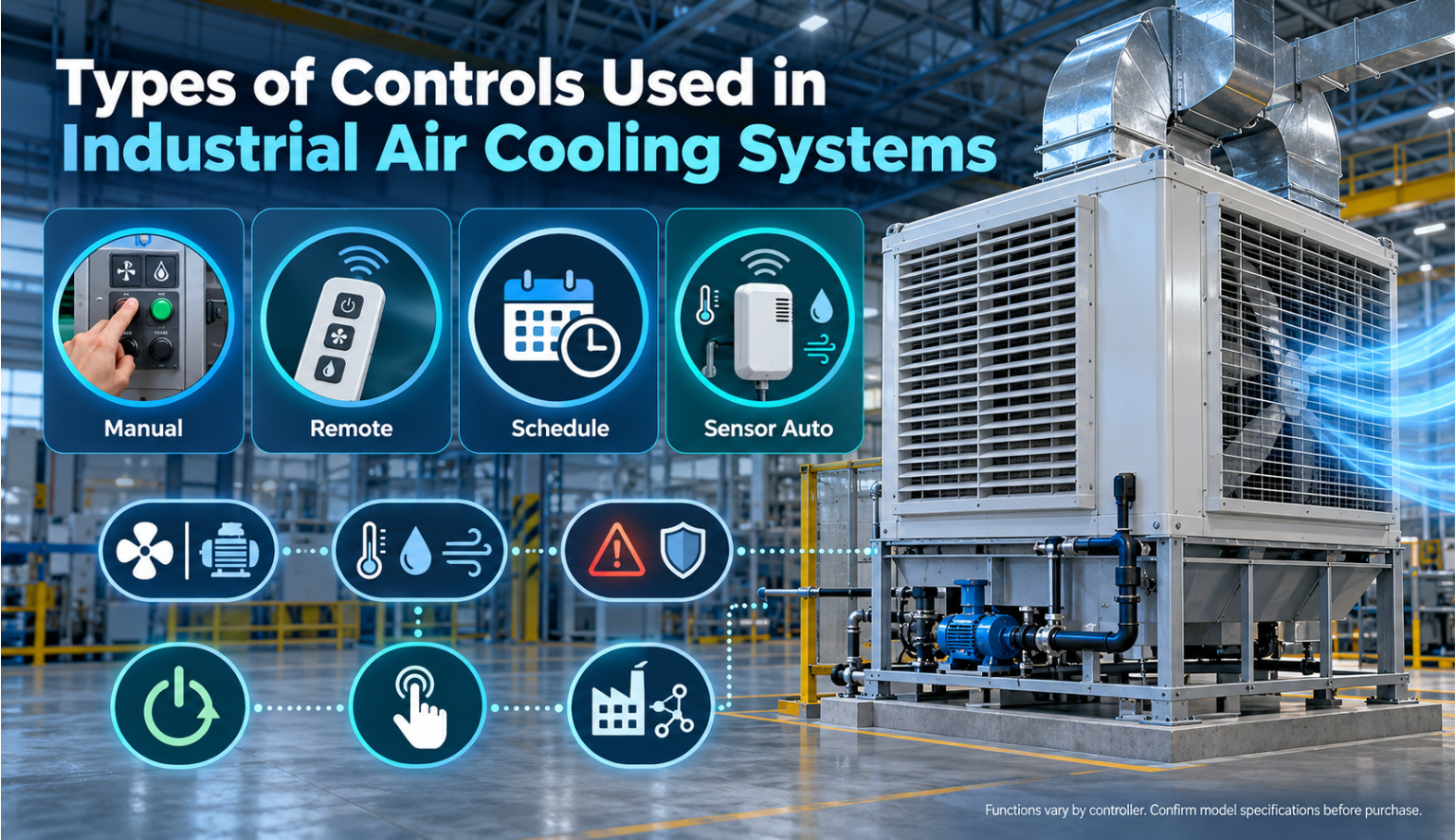
Control approaches used across industrial cooling equipment generally fall into five categories, and they are easy to mix up.
- Manual local controls, operated directly at the unit by a person on site.
- Remote operator controls, where a handset moves the command away from the unit but a person still decides when to act.
- Scheduled operation, which requests operation at configured times, subject to protective functions.
- Sensor based automatic operation, which reacts to a measured value such as temperature or humidity.
- External facility control, where a separate building system issues commands to the cooler.
A remote handset is often assumed to mean automatic operation. It does not make operation automatic. A person still decides when to issue each command.
A fixed schedule is also assumed to respond to conditions. A schedule requests operation at configured times; protective functions may still prevent or stop operation. A sensor would need to be added for the cooler to respond to temperature or humidity.
When Does Manual Operation Suit an Industrial Cooling System?
Manual operation tends to work well where staff are present for most of the working day. A person on the floor can make a direct call on when cooling is needed.
It also suits spaces where the working pattern changes often enough that a fixed schedule would not track it.
For manual operation to function well, the controls need to sit somewhere accessible. One role needs to own responsibility for the unit, and basic operating instructions need to be on hand.
When Does Scheduled or Sensor Based Control Help an Industrial Air Cooler?
Scheduled or sensor based operation tends to help where shifts repeat in a predictable pattern. It also helps where conditions in the space swing enough that a simple on and off time cannot keep up.
Neither removes the need for a person to check periodically that the cooler is behaving as configured. Both depend on someone setting correct values in the first place, and neither is guaranteed to be available on any particular model.
Factor | Manual Operation | Scheduled Operation | Sensor Based Operation |
Operator involvement | An operator initiates changes | Runs at configured times, with periodic checks and updates when operating hours change | Responds to configured sensor readings, with periodic checks of sensors and thresholds |
Trigger | A person’s decision at the time | A fixed time of day | A measured condition, such as temperature |
Sensor dependence | None required | None required unless combined with a sensor | Depends entirely on which inputs the controller accepts |
Question to confirm for a specific model | Which manual controls ship as standard | Which scheduling functions the controller supports | Which sensor inputs the controller accepts |
Why Does Separate Fan and Pump Control Matter?
The fan moves air through the unit. The pump supplies water to the cooling media. These are two separate jobs inside one machine.
A site might need airflow without active water cooling, for example during a changeover between shifts. That is only possible if the fan and pump can be switched independently.
Whether a specific model allows this, and whether the manufacturer specifies a required sequence such as the pump running before the fan starts, is worth raising directly with Symphony Venticool.
What Sensors Does an Industrial Cooling System Need?
Specify sensors compatible with the controller or an approved external control interface. Adding one because it seems useful is not a good enough reason.
Temperature, humidity, water level, and general equipment status are common candidates. Each should be tested against the actual control objective before it goes into a specification.
It is worth asking what happens if a sensor fails, disconnects, or returns an implausible reading. A controller’s handling of a bad reading says more about its reliability than its handling of a good one.
How Is a Fault Indication Different From a Protective Response?
These two things are often treated as the same, but they are not. A fault indication is simply a warning shown to an operator.
An automatic protective response is a separate function, where the equipment itself takes action, such as stopping the pump or the whole unit. A light on a panel does not confirm that anything actually shuts down.
Whether a displayed fault triggers an automatic shutdown of the fan, the pump, or the entire unit should be confirmed for the specific controller fitted. This should not be assumed to be included by default on any model.
What Should Happen After a Power Interruption?
Restart behaviour should be written down in advance. It should not be discovered the first time the power actually goes out.
Several distinct questions sit under this one topic.
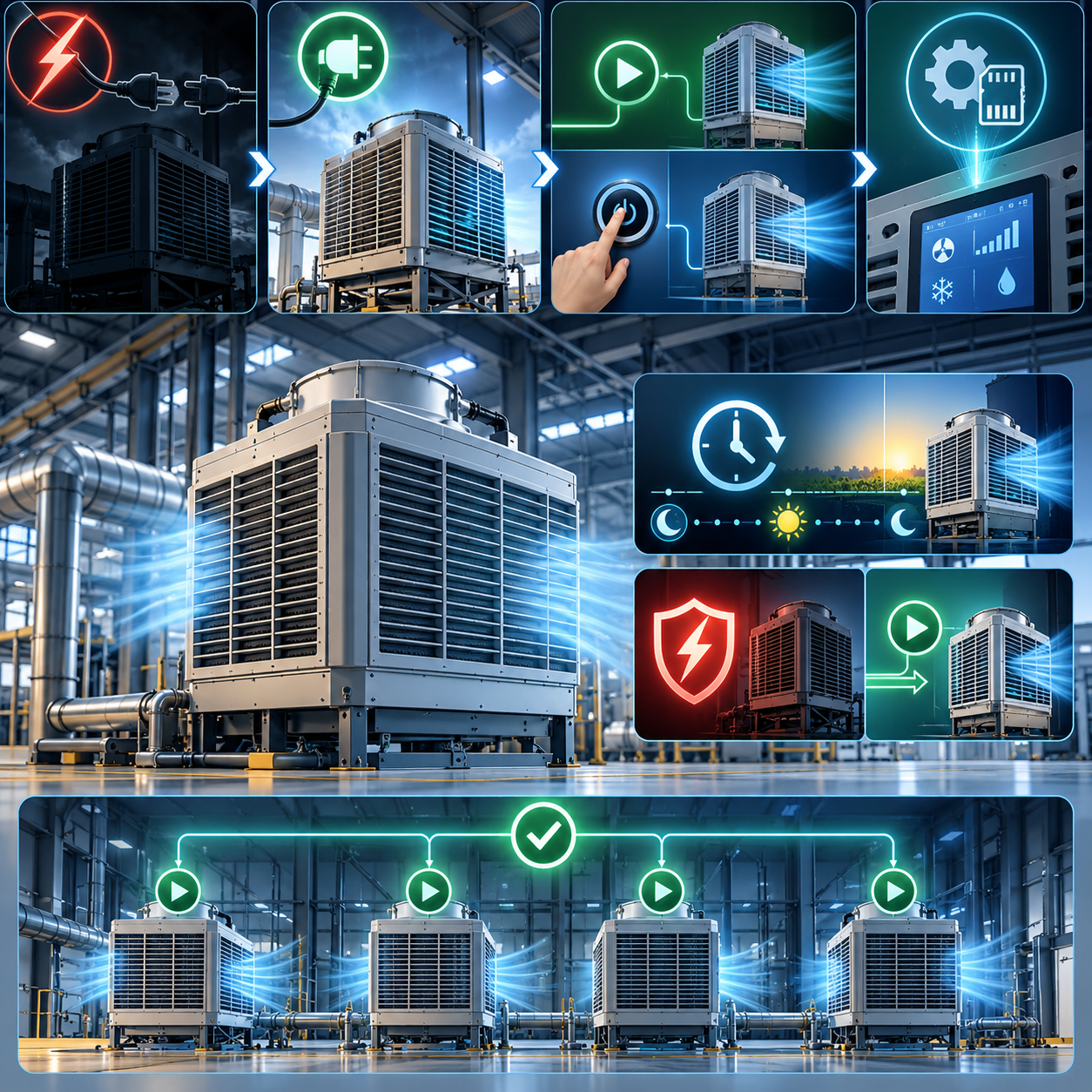
- Whether the unit restarts automatically or waits for a manual command once power returns.
- Whether previously configured settings survive the interruption or need re entering.
- How a schedule behaves if the outage happened during a period the unit should have been running.
- How coordination works when several units need to restart together.
Restart after a straightforward power cut and restart after a protective trip are not necessarily the same behaviour. This is worth confirming with Symphony Venticool before any unit is relied on in an unattended area.
How Should Local Override and External Systems Work?
Local override lets an authorised person step in and change what the equipment is doing. It should only work where the controller is actually built to allow it, and never as a way around a protective function.
Several command sources can exist on one site. A local control, a schedule, a remote handset, and an external system may all be present.
It is worth deciding in advance which one wins if two issue conflicting instructions at the same moment.
Integration with an existing facility system is not one thing but several. Sending a command to the cooler, receiving a status reading, and acknowledging a fault are three separate capabilities.
A given unit might support some of these without supporting all of them. PLC, network, or protocol compatibility varies by model.
What Precautions Apply When Servicing or Maintaining an Industrial Air Cooler?
A number of practical risks apply to industrial cooling equipment generally. These include conflicting commands from different control sources, unauthorised changes to control settings or wiring, water near electrical components, and unsafe access to moving parts inside the unit.
Before any servicing or maintenance work begins, the relevant energy sources supplying the unit should be isolated. Switching the unit off at the controller is not the same thing. A controller’s Off command stops normal operation. It does not guarantee the equipment cannot restart unexpectedly.
Isolation should prevent an unexpected restart during the work, whether from a schedule, a sensor trigger, a remote command, or power returning after an outage, verified by a trained person following the site’s approved procedure.
Electrical work should only be carried out by an authorised electrician, following the manufacturer’s documentation rather than informal modification.
If the unit has tripped or shown a fault, the cause should be investigated before any restart is attempted. Resetting and restarting simply to see if a fault clears is not an acceptable substitute for investigation.
Protective functions should stay active during normal operation. They should not be bypassed or disabled to work around a nuisance fault or to speed up a restart.
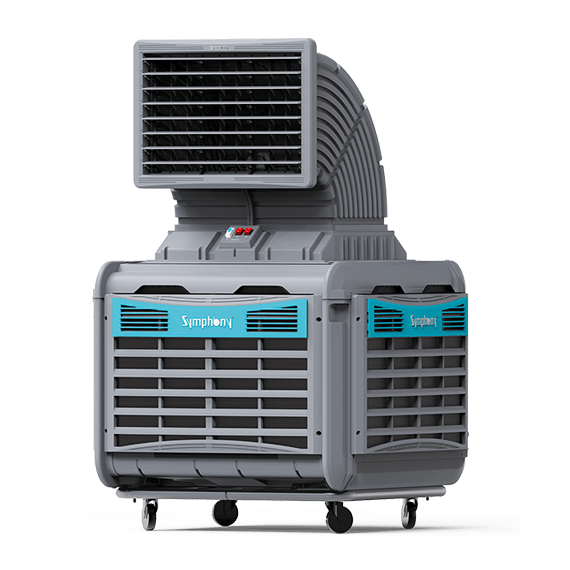
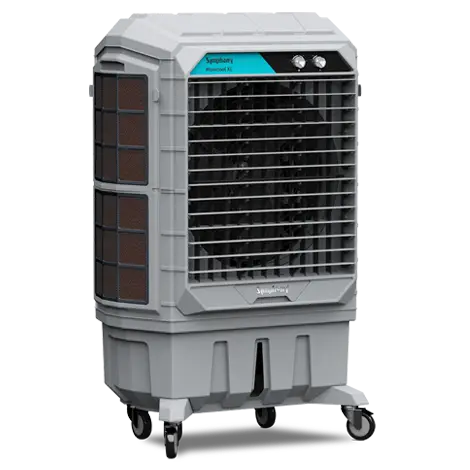
These precautions apply regardless of which model is installed. Symphony has documented motor overload protection on specific models, including the Venticool 11U and Movicool XXL, though this guards the motor rather than acting as a broader safety interlock. Any other protective feature should only be treated as present when confirmed by an approved manual or written confirmation from Symphony Venticool.
What Does Commissioning Confirm and Record?
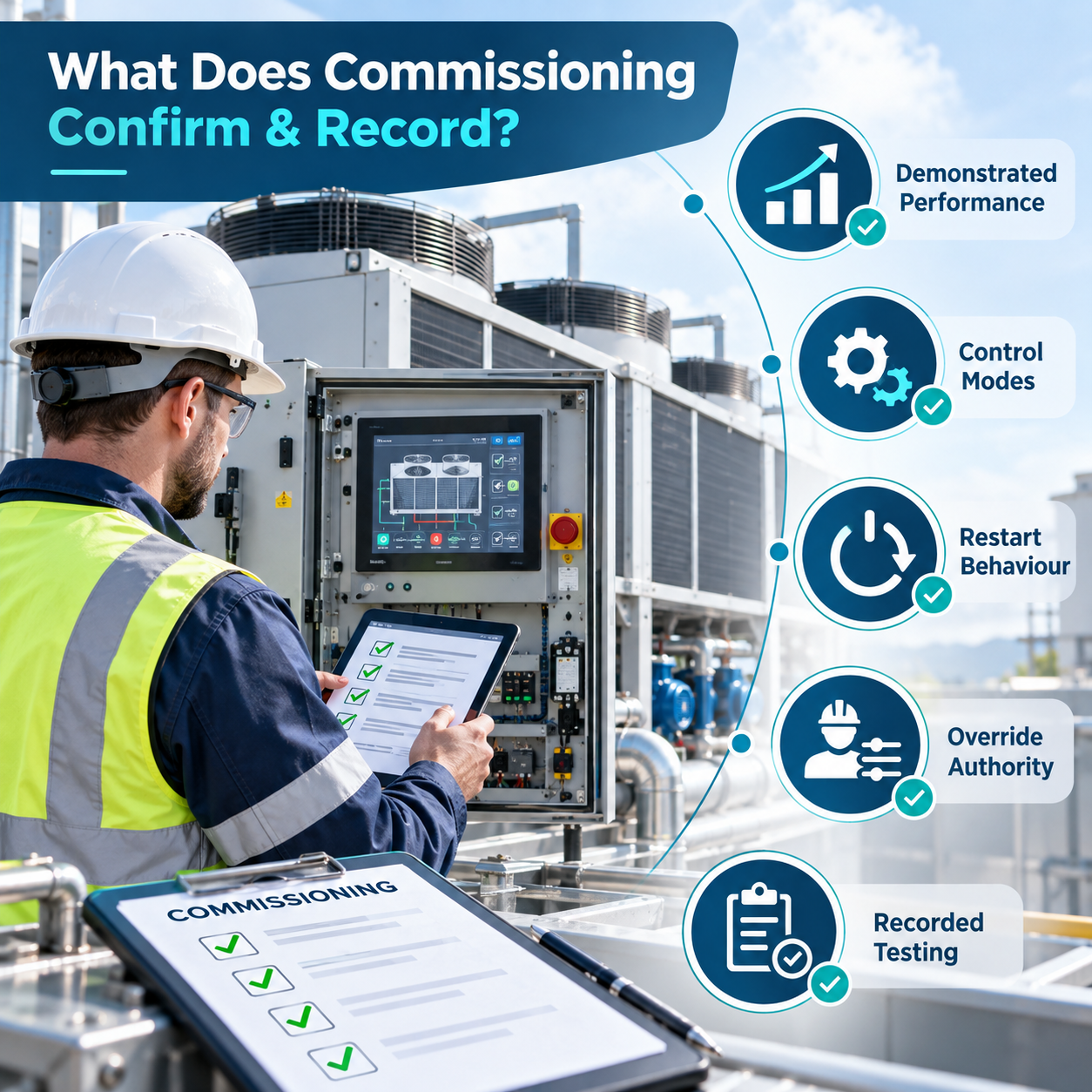
Commissioning is not where control requirements are decided. That should already be settled from the list drawn up before purchase. It is where the agreed behaviour is demonstrated and formally recorded.
During the visit, each function named in the requirement list should be shown working as described, covering the model’s actual control modes, restart behaviour, and override authority.
Any fault simulation or restart test should follow the manufacturer’s approved procedure, carried out by someone competent to do it, not created informally to see what happens.
The outcome should be a written record, confirming what was demonstrated and noting anything that still needs resolving.
What Belongs on a Buyer Checklist for Industrial Cooling System Controls?
- Define operating hours and who is responsible for the unit.
- Decide which functions need to be manual and which can be automatic.
- Confirm whether fan and pump control is independent.
- List the sensors actually required for the application.
- Document how warnings and faults should be handled.
- Confirm restart behaviour after both power loss and a fault.
- Establish who holds override authority.
- Verify what external integration is actually supported.
- Separate standard functions from optional ones.
A common mistake is assuming a digital display means a unit is automatic, or treating a remote handset as proof of facility integration.
Comparing an industrial air cooler price without checking the control package behind each quotation is another common mistake. The cheaper option on paper may exclude sensors or accessories the site actually needs.
About Symphony Venticool
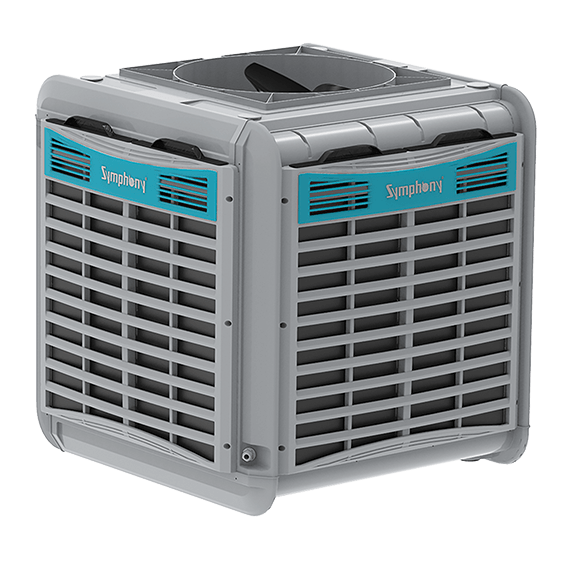
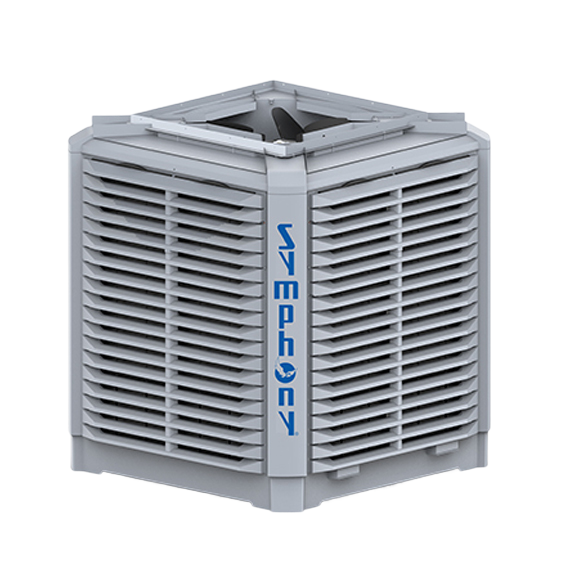
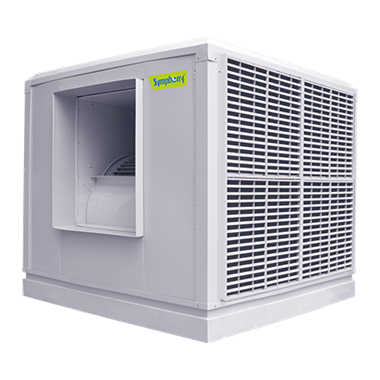
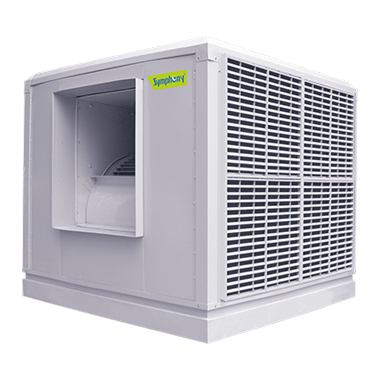
Symphony Venticool is Symphony Limited’s industrial and large space cooling range, built on evaporative cooling rather than compressor based air conditioning. Symphony Limited was founded in 1988 and has since grown into one of the world’s largest air cooler manufacturers. The range includes ducted models such as the Venticool 11U, 20U, and 22S, used across industries including textiles, healthcare, government and educational institutions, automotive manufacturing, and food and plastic processing. Symphony positions evaporative cooling as a lower running cost alternative to compressor based systems for large industrial and commercial spaces.
What Is the Key Takeaway on Industrial Air Cooling System Controls?
Manual, scheduled, and sensor based operation each suit different sites. None of them is a universal default, and which ones a specific unit actually supports depends on the controller fitted to it.
Independent fan and pump control, sensor inputs, fault handling, restart behaviour, and override authority all belong on the same written requirement list. Controls support safe operation. They do not replace trained staff, routine maintenance, or proper isolation procedures during servicing.
Frequently Asked Questions
Types of Controls Used in Industrial Air Cooling Systems
What is the difference between manual and automatic industrial cooler controls?
Manual controls need a person to start and stop the unit. Automatic controls act on a schedule or sensor without that step, provided the fitted controller actually supports it.
Does remote control mean an industrial air cooler runs automatically?
No, a handset only moves where the command comes from. A person still makes the decision. True automatic control needs a schedule or sensor acting on its own.
Why should buyers check separate fan and pump control?
The fan moves air, the pump supplies water to the cooling media, and some sites need one without the other. Whether they can be switched independently varies by model, so it is worth checking against the approved manual.
Which sensors does automatic industrial cooling actually need?
Use sensors compatible with the controller or an approved external control interface, selected for the application's needs. Not every application needs every sensor, and the inputs a controller supports vary by model.
Does a fault indication automatically stop the cooler?
Not necessarily. A fault light is a warning, not proof of an automatic shutdown. These are two separate functions, and neither should be assumed present by default on any given model.
What should happen when power returns after an outage?
Restart should be documented in advance, covering automatic versus manual restart and whether settings survive the outage. Restart after a fault may follow a different procedure, depending on the controller.
Can an industrial cooler connect to an existing facility system?
This depends entirely on the controller and interface fitted. Never assume it from a brochure photo. Sending commands, receiving status, and acknowledging faults are separate capabilities that may not all be supported together.
What control details matter when comparing industrial air cooler price quotations?
A fair comparison needs to state which controller, sensors, and accessories are included in the quotation, since similar prices can hide very different control packages.