








What is the best air cooling system for large corporate offices with high cooling loads?
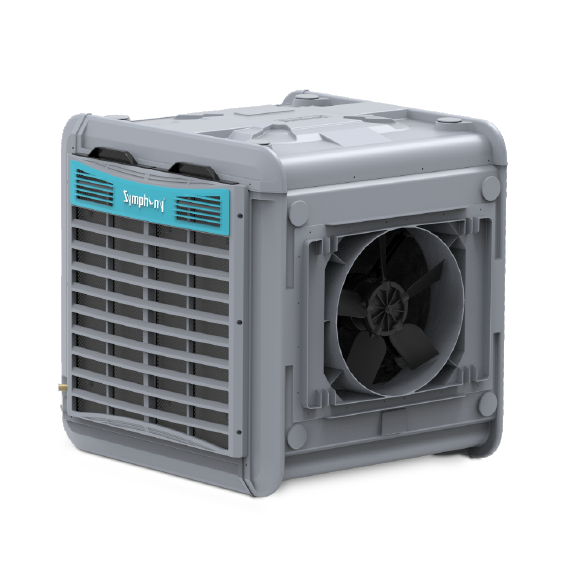
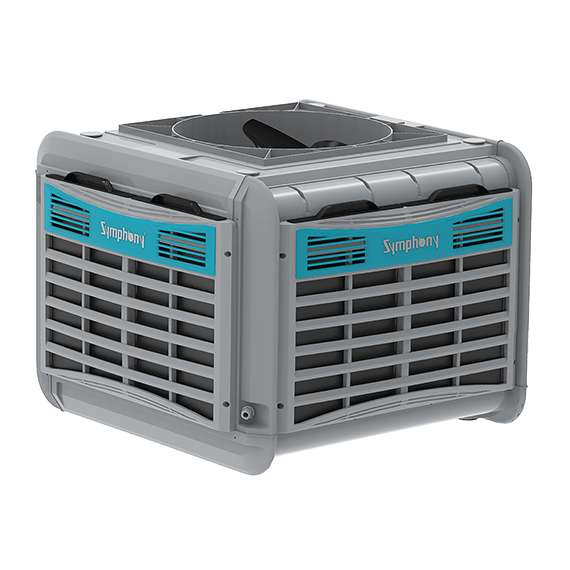
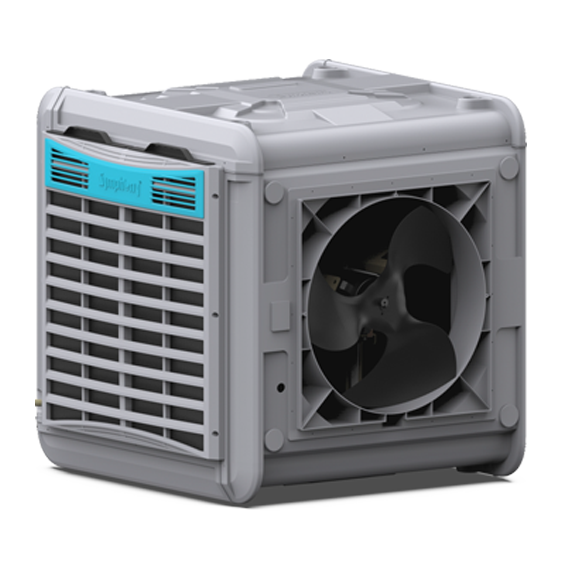
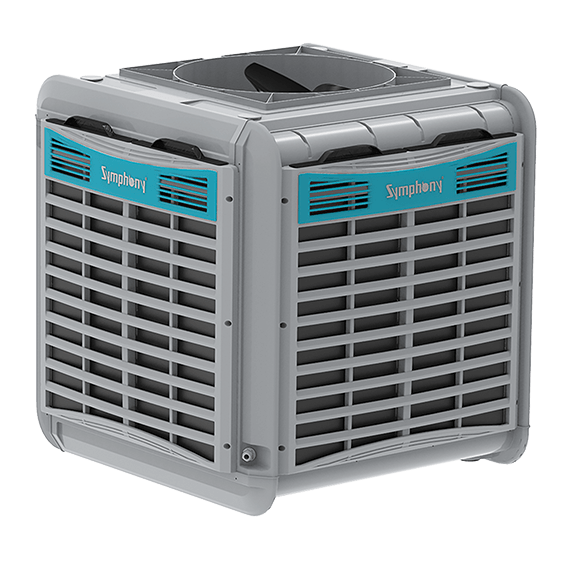
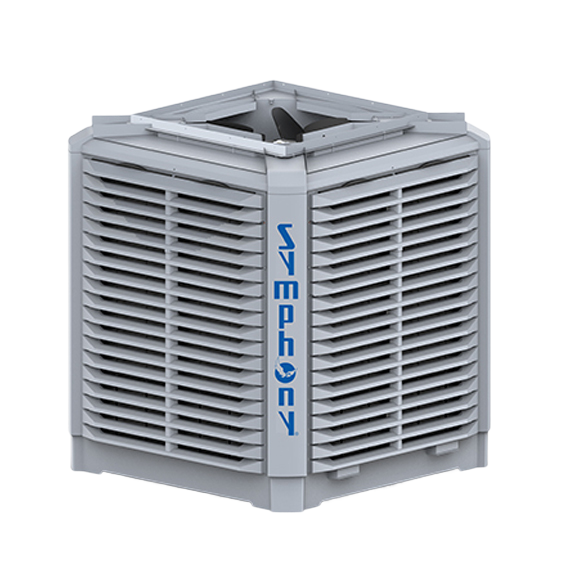
There is no single best air cooler for office use. Selection starts with an assessed cooling load, covering occupancy, glazing area, equipment heat output, climate and humidity, measured against the floor plan before comparing product ranges. You can check wide range of Symphony Venticool Air coolers for commercial and industrial applications best suited for your needs.
How does indirect evaporative cooling reduce office temperatures without adding moisture to the supply air?
Indirect evaporative cooling keeps two air streams separate. A secondary stream is cooled through evaporation and passed through a heat exchanger, lowering the supply air temperature without that air contacting water directly.
The process does not add moisture to the supply air delivered to the office, though it does not dehumidify that air either.
Why does an evaporative air cooler require adequate exhaust ventilation in an office building?
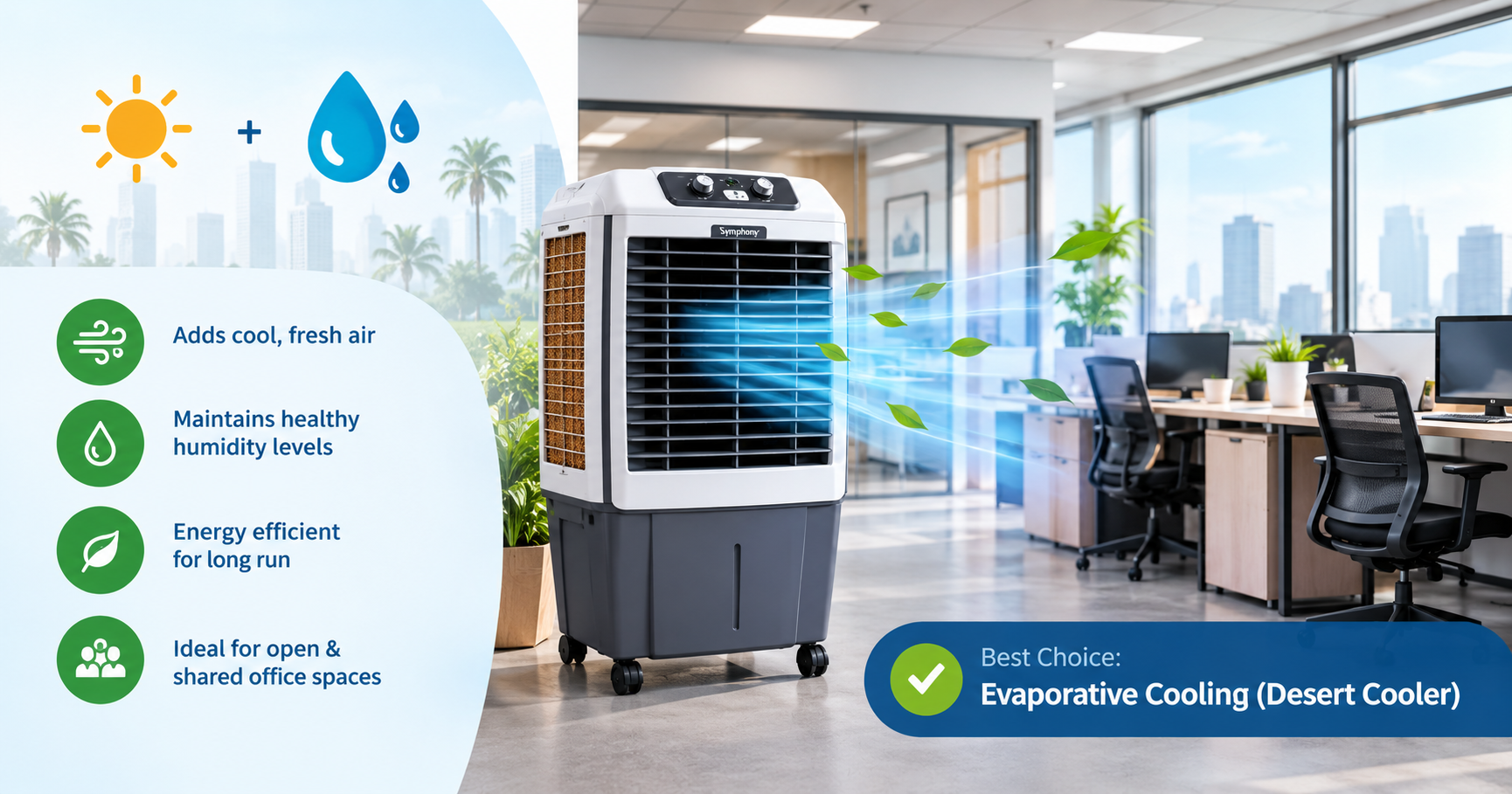
A direct evaporative system draws in outdoor air and cools it over moist pads before delivering it to occupied areas. For this airflow to keep moving, it then needs a planned route out of the building, such as louvres, vents or an exhaust duct discharging outdoors.
The available relief openings should be checked against the proposed supply airflow, rather than relying on incidental gaps.
Which air cooling technology is suitable for offices in hot and humid climates?
Evaporative cooling performance depends on outdoor humidity: the drier the incoming air, the greater the cooling effect. In hot, humid conditions it may not lower the temperature enough, and can add moisture the office does not need.
Offices needing active moisture removal typically need refrigeration based cooling, or a combined arrangement assessed for the building, rather than assuming one technology suits every climate.
How do you calculate the required airflow (CFM or CMH) for an office air cooling system?
Airflow is usually expressed in CFM (cubic feet per minute) or CMH (cubic metres per hour), both measuring the volume of air moved per unit of time.
A preliminary estimate: Required airflow in CMH equals room volume in cubic metres multiplied by air changes per hour. This gives CMH, not CFM. The air change rate should come from a project specific assessment, since it varies with occupancy and climate, and this remains a preliminary estimate, not a substitute for a full load calculation.
Our Other Product
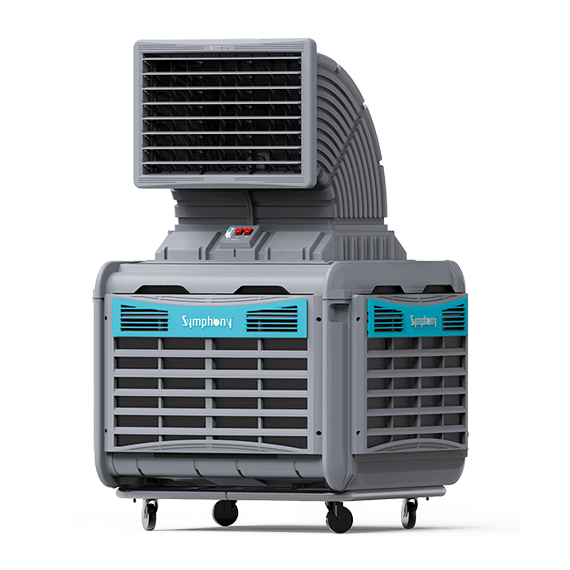
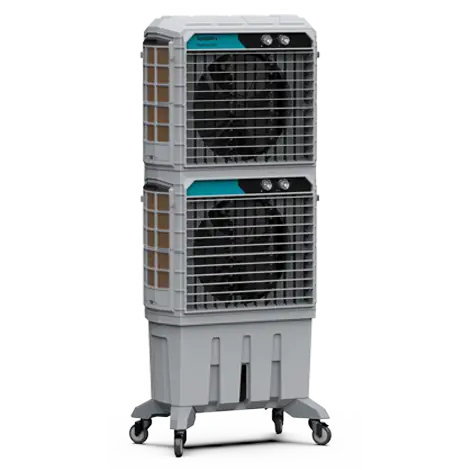
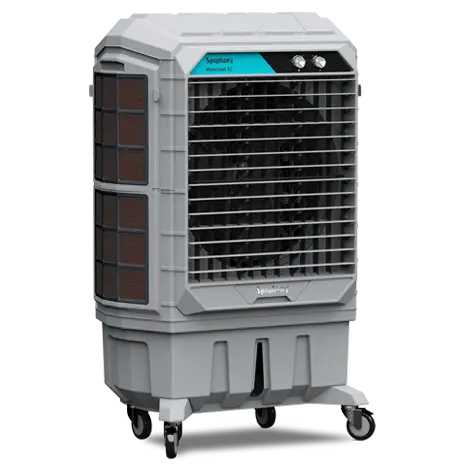
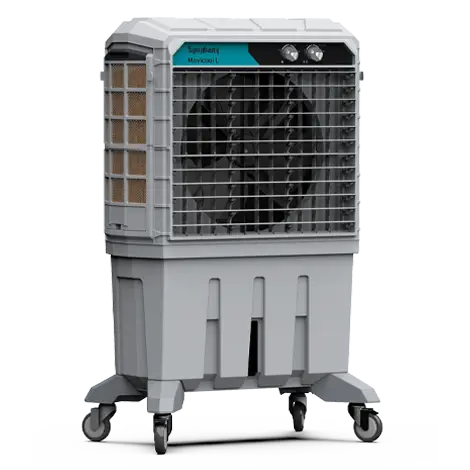
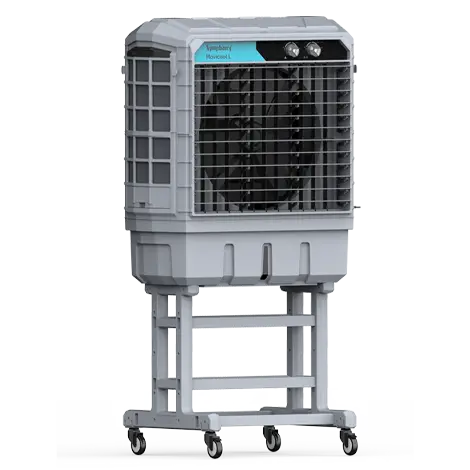
Symphony Movicool XL 200 - Commercial Portable Air CoolersWhat is the difference between portable office air coolers, ducted air coolers and centralised cooling systems?
A portable office air cooler delivers air locally from one unit, typically to a single room. A ducted air cooler distributes air through ductwork to multiple outlets from one unit, while a centralised system treats or distributes air at a building level and may or may not use evaporative technology.
Commercial cooler ranges usually span both types; the right product line depends on whether single room or multi outlet distribution fits the office.
How can an office air cooling system introduce fresh outdoor air while removing stale indoor air?
The intake should draw from a clean outdoor area, away from exhaust outlets, vehicle fumes or waste areas, so the air entering is not already contaminated.
Outlets should spread cooled air evenly across the work area, kept apart from the exhaust path above to reduce short circuiting, where newly supplied air exits before reaching occupied areas.
What factors determine whether an industrial air cooler can effectively cool a multi storey office building?
Multi storey suitability depends on available fan pressure, duct resistance, vertical distribution between floors and access for servicing.
A single stated coverage area for an open space does not establish performance across several floors. These factors differ between models, so capacity for a specific layout should be confirmed against the chosen product’s own ducting specifications.
How does an indirect evaporative cooling system compare with direct evaporative cooling in terms of humidity and cooling performance?
The choice mainly comes down to humidity tolerance. Direct systems, described above, suit drier climates where some added moisture is acceptable; indirect systems suit situations where moisture addition to the supply air must be avoided.
Equipment, installation and operating costs should be compared for the specific configurations under consideration, since these vary by system and supplier.
When should a business choose a hybrid evaporative cooling system for office applications?
“Hybrid” can describe several different arrangements, so the intended combination should be defined first. A business might consider one when a single evaporative stage cannot meet both cooling and humidity targets for its location.
Any such combination requires engineering assessment specific to the building, not an assumption that it suits because it combines two known technologies.
How can businesses evaluate the energy consumption and operating cost of an office air cooling system against conventional AC?
A fair comparison uses equivalent operating hours and occupied conditions, accounting for electricity, water use, maintenance and any supplementary cooling the office needs.
Evaporative systems are generally positioned as a lower energy alternative to refrigeration based air conditioning, though savings depend on run hours, climate and load, and should be checked against the chosen model’s documented specifications.
What water quality and maintenance requirements apply to evaporative air coolers installed in commercial offices?
Evaporative systems rely on water quality, since mineral content can affect distribution and cooling media over time. Maintenance generally means checking the water distribution system, cooling pads, tanks and drainage.
Model specific maintenance guidance is typically provided with the unit and should be the reference point, rather than a generic schedule.
Which office cooling solution is suitable for server rooms and offices with heat generating equipment?
Ordinary office equipment loads differ from server rooms, which generate continuous, concentrated heat and need dependable, controlled cooling to protect equipment.
Selecting cooling for a server room should start from the equipment manufacturer’s requirements, not a general office cooler’s airflow rating, and needs its own assessment.
Our Other Product
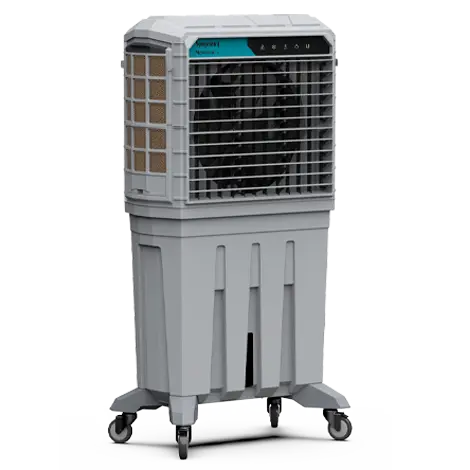
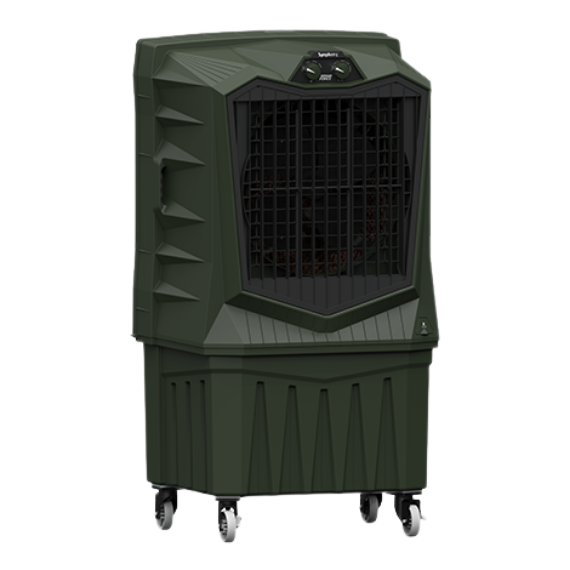
Symphony Movicool DD 125 - Commercial Portable Air CoolersHow can an office cooling system maintain comfortable indoor conditions when outdoor temperatures fluctuate throughout the day?
Where provided, sensors, zoning and fan speed controls let a cooling system respond to outdoor shifts, adjusting output rather than running at one fixed setting all day. Availability varies by model, so confirm which controls are included with the selected Symphony product.
Controls can only work within the equipment’s underlying capacity; they cannot force a fixed temperature if the system is undersized or mismatched to the building’s load.
What design considerations are essential when retrofitting an evaporative cooling system into an existing office building?
Retrofit feasibility depends on available space for equipment, structural support, routes for new ductwork, wall or roof penetrations, electrical supply and water connections.
Coordination with existing building systems and realistic planning for installation disruption are also part of the assessment, shaping which product is reviewed before selection.
How does open plan office layout affect air cooler coverage area?
A stated coverage figure may not reflect the effect of partitions, cabins and furniture. Partitioned offices typically need additional outlets or more than one unit, rather than one cooler sized on floor area alone.
What limits an evaporative cooling system in sealed, glass facade office buildings?
Glass facade and fully sealed office buildings often do not have the airflow route described above already in place. A structural and permissions review is needed before a ducted cooler can be fitted.
What electrical and power supply requirements apply to a commercial air cooler installation?
Power needs vary by model size and motor rating, with larger ducted units drawing more current. Voltage, phase and circuit capacity should be confirmed before installation.
What noise levels should you expect from an office air cooler?
Noise mainly comes from the fan motor and, in ducted units, air moving through outlets and ductwork. Exact levels vary by model, so check with the supplier for the chosen one.
What indoor air quality benefits does an air cooler for office use provide?
Some models include dust filters alongside the cooling pads, helping reduce dust as outdoor air passes through. This is a side benefit of the fresh air exchange, not a certified air purification claim.
About Symphony Venticool: Commercial and Industrial Air Cooler Manufacturer
Symphony Venticool is the commercial and industrial air cooler range from Symphony Limited, founded in 1988, which describes itself as an air cooler manufacturer in India.
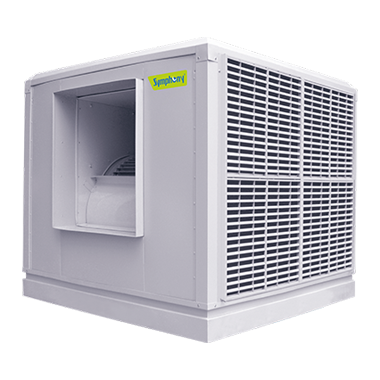
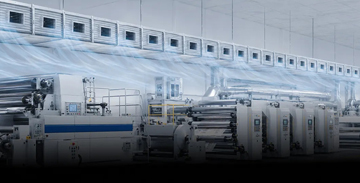
Its portable coolers are sold under the Movicool name, used in showrooms, restaurants and banquet halls. Its ducted range, sold under the Venticool name, works as a ducted air cooler for office and other larger spaces, distributing cooled air through ducts to multiple outlets.
Find the Right Air Cooler for Office Use: Next Steps
Share your floor area, ceiling height, local climate and occupancy through Symphony Venticool’s enquiry form, and ask for an assessment of whether Movicool or Venticool suits your office cooling needs.