









AI Summary
A commercial air cooler moves air most freely along open aisles, while workstations behind loaded racks may receive a different share. Checking and recording airflow where people work, under normal stocking and operating conditions, shows exactly where to focus before changing equipment, cooler placement or layout.
Commercial Cooling System Airflow in Real Work Areas
Consider an illustrative case: air moves freely along a warehouse aisle, while a packing bench behind a stocked rack receives less. With a commercial evaporative air cooler, a commercial portable air cooler or a larger commercial cooling system, the goal is the same: cooled air reaching the people who need it.
This guide focuses on checking that at each workstation before deciding whether to move a unit or consider an air cooler with ducting. The readings then show which change deserves attention first.
Commercial Air Cooler Performance in Obstructed Spaces
Buyers often read three different measures as one. Each describes something different, as the table below shows:
Measure | What it describes | What to confirm separately |
Rated air delivery | Volume of air the unit moves | Where that air ends up |
Published air throw | Distance the stream travels on a clear path | Whether air turns corners or passes through stock |
Air movement at a workstation | Air movement at the point checked | The unit’s overall output |
Rated air delivery and published air throw help you compare units. To see how much air reaches a bench behind a rack, check air movement at the bench itself, whether air comes from a portable unit or from the outlets of an air cooler ducting system.
Commercial Evaporative Air Cooler Airflow Around Shelves, Racks and Machinery
Obstructions change air distribution in two different ways. How strongly each applies depends on stock levels and whether equipment is running:
- Loaded racks and shelving redirect the air stream. A rack that lets air through when empty can channel air differently once its bays are stocked.
- Machinery can shape airflow around an operator while also adding local heat from the equipment itself.
Air movement and local heat are separate factors that can apply at the same position. Recording them separately, as shown in the next section, makes it easier to see which one to address.l
Checking Commercial Air Cooler Airflow at Workstations
This check is the most useful step before any change to equipment, placement or ducting. It compares an open aisle with the positions where people actually work.
Suggested Workstation Airflow Check
Map the space first. On a floor plan, mark each cooler outlet, every loaded rack or machine, and every occupied workstation. Include packing benches, counters and machine stations where staff spend long periods. Where the site relies on air cooling with ventilation, also mark the windows, vents and other openings where air leaves.
Choose your check points. Use the open aisle as a reference. Then add positions behind loaded racks, at aisle ends and near machinery.
Check under real conditions. Take readings at the working height of each task, with stock at its usual level and machines running.
Record each reading the same way. If you take measurements, log air speed and temperature separately for each position. Note the working height, fan setting, stock level and site conditions alongside every reading.
What to Check Next
Compare each position with the open aisle reading. The pattern of differences suggests what to review next:
| What the readings show | Where to look next |
| Lower air at one or two positions only | Unit placement and discharge direction |
| Lower air in zones divided by fixed racks or machines | Ducted distribution |
| Lower air across several zones | Include air relief openings in the assessment |
| Good air movement with higher temperature near equipment | Check for nearby heat sources |
Keep these records. Checking the same positions in the same way allows a fair comparison after any change.
Commercial Portable Air Cooler Placement and Direction
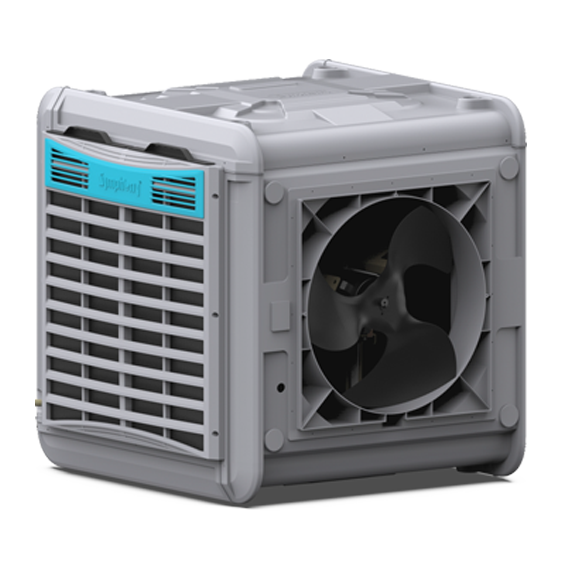
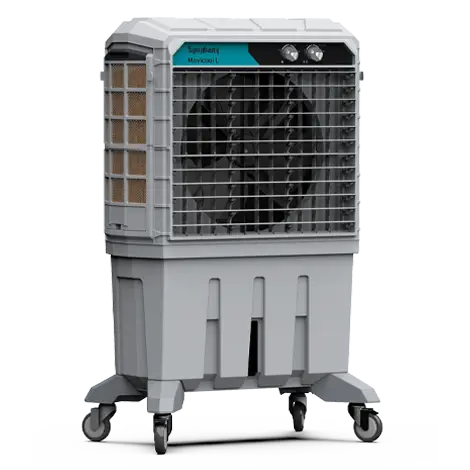
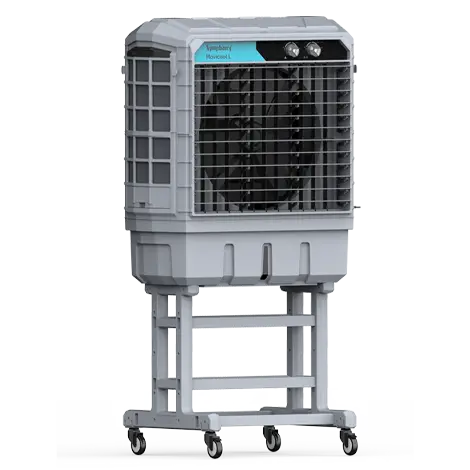
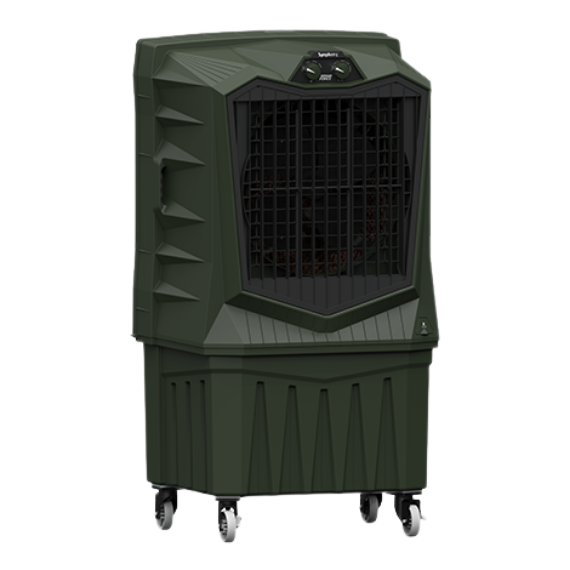
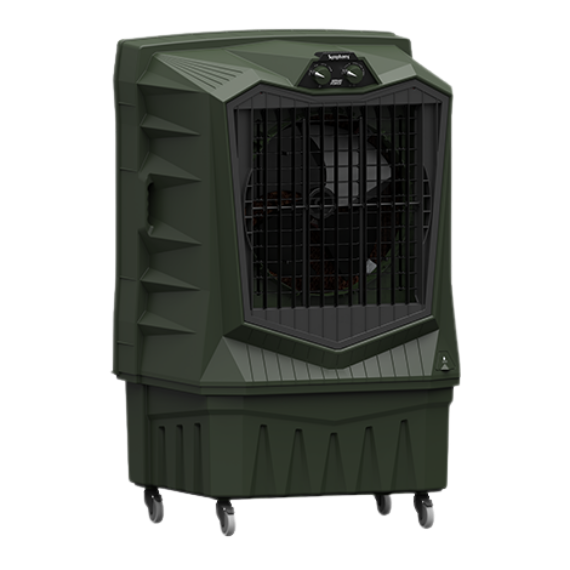
When a few positions need more air, start with unit placement. Symphony’s commercial portable air cooler range is designed for easy repositioning, so try the following:
- Reposition the unit so its stream is directed toward the positions that need more air.
- Change the discharge direction where louvers or outlets are adjustable.
- Relocate movable obstructions such as trolleys or stacked cartons.
Sending air along an aisle and aiming it at one work area involve a tradeoff, and the better choice depends on the layout. Compare the same workstations before and after each change against your earlier readings. Keep walkways, emergency exits, fire equipment and machine access clear at every position tried.
Air Cooler Ducting Systems for Separate Work Zones
Ducted distribution becomes worth evaluating when fixed racks or machinery divide the floor into separate occupied zones that benefit from their own supply outlets. Planning it involves these points:
- Resistance: duct length and bends add resistance to airflow.
- Sharing: branch and outlet design affect how airflow is shared between zones.
- Outlet locations: outlets should serve the occupied positions marked on your floor plan.
- Fan pressure: confirm that the unit has enough available pressure for the planned route.
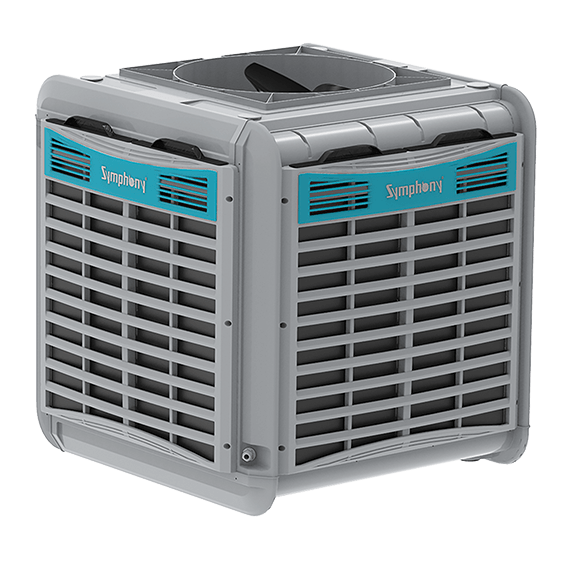
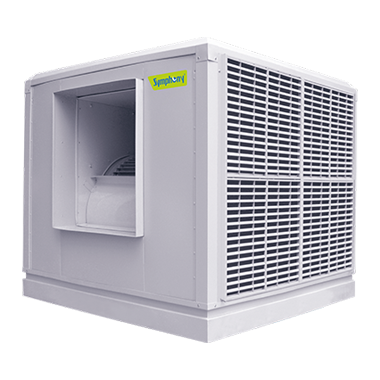
Symphony’s Industrial Ducting Coolers are built for ducted layouts, so choose the model that matches your duct route during planning.
Air Cooling With Ventilation in Obstructed Layouts
Symphony describes its large space venti cooling as evaporative cooling combined with fresh air ventilation. In this approach, supply air enters the space, moves through occupied zones and then needs a route out of the building.
When airflow is lower across several zones, include the air relief openings in the site assessment. Check that windows, vents and roof openings stay clear during operation, and separately confirm that any exhaust fans are running.
Symphony Venticool Commercial Air Cooler Options
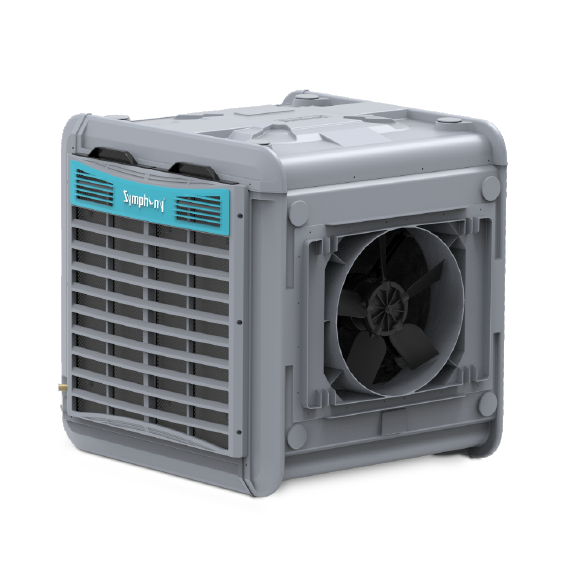
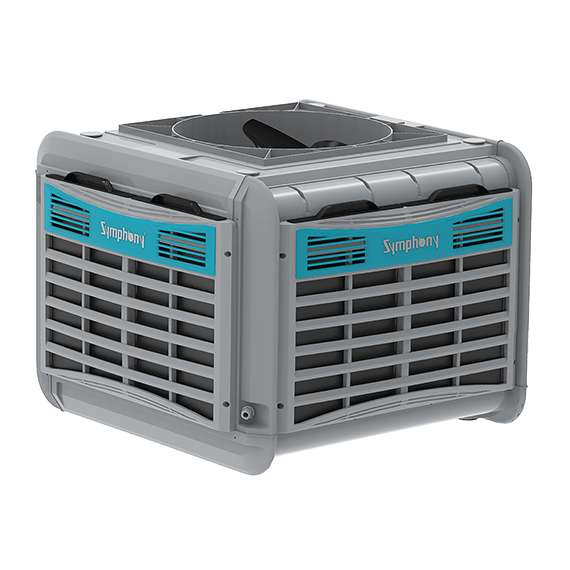
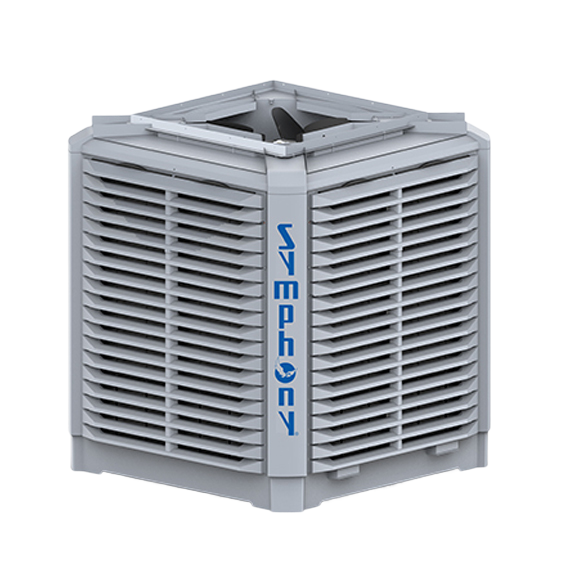
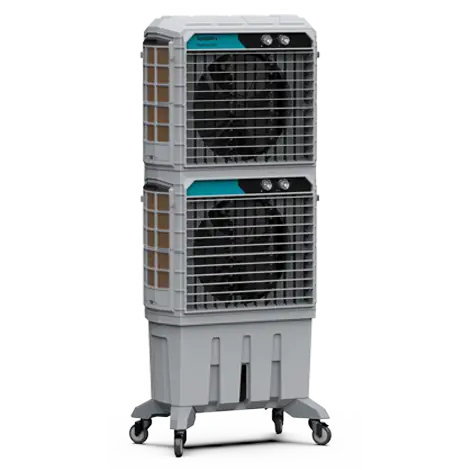
Symphony Venticool offers Industrial Ducting Coolers and Commercial Portable Air Coolers. For layouts divided into separate work zones, the Venti Cool 11U is published with the following specifications:
Specification | Published value |
Discharge | Top / Bottom / Side |
Air outlets | Up to 7 |
Duct length with one bend | Up to 30 ft |
Matching these published specifications to your floor plan helps place outlets where your team works. Discharge direction, outlet count and duct length are the points to review with Symphony’s team against your floor plan and workstation record.
About Symphony Venticool Commercial Cooling Systems
Symphony Venticool is the commercial and industrial air cooling range from Symphony Limited, based in Ahmedabad, Gujarat. The range is built for large, open or semi open spaces such as factory shop floors, warehouses, classrooms and auto workshops.
Conclusion: Planning Commercial Air Cooler Air Distribution
Rated output helps you select the right unit, and a recorded check at each occupied position shows whether cooled air reaches workstations behind racks and machinery. Your next step is to prepare a floor plan showing loaded racks, machinery and occupied work zones, along with any airflow readings or observations you recorded. Share them when you book a free site visit with Symphony Venticool before selecting equipment or outlet positions.
Commercial Air Cooler Air Distribution FAQs
How Does Air Distribution Affect Commercial Air Cooler Performance Behind Shelves, Racks and Machinery?
How often should airflow at workstations be rechecked?
A recheck is useful whenever stock levels change significantly, machinery is relocated or work zones are reassigned. Repeating the check at the start of each warm season also keeps cooling aligned with how the space is being used.
Which features help when the layout changes often?
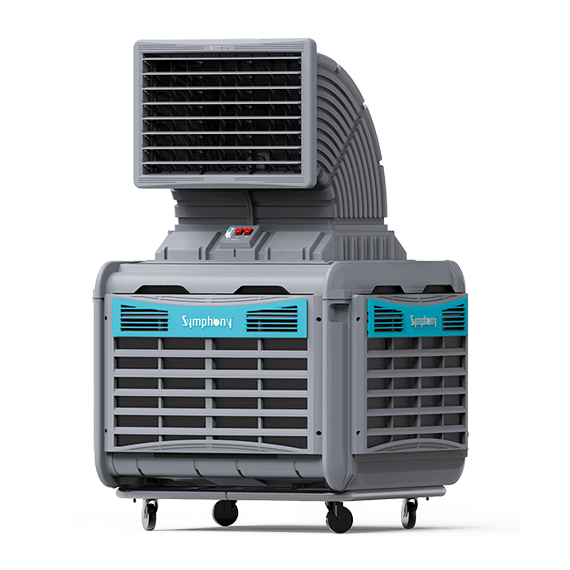
A commercial air cooler that is easy to move and redirect suits layouts where racks or work zones shift. Symphony describes its Movicool XXL as a portable industrial air cooler with auto swing louvers and lockable wheels, so it can be repositioned and secured as the layout develops.
Why does fresh air ventilation matter in spaces with machinery?
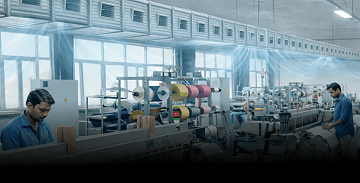
Factories, workshops and warehouses build up heat from machinery, roof exposure, people movement and long operating hours. Air cooling with ventilation keeps fresh air moving through the space and helps reduce stale air build up, supporting comfort at workstations near equipment.
How quickly can an air cooler ducting system be installed?
Symphony states that its large space venti cooling can be installed within a few hours. The exact schedule for an air cooler ducting system depends on the duct route and the number of outlets planned for your layout, which the site assessment helps define.
Can the cooling setup grow as the facility expands?
Yes. Symphony describes its air cooling machines as easy to install and scalable for expanding commercial and institutional spaces. As new racks or work zones are added, a fresh workstation check shows where extra outlets or units will help most.
What details help Symphony plan a cooling layout?
The free site assessment form asks for your industry, the place to be cooled and its area. A floor plan marking racks, machinery and occupied work zones gives Symphony's sector experts a clear picture of where cooled air needs to reach.