










What Is the Commercial Air Cooler Running Cost Formula?
A commercial evaporative air cooler uses electricity to operate its fan and water pump, while water consumption and servicing contribute separately to its ongoing operating expenses. When selecting an air cooler for commercial use, assess airflow, shop layout and ventilation, then use the unit’s documented total electrical input to estimate electricity costs.
The monthly electricity cost formula is: monthly electricity cost equals total electrical input in kilowatts multiplied by daily operating hours multiplied by operating days multiplied by the electricity rate per kilowatt hour. One electricity unit on a commercial bill equals one kilowatt hour.
Your own tariff is the only rate that applies to your connection, since commercial rates vary by state, electricity board and connection category, so use the figure on your bill rather than a general assumption. For a Symphony Venticool unit, the kilowatt figure in this formula comes from that specific model’s rating rather than a rounded estimate.
Worked Example
This example uses an assumed electricity rate and an assumed power input for illustration only.
- Daily energy used: 1.5 kilowatts multiplied by 10 hours equals 15 units (kilowatt hours).
- Daily electricity cost: 15 units multiplied by 8 rupees equals 120 rupees.
- Monthly electricity cost over 26 operating days: 120 rupees multiplied by 26 equals 3,120 rupees.
The estimate excludes taxes and other applicable bill adjustments. Include additional fixed or demand charges only where installing or operating the cooler causes those charges. Replace the figures above with your own tariff and your chosen model’s documented specifications before treating any result as representative.
How to Check Power Input and Operating Hours
Power input is usually listed on the specification sheet for a given model. This figure may describe the motor alone rather than the complete unit including the water pump and other components.
It is worth confirming with the supplier whether a published rating covers total electrical input. Treat a rated power calculation as an estimate, and use suitable energy metering for the unit’s electrical connection, with an electrician’s assistance where required, particularly for hardwired or three phase installations.
Running hours are easiest to establish with a simple log kept for a week, rather than an assumed average. Shops often underestimate how long a Symphony Venticool unit actually runs once early starts, breaks and closing routines are included.
What Other Operating Expenses Should You Budget For Commercial Cooler?
Electricity is only part of the ongoing cost of running a commercial air cooler. Evaporative cooling uses water, so regular refilling or a connected water supply adds a recurring cost that varies with running hours and local water charges.
Servicing, including cleaning the cooling pads and checking the pump, keeps the unit performing as intended. Poor maintenance mainly affects cooling performance and comfort rather than electricity draw, which is why maintenance and electricity cost are tracked as separate expenses.
Pads and other wearing parts need periodic replacement over the life of the unit, which is a cost separate from the electricity bill.
Commercial air cooler price, the one time cost of buying the unit itself, is a different decision from running cost and is not part of the calculation above. A shop owner weighing a Symphony commercial air cooler should treat purchase price and ongoing running cost as two separate parts of total ownership cost.

How Do Shop Operating Conditions Affect Commercial Air Cooler Running Cost?
At the same power input and running hours, two identical units have the same calculated electricity cost regardless of which shop they sit in. What actually changes between shop types is the cooling requirement itself, meaning the equipment size, number of units or running hours a space needs.
These are illustrative schedules using the same assumed total electrical input of 1.5 kilowatts, 8 rupees per kilowatt hour and 26 operating days, not Symphony Venticool model specifications or typical business averages.
|
Business Example |
Assumed Daily Operation |
Daily Electricity Use |
Daily Electricity Cost |
Monthly Electricity Cost |
|
Garment Showroom |
8 hours |
12 kWh |
₹96 |
₹2,496 |
|
Grocery Shop |
12 hours |
18 kWh |
₹144 |
₹3,744 |
|
Restaurant Seating Area |
10 hours |
15 kWh |
₹120 |
₹3,120 |
|
Workshop |
6 hours |
9 kWh |
₹72 |
₹1,872 |
|
Shop Attached Godown |
7 hours |
10.5 kWh |
₹84 |
₹2,184 |
The differences above come from the assumed schedules, not from the equipment itself. Actual equipment requirements depend on the premises, and for multiple units, calculate each unit’s consumption and add the results together.
Each business also faces a different practical condition beyond its operating hours. A grocery shop deals with refrigeration heat near the cooling area, a restaurant seating area sits close to kitchen heat, a workshop has dust that settles on pads and filters, and a godown or warehouse often only needs cooling in the zones that are actually occupied rather than the full volume. These conditions shape how the space should be cooled, separately from the electricity calculation itself.
What Practical Steps Reduce Commercial Air Cooler Running Cost?
Running hours can be limited to actual opening or working hours rather than left on through closed periods. A Symphony Venticool unit switched off during idle time naturally logs fewer hours over a month.
In dusty workshops, inspect and clean pads and filters according to the manufacturer’s guidance and actual operating conditions, since dust can affect how consistently a unit performs between services.
Evaporative cooling depends on a steady supply of fresh air moving through the space and a route for that air to leave, unlike refrigerant based air conditioning. Closing doors and vents to hold in cooled air can work against it rather than reduce running hours.
The better approach is managing when and where fresh air enters, for example through appropriately placed openings, rather than sealing the shop the way an air conditioned space might be managed.
How to Select a Symphony Venticool Cooler for Your Shop
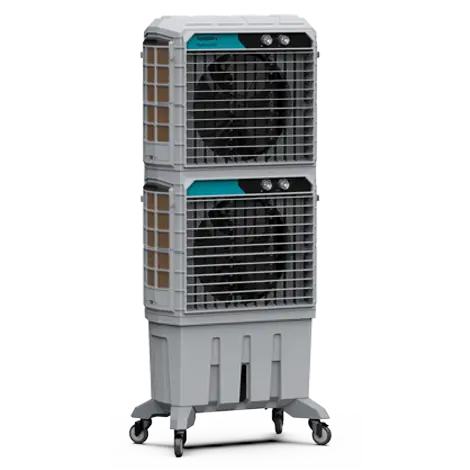
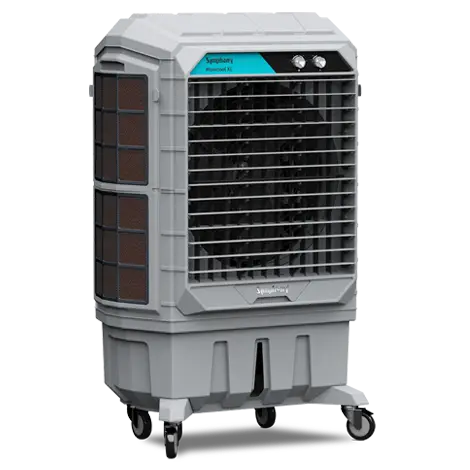
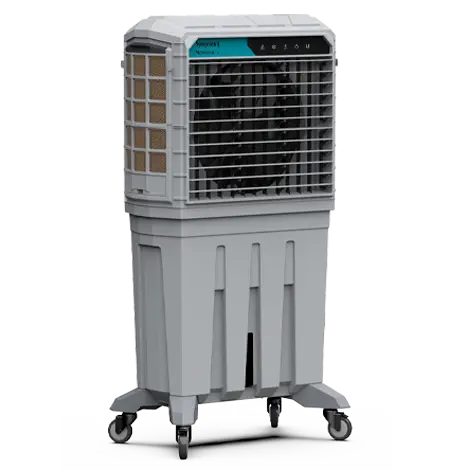
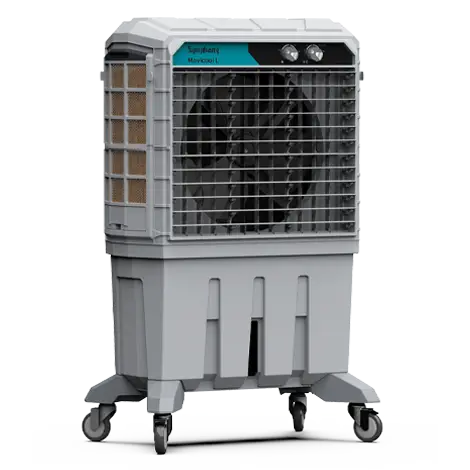
Symphony Venticool’s commercial cooling system range covers different coverage areas and air delivery levels, with documented specifications for each model. This documentation is what makes the calculation in this article usable with a real figure rather than a guess.
Before buying, check the specification sheet for the specific Symphony Venticool model under consideration, and confirm installation and water supply requirements.
Request a Symphony Venticool site assessment to discuss your shop layout, operating schedule and suitable equipment specifications.
Frequently Asked Questions
How Much Does It Cost to Run a Commercial Air Cooler in a Shop?
Does a higher electricity tariff always mean a shop pays more to run its cooler than another shop?
Not necessarily, since tariff is only one of three factors. A shop with a higher tariff but fewer running hours or a lower power Symphony Venticool unit can still total less than a shop running longer hours on a larger one.
Can running cost be compared directly between a commercial air cooler and an air conditioner?
A fair comparison needs comparable space, comfort requirements and weather conditions, along with documented power figures for both systems, including a Symphony Venticool model's own rating, and measured energy use rather than assumed numbers. The two also provide different results, since an air cooler adds humidity while an air conditioner removes it, so running cost is only one part of deciding between them.
Does running cost change across the season, and how often should I recheck it?
Running cost follows running hours, so a longer or hotter season with more daily hours will cost more even on the same Symphony Venticool unit. Reviewing logged hours every few months, especially across a change in season or business volume, keeps the estimate aligned with how the shop actually operates rather than left to a single assumption made once.
How do I calculate electricity cost when using multiple coolers?
Calculate each Symphony Venticool unit's electricity cost separately using its own documented power input and running hours, then add the results together, since the formula applies per unit rather than per shop as a whole.