








What Does CFM Mean in Industrial Cooling?
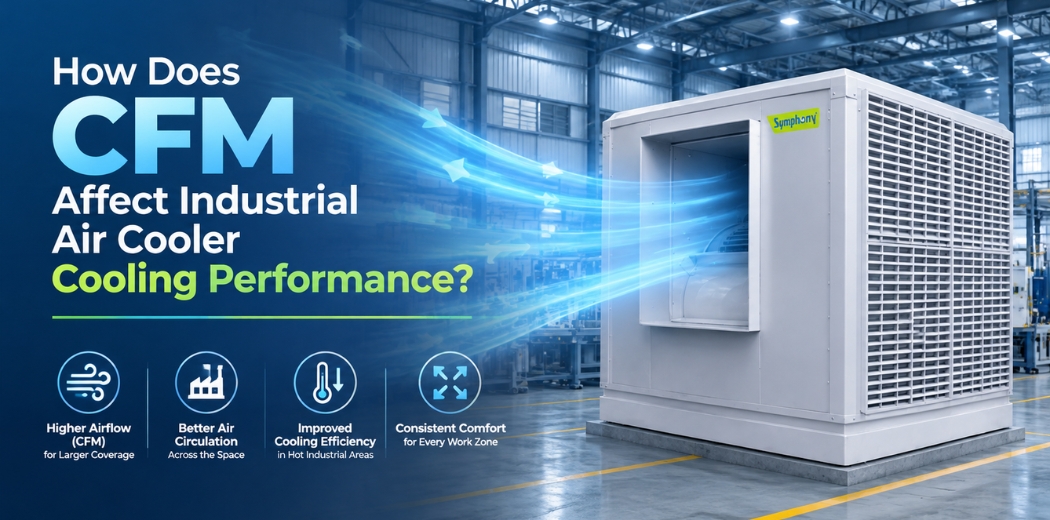
CFM stands for Cubic Feet per Minute, a measurement of how much air volume an industrial air cooler can move in one minute. It tells you the airflow capacity of the machine, not how cold the air will feel or how large a space it can effectively cool on its own.
In industrial cooling, CFM is one of the most quoted specifications because it is easy to compare across products. A factory air cooler rated at a higher CFM is physically pushing more air through its cooling pads and out into the space than a unit with a lower rating.
That said, CFM is only a measure of quantity. It says nothing about:
- How far the air travels before losing velocity
- Whether the air reaches the actual work zones
- How well it displaces hot air generated by machinery
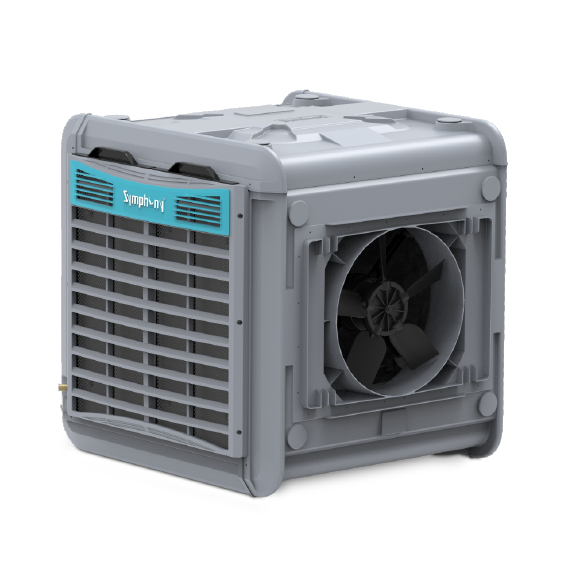
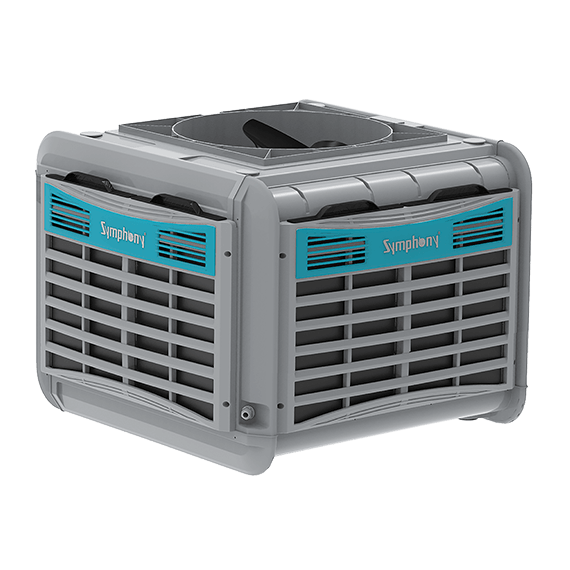
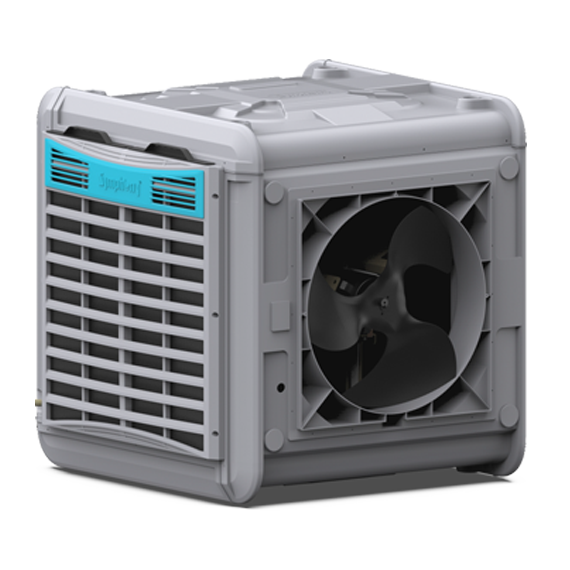
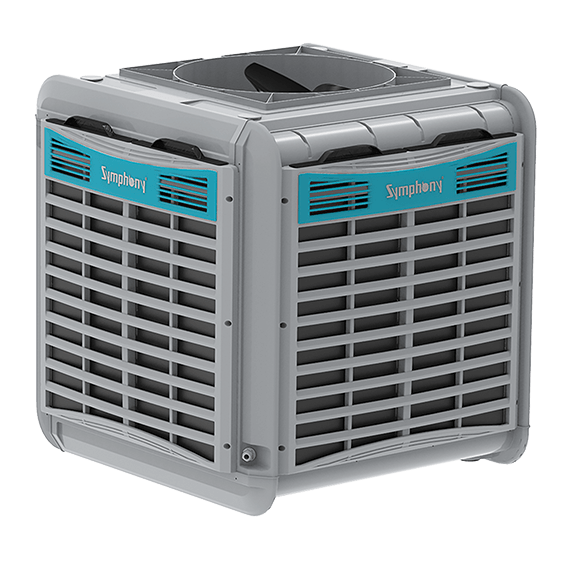
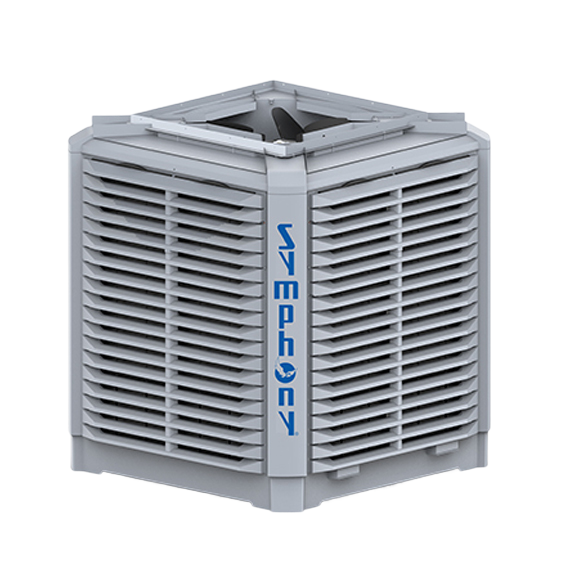
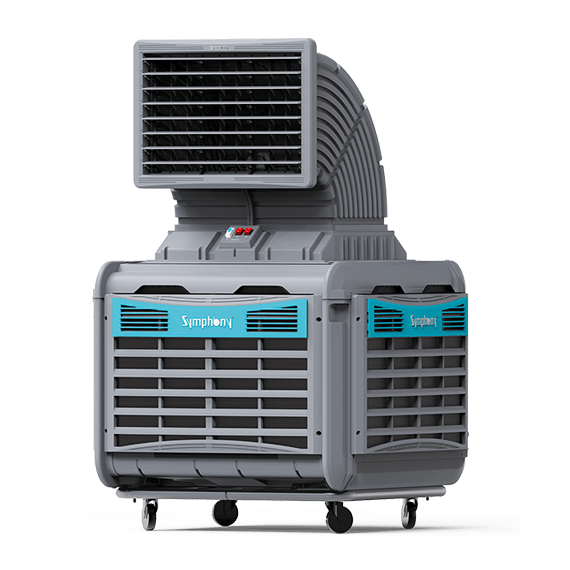
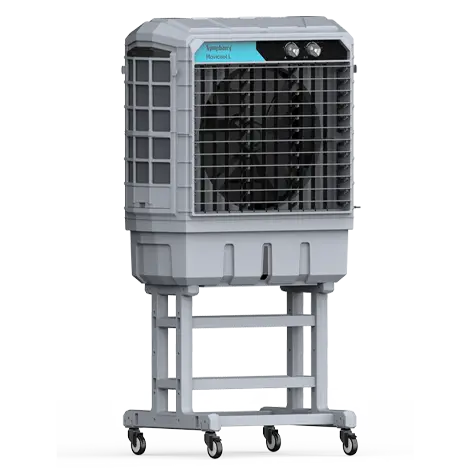
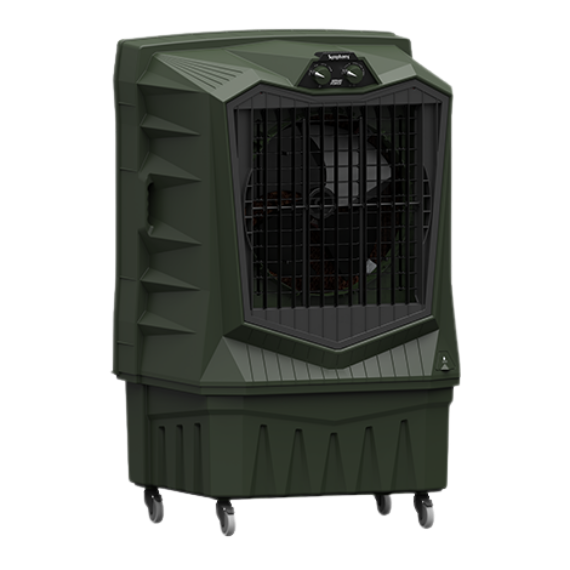
For an industrial air cooling system, CFM works alongside static pressure, ducting design and pad efficiency to determine actual cooling outcomes. Symphony Venticool designs its industrial evaporative air coolers, including the Venti-Cool ducting range, to balance airflow capacity with delivery efficiency, so the air that leaves the unit is put to productive use rather than dissipating before it reaches the floor.
Does Higher CFM Always Mean Better Cooling?
No, higher CFM does not always mean better cooling. Airflow quantity is only one part of the equation. Cooling effectiveness also depends on how that air is distributed, the heat load in the space, ceiling height, ventilation and how well the moving air is directed toward occupied or high heat zones.
A common misconception among factory owners and warehouse operators is that picking the industrial air cooler with the biggest CFM number automatically solves their cooling problem. In practice, an oversized unit in a poorly ducted layout can move a large volume of air that simply circulates near the ceiling or escapes through open bays, without ever cooling the actual work area.
Conversely, an appropriately sized industrial ducting cooler with well planned duct runs and outlet grills can outperform a higher CFM unit that has no distribution strategy behind it.
This is why an industrial cooling solution should be evaluated as a system, not a single spec. Symphony Venticool’s Venti-Cool range is built with this in mind. Several models support ducting accessories and multiple outlet grills, which allow the same airflow to be split and directed to specific hot spots rather than released in one general direction. This turns raw CFM into usable, targeted cooling.
CFM vs Cooling Coverage
CFM and cooling coverage are related but not identical. CFM tells you how much air a unit moves, while cooling coverage describes the actual floor area or zone that receives a meaningful drop in temperature from that airflow.
Two industrial air coolers with the same CFM rating can have different effective coverage areas depending on:
- Ceiling height and building volume
- Whether the air is ducted or released as open discharge
- Obstructions such as machinery, racking or partitions
- Airflow direction and outlet placement
A warehouse air cooler positioned for open discharge in a low ceiling space will generally cover its rated area more evenly than the same unit operating in a tall, open span factory where the air rises and disperses before reaching worker height.
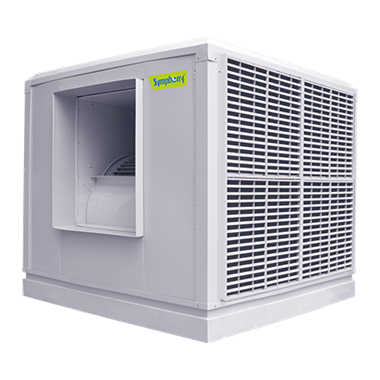
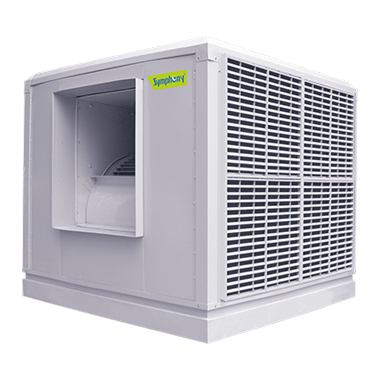
Symphony Venti-Cool coolers are offered across a range of configurations, from smaller ducting units suited to workshops and confined zones, to larger models designed for expansive factory floors. Matching the model to the facility’s actual floor area and layout, rather than to the highest CFM figure available, is what determines whether the rated coverage translates into real comfort at ground level.
CFM vs Air Velocity
CFM measures volume of airflow, while air velocity measures the speed at which that air moves at a given point, usually expressed in feet per minute or meters per second. The two are connected through the size of the outlet or duct the air passes through, but they answer different questions.
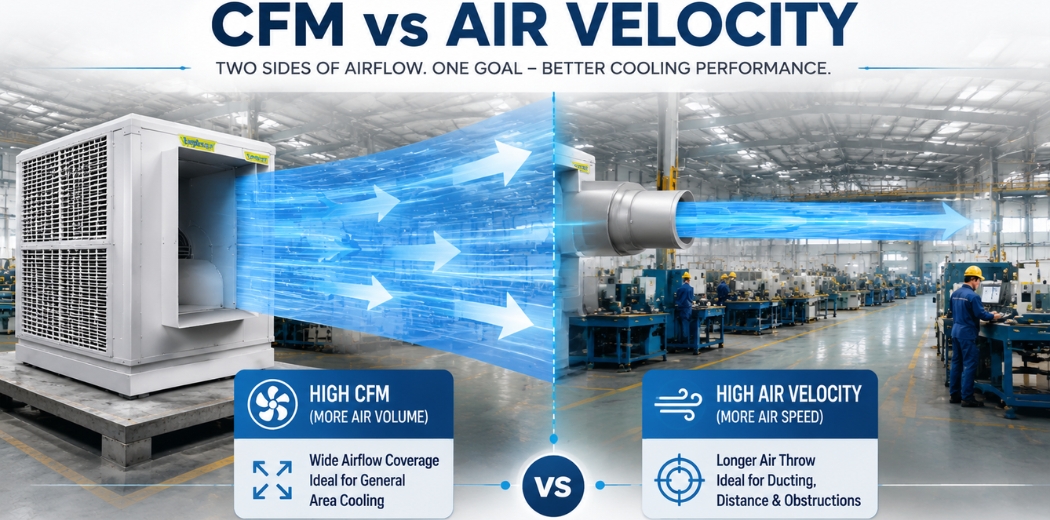
A cooler can have high CFM but low velocity at the outlet if the discharge area is wide. Conversely, a duct with a narrow opening can produce high velocity air with a lower total CFM. For an industrial air cooler, velocity matters because it determines how far the air will travel and how well it can penetrate a heat affected zone before slowing down and losing its cooling effect.
In practical terms:
- High volume, low velocity air is useful for general area cooling.
- Higher velocity air is more useful for pushing cooled air over longer ducted distances or through obstructions.
This is a key reason Symphony Venticool’s industrial ducting coolers, such as the Venti-Cool models built for high static pressure applications, are engineered differently from open discharge units. They are designed to maintain air delivery over longer duct runs, so cooling reaches distant sections of a factory rather than losing effectiveness a short distance from the unit.
Our Other Product
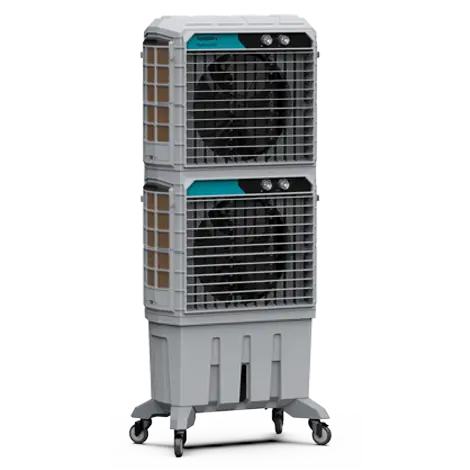
Venti Cool 11U Industrial Ducting CoolersCFM and Air Changes per Hour
Air Changes per Hour, or ACH, refers to how many times the entire air volume of a space is replaced by fresh or cooled air within one hour. CFM is a direct input into this calculation, but ACH also depends on the total volume of the building, meaning its length, width and height together, not just the floor area.
This is where CFM based selection often goes wrong. Two facilities with the same floor area can have very different building volumes if one has a 4 meter ceiling and the other has a 10 meter ceiling. The taller facility requires proportionally more airflow to achieve the same number of air changes.
For industrial spaces with heat generating machinery, adequate ACH is important because it continuously removes warm, humid air and replaces it with fresh, cooled air rather than allowing heat to accumulate. A cooling plan that only checks CFM against floor area, without accounting for building volume, can under deliver on comfort even though the unit’s rated CFM appeared sufficient on paper.
Symphony Venticool recommends evaluating cooling requirements at the building volume level rather than the floor area level alone, which is a key input its team factors in when helping businesses size a Venti-Cool configuration correctly, rather than relying on CFM in isolation.
Effect of Ceiling Height on Required CFM
Ceiling height has a direct effect on the CFM required to cool a space effectively, because taller spaces have a larger air volume to circulate for the same floor area. As ceiling height increases, the same industrial air cooler will need to work harder, or additional units will be required, to maintain equivalent air changes and cooling coverage.
In high ceiling environments such as large warehouses or manufacturing halls, warm air also tends to stratify, meaning it rises and collects near the roof while cooler air settles lower. This stratification means airflow strategy matters as much as raw CFM. Ducted delivery aimed at occupied height, rather than open discharge that lets air rise unchecked, is generally more effective in tall facilities.
Practical considerations for high ceiling industrial spaces include:
- Directing airflow toward work zones rather than upward
- Using ducting to deliver air at a consistent height across the floor
- Accounting for roof mounted machinery or exhaust systems that can pull cooled air away before it circulates
Symphony Venticool’s ducting coolers are suited to these conditions, since their duct and outlet grill accessories allow cooled air to be delivered closer to where people and equipment are located, rather than being released to rise toward a distant ceiling.
Effect of Machinery Heat Load
Machinery heat load refers to the amount of heat generated by equipment, processes and motors operating within an industrial facility, and it has a direct effect on how much CFM is actually required. A facility with heavy machinery, ovens, presses or continuous production lines generates significantly more heat than an equivalent space used purely for storage.
This means CFM requirements cannot be judged from building size alone. A warehouse used for cold or ambient storage may need comparatively less airflow than a manufacturing plant of the same size where machines are running heat intensive processes throughout the day.
Key factors that increase effective heat load include:
- Number and wattage of motors or production equipment
- Process heat from welding, molding, packaging or drying
- Occupant density and shift patterns
- Solar heat gain through roofing and windows
Because Symphony Venti-Cool units are available across a range of airflow capacities, businesses with higher heat load processes, such as manufacturing plants and mills, can select or combine units suited to their actual thermal load, rather than assuming a standard industrial air cooler sized for general warehouse use will perform the same way in a high heat process environment.
Read Our Article
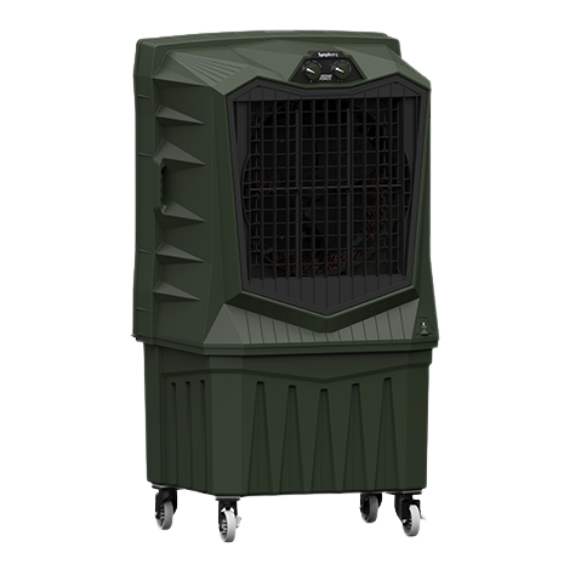
The Comprehensive Guide to Industrial Ducting CoolersCFM Requirements for Factories vs Warehouses
Factories and warehouses often have different CFM requirements because they differ in heat load, layout and how air needs to be distributed, even when their floor areas are similar. A factory cooling solution generally has to account for concentrated heat sources from machinery, while a warehouse cooling solution is more often about maintaining general comfort and air movement across large open storage areas.
Typical differences include:
- Factories: Localized hot spots near machinery, higher heat load per square foot, and a greater need for ducted or zone specific airflow to target work areas directly.
- Warehouses: More uniform heat distribution, larger open volumes, and a greater reliance on overall air circulation and Air Changes per Hour rather than targeted delivery.
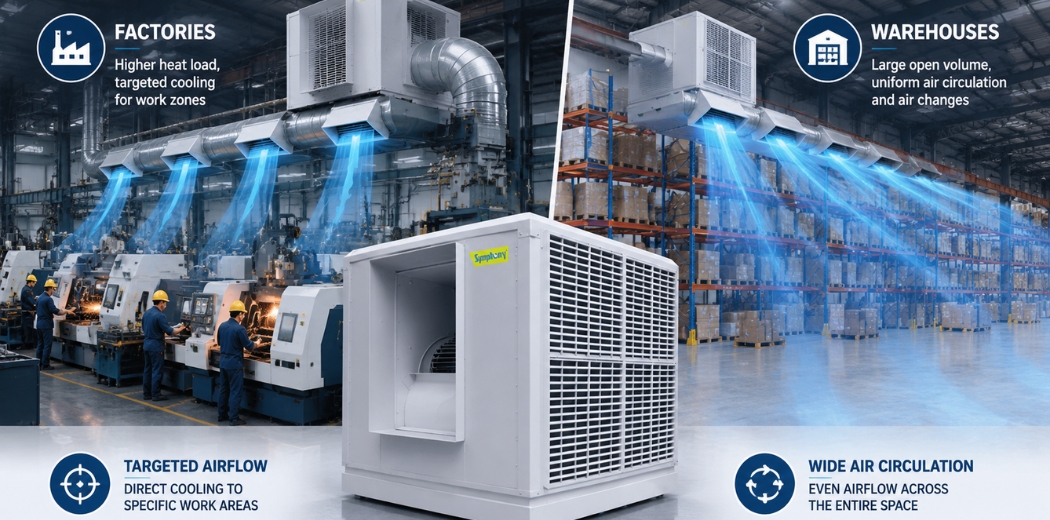
Because of these differences, the ideal industrial air cooler setup is rarely identical between the two. A factory may benefit more from an industrial ducting cooler with multiple outlet grills directing air to specific stations, while a warehouse may be better served by a combination of units positioned to maximize general air circulation across the space.
Symphony Venticool offers both ducted and open discharge configurations within its Venti-Cool range, which allows factory operators and warehouse managers to select a setup based on how heat is actually generated and distributed in their facility, rather than applying the same layout logic to both environments.
Our Other Product
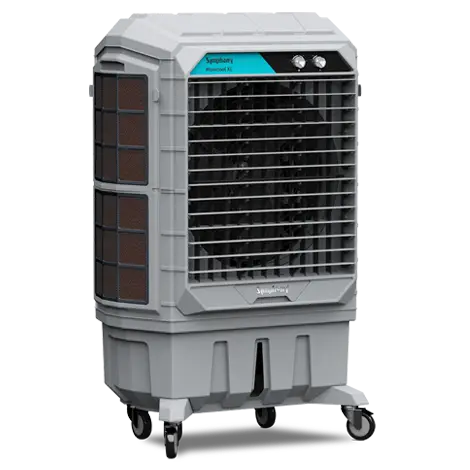
Movicool XXL Industrial Ducting CoolersHow to Select the Right Symphony Venti-Cool Configuration
Selecting the right Symphony Venti-Cool configuration starts with assessing actual site conditions, including floor area, building volume, ceiling height, machinery heat load and layout, rather than choosing a unit based on CFM rating alone. A proper evaluation looks at the facility as a complete system.
A practical selection process generally includes the following steps:
- Measure building volume, not just floor area, by factoring in ceiling height across the space.
- Identify heat sources, including machinery, process equipment and occupant density, since these increase real world cooling demand.
- Review the layout, noting whether hot spots are localized near equipment or spread evenly across an open area.
- Decide between ducted and open discharge delivery, based on whether air needs to reach specific work zones or circulate generally.
- Account for ventilation conditions, such as existing exhaust systems, open bay doors, or roof vents that affect how air moves through the building.
- Match the configuration to the application, whether that is a workshop, textile mill, warehouse, food processing unit or large manufacturing plant.
Because industrial cooling needs vary significantly between a small workshop and a large logistics facility, Symphony Venticool offers its Venti-Cool range across multiple capacities and configurations, including models designed for ducted delivery over longer distances and others suited to direct area cooling. Working through site specific factors first, and then selecting the Venti-Cool configuration that matches those requirements, gives a more reliable result than choosing a unit based on its CFM number alone.
For facilities with complex layouts or high heat loads, consulting directly with the Symphony Venticool team to review site conditions can help ensure the selected configuration delivers the coverage, air circulation and Air Changes per Hour the space actually needs.
Conclusion
aCFM is an important starting point for understanding industrial air cooler performance, but it is not the deciding factor on its own. Real cooling results depend on how airflow translates into coverage, velocity and Air Changes per Hour once building volume, ceiling height, machinery heat load and layout are factored in. Factory owners, plant managers and warehouse operators get the best outcome when they evaluate their site as a whole system, measuring building volume, identifying heat sources and deciding whether ducted or open discharge delivery suits the space, rather than comparing CFM numbers in isolation. Symphony Venticool’s Venti-Cool range offers industrial air coolers across multiple capacities and delivery methods, and reviewing site conditions with the Symphony Venticool team before finalizing a unit helps ensure the selected industrial air cooling system performs as expected once installed.
Frequently Asked Questions About Industrial Air Cooler CFM
How Does CFM Affect Industrial Air Cooler Cooling Performance?
What is a good CFM for an industrial air cooler?
There is no single CFM figure that works for every facility, since the right airflow depends on building volume, ceiling height and machinery heat load rather than floor area alone. A small workshop needs far less airflow than a large manufacturing hall. Symphony Venticool offers its Venti-Cool range across multiple airflow capacities so businesses can match a unit to their actual site conditions.
How much CFM do I need to cool a factory or warehouse?
The airflow needed depends on the total building volume, not just square footage, along with the amount of heat generated by machinery, occupants and equipment inside the space. Facilities with higher ceilings or heavy heat producing processes generally require more airflow to achieve effective cooling. A site specific assessment is the most reliable way to determine this figure before selecting a unit.
How many air changes per hour are recommended for industrial spaces?
Recommended Air Changes per Hour vary by industry, heat load and ventilation conditions, so there is no universal number that applies to every facility. Spaces with heavy machinery or high occupant density typically need more frequent air changes than general storage areas. Rather than using a fixed figure, Symphony Venticool recommends evaluating actual building volume and heat load when planning a cooling system.
Which is better, higher CFM or better air distribution?
Air distribution generally matters more than raw CFM alone, since a high airflow unit that cannot direct air to occupied zones will underperform compared to a properly ducted lower CFM unit. Effective cooling depends on getting air to where people and equipment actually are. This is why Symphony Venticool's ducting coolers focus on directed delivery rather than airflow volume alone.
How does ducting affect industrial air cooler CFM requirements?
Ducting allows a fixed amount of airflow to be split and directed toward specific work zones instead of being released in one general direction, which can reduce the total CFM needed to achieve effective cooling in targeted areas. It also helps air travel longer distances without losing effectiveness. Several Symphony Venti-Cool models are designed specifically for ducted, zone based delivery.
What is the difference between CFM and CMH in industrial cooling?
CFM measures airflow in cubic feet per minute while CMH measures airflow in cubic meters per hour, and both describe the same underlying concept of air volume moved over time using different units. Industrial air cooler specifications may list either measurement depending on the region or manufacturer. Symphony Venticool product listings typically use CMH, which can be converted to CFM for comparison purposes.
How much does ceiling height affect industrial air cooler CFM needs?
Ceiling height has a significant effect, since taller spaces contain more total air volume that needs to be circulated to achieve the same level of cooling as a lower ceiling space of equal floor area. Warm air also tends to rise and collect near high ceilings, which can reduce cooling at ground level if airflow is not directed properly. Ducted delivery helps address this in tall facilities.
Who should use an industrial ducting air cooler instead of an open discharge cooler?
Businesses with defined work zones, long floor plans, or machinery generating concentrated heat generally benefit more from an industrial ducting cooler, since it can direct air to specific locations rather than releasing it generally into the space. Open discharge units tend to suit smaller or more uniform spaces. Symphony Venticool offers both formats within its Venti-Cool range.
Where should industrial air coolers be installed for best cooling performance?
Placement should be based on where heat is generated and where workers or equipment are located, rather than simply near an exterior wall or entrance. Units or duct outlets positioned closer to hot spots and occupied areas generally perform better than those placed for convenience alone. Reviewing the facility layout before installation helps determine the most effective positioning.
How can I choose the right Symphony Venti-Cool model for my facility?
Choosing the right model starts with assessing floor area, building volume, ceiling height, machinery heat load and whether ducted or open discharge delivery suits the space. These factors together determine which Venti-Cool configuration will perform effectively rather than relying on CFM rating alone. Symphony Venticool can help review site conditions to identify a suitable configuration for a given facility.
Conclusion
The cooling pad is the single component that determines how effectively an industrial evaporative cooler can lower temperature, and choosing the right type, thickness, and material has a direct impact on energy use, water consumption, and long term running cost. Honeycomb cellulose pads consistently outperform older wood wool designs, but even within honeycomb pads, matching thickness and cell size to the specific facility, water quality, and fan capacity is what determines real world performance.
Symphony Venticool supplies genuine honeycomb cooling pads engineered to match each model in its industrial ducting cooler range, along with guidance on selection and replacement timing suited to local water conditions. Reach out to Symphony Venticool for the correct replacement pad specification and to keep your industrial cooling system running at its rated efficiency.