


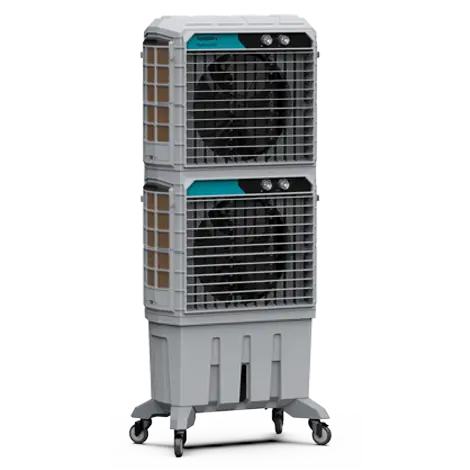
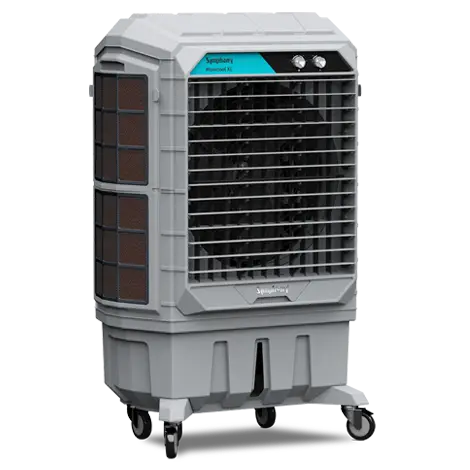
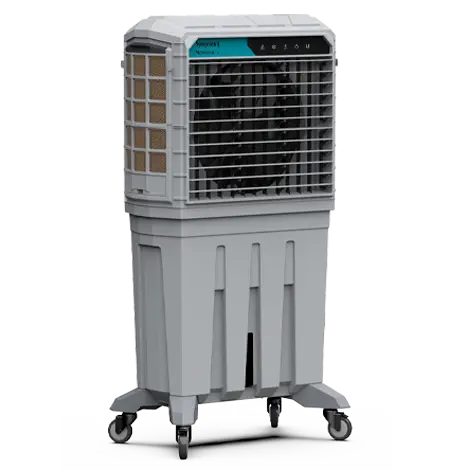
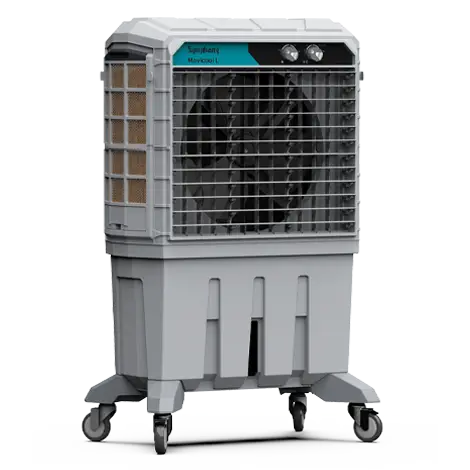
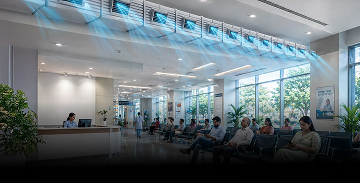
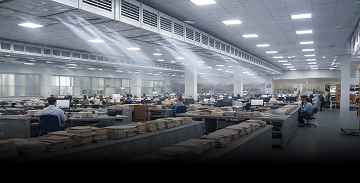

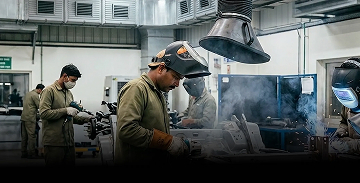

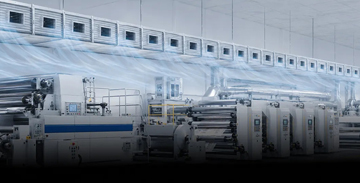


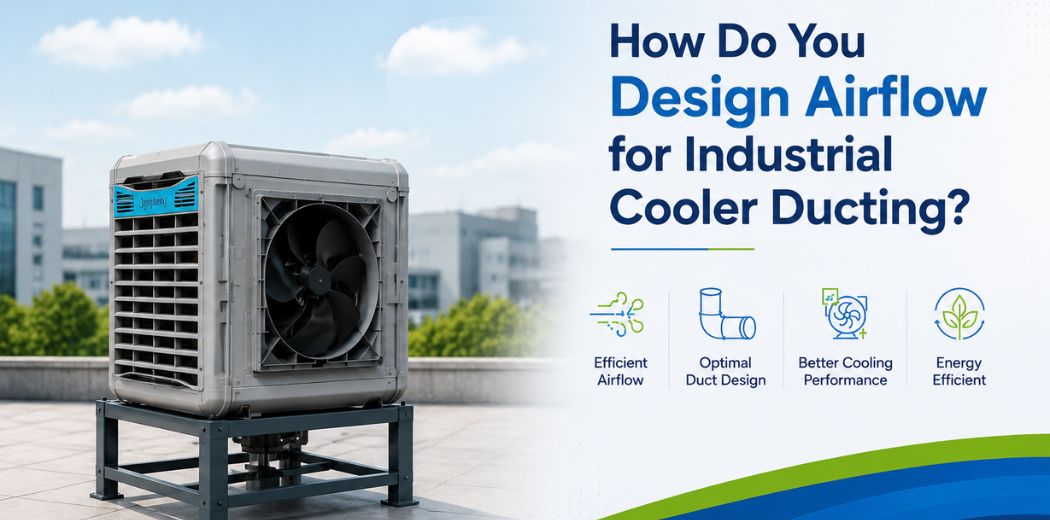
Designing airflow for industrial cooler ducting means calculating required air volume, sizing ducts correctly, managing air velocity, accounting for static pressure and pressure loss, and positioning outlets so cool air reaches every part of a facility evenly. It is a complete system design exercise, not simply connecting ducts to a cooling unit.
What Does CFM Mean in Industrial Cooling?
Proper ducting design matters because it determines whether cooled air reaches every working zone, rather than concentrating near the cooling unit while other areas stay warm. Distribution depends on how the ducting routes, splits and releases air, not only on equipment capacity.
A common misconception is that a high capacity industrial air cooler will automatically cool an entire shop floor. In practice, an industrial cooling solution is a complete system: the cooler generates cooled, ventilated air, but the ducting carries it to machine areas, packaging lines or storage aisles. Poor design leads to uneven zones, stagnant pockets, higher resistance and strain on the unit, which is why installations should begin with a site assessment covering ceiling height, layout and heat sources. Symphony Venticool treats ducting design as part of the overall cooling plan, matching building layout to airflow requirement.
How Is Required CFM Determined for Industrial Cooler Ducting?
Required CFM is determined by evaluating the space volume, desired air change rate, and heat load from machinery, occupancy and building exposure. This defines how much air the ducting must carry.
The approach involves calculating space volume from floor area and ceiling height, setting an air change rate that reflects heat levels, typically higher for heavy machinery areas than storage warehouses, and factoring in contributors such as equipment, lighting and worker density.
CFM should not be confused with cooling effect. It tells you how much air the ducting must move; actual temperature reduction depends on ambient conditions, humidity and distribution quality. Symphony Venticool calculates this air change requirement for each facility individually, then sizes the ducting network and Venti-Cool configuration to match it rather than applying a standard formula.
How Does Duct Size Affect Industrial Airflow Performance?
Duct size directly affects performance because it determines how easily air moves and at what velocity. Undersized ducts increase resistance and noise, while oversized ducts can drop velocity to a point where distribution becomes weak and uneven.
Sizing is shaped by the available CFM at each section, duct material, space constraints in retrofits, and noise, since undersized ducts forcing high velocity air can be noticeable near workstations. Main trunk ducts near the cooling system typically carry higher airflow, while branch ducts are sized smaller as demand decreases.
Symphony Venticool applies this tapering approach across its ducting cooler installations, sizing each section to the airflow it needs to carry.
Why Is Air Velocity Important in Industrial Cooler Duct Design?
Air velocity matters because it affects how efficiently air moves through ducting, how much noise the system generates, and how well air reaches the far end of a run. Velocity that is too high increases friction and noise; velocity that is too low weakens air throw at outlets.
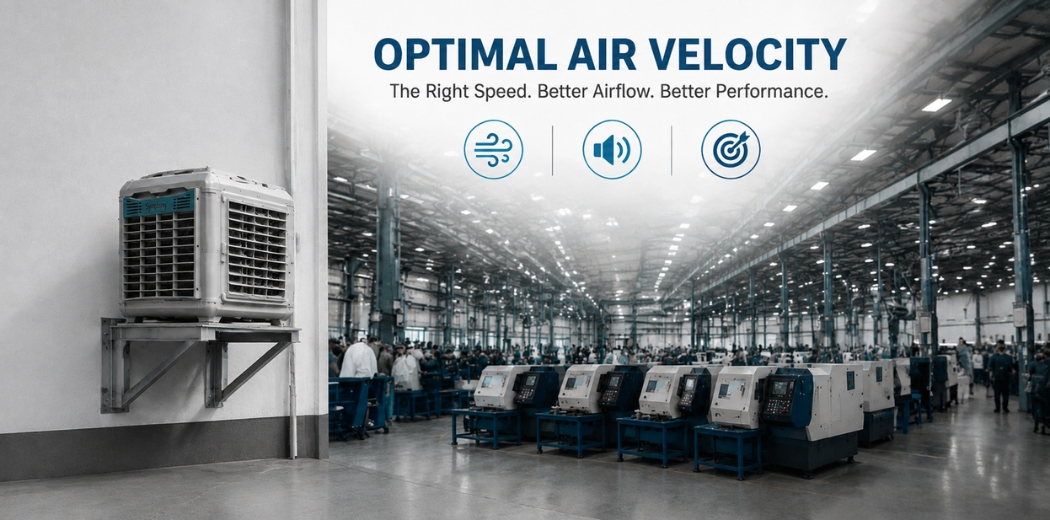
Velocity is not airflow quantity. CFM measures the volume of air moved; velocity measures how fast it travels through a given cross section, so two systems can carry identical CFM at different velocities depending on duct size. Trunk ducts near the cooler can run at higher velocity since they sit further from occupied zones, while branch ducts feeding workstations need moderate velocities to avoid noise.
Symphony Venticool factors this into layout recommendations for each zone, so air arrives at outlets with enough energy for proper distribution without drafts or excess noise.
How Does Static Pressure Influence Industrial Cooler Ducting?
Static pressure is the resistance a cooling unit’s fan must overcome to push air through the duct network. Long runs, multiple bends, restrictive fittings or undersized ducts all raise static pressure, reducing delivered airflow compared to rated capacity.
Every component, from straight sections to bends and filters, adds to total resistance. As resistance increases, the fan works harder, and if it exceeds the fan’s design capability, delivered airflow falls short even with a correctly sized cooler.
Before installation, Symphony Venticool checks the planned layout against the selected Venti-Cool configuration’s static pressure capacity to confirm the fan can handle it.
How Do Duct Length and Layout Affect Airflow Distribution?
Longer duct runs add friction resistance that gradually reduces air velocity and pressure as air travels further from the cooling unit, producing strong airflow near the cooler and weaker delivery at outlets furthest away.
Techniques to manage this include balanced trunk and branch configurations, centralized cooler placement where feasible, tapered duct sizing along the run, and multiple shorter runs instead of one long run where layout allows. Warehouses with long, narrow floor plans face particular challenges, since one central cooling point may not serve both ends evenly.
Symphony Venticool evaluates facility dimensions when planning installations, recommending multiple distribution points where needed to avoid airflow drop off on long runs.
Our Other Product
Industrial Ducting CoolersHow Do Bends and Turns Create Pressure Loss in Industrial Ducting?
Bends create pressure loss by disrupting smooth airflow, causing turbulence and added resistance compared to straight sections. Sharper or more frequent bends create proportionally greater losses.
Ways to reduce these losses include using gradual radius bends instead of sharp right angle turns wherever space allows, minimizing the total number of bends through better routing, and using turning vanes where gradual bends are impractical. Some bends are unavoidable given columns or building layout, so the goal is to keep their number and severity to what is genuinely necessary.
Symphony Venticool factors these structural constraints into duct routing, keeping bend count and severity within what the layout genuinely requires.
How Should Branch Ducts Be Designed for Uniform Air Distribution?
Branch ducts should be sized and allocated airflow in proportion to the specific zone each one serves, so every outlet gets an adequate share rather than branches closer to the cooling unit drawing disproportionately more air.
Without careful design, branches nearer the unit, where static pressure is highest, tend to receive more airflow than distant branches. Effective branch design involves sizing each branch to its calculated requirement, using adjustable balancing dampers at takeoffs, and grouping outlets by zone, such as by production line or storage aisle.
Symphony Venticool plans branches on this zone based approach rather than distributing airflow evenly by default.
How Do Diffusers and Grilles Improve Industrial Cooling Distribution?
Diffusers and grilles control how air exits the ducting into the occupied space, shaping throw distance, spread pattern and how well conditioned air mixes with room air.
Grilles generally suit locations needing simple, directed discharge toward a specific zone. Diffusers suit locations needing a wider, more even spread that avoids concentrated drafts. Adjustable louvers let airflow direction be fine tuned as layouts change over time.
Symphony Venticool selects grille or diffuser type per zone based on function, rather than fitting the same outlet across the entire facility.
Why Is Pressure Loss Calculation Important in Industrial Cooler Ducting?
Pressure loss calculation determines whether the cooling unit’s fan can deliver the required airflow through the complete duct network. Skipping this step risks a system that looks correctly sized on paper but underperforms once installed.
Total pressure loss is the cumulative resistance from every component air passes through. The calculation involves identifying the index run, the longest or most resistant path; summing friction losses; adding losses from each fitting; and comparing the total against the selected unit’s available static pressure.
Symphony Venticool runs this calculation for every proposed layout, confirming the chosen Venti-Cool configuration’s fan can overcome it before the ducting goes in.
How Does Airflow Balancing Improve Cooling Performance?
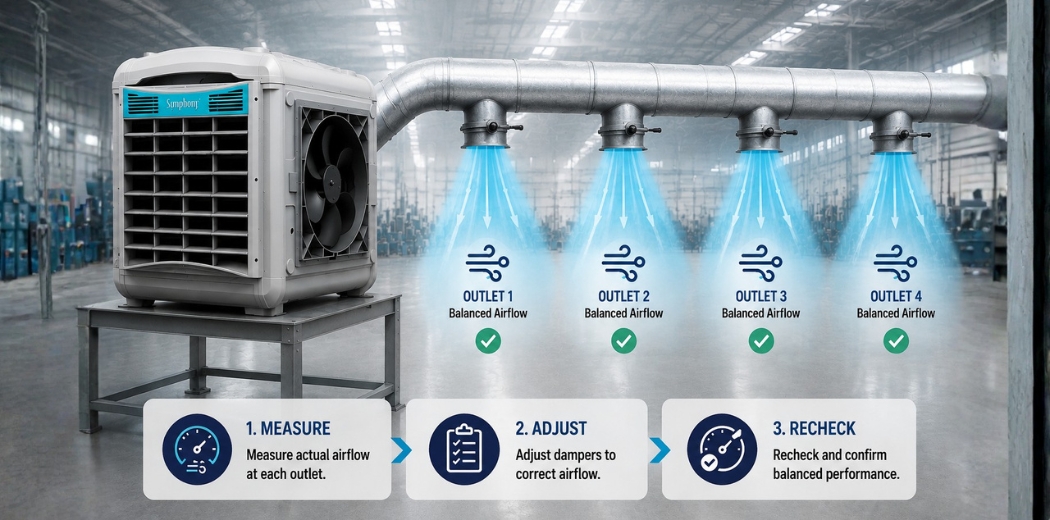
Airflow balancing adjusts the actual airflow delivered at each outlet after installation, correcting the natural tendency of ducting systems to deliver uneven airflow across branches.
Even a well designed system rarely delivers perfectly even airflow without adjustment. The process involves measuring actual airflow at each outlet, comparing it against the design target, adjusting balancing dampers, and rechecking measurements afterward.
Symphony Venticool measures and adjusts airflow at each outlet after installation, confirming actual performance rather than relying on design calculations alone.
How Should Businesses Decide the Number and Position of Duct Outlets?
Outlet number and position should be based on zone size and shape, heat source locations, occupied work areas and outlet throw capability, not by dividing total airflow evenly across the network.
Too few outlets can leave hot spots, while too many, especially if undersized, can dilute throw distance. Key factors include zone dimensions, ceiling height, heat sources, occupied work zones, and obstructions such as cranes or racking. Positioning also needs to account for return air paths, since blocked returns can undermine even a well planned layout.
Symphony Venticool maps outlet count and position against each facility’s floor plan and machinery layout, rather than applying a standard spacing rule.
How Does Ducting Design Support Different Industrial Cooling Zones?
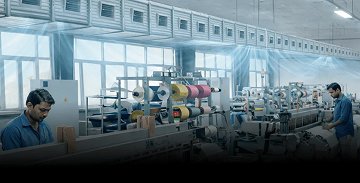
Ducting design lets a single industrial air cooling system serve multiple areas with different airflow requirements, using zone specific branch sizing, dedicated outlet groups and, where needed, dampers adjusted independently by zone.
Most industrial facilities are not uniform spaces. One building may include a high heat production area, a lower demand storage zone and an office area, each with different needs. Ducting design lets one system address this variation through dedicated branch ducts, zone dampers, and separate outlet groupings for high heat versus lower demand areas.
Symphony Venticool designs ducting layouts with this zoning principle wherever a facility has varied heat loads.
Our Other Product
Commercial Portable Air CoolersHow to Select the Right Symphony Venti-Cool Configuration for Industrial Cooler Ducting
Selecting the right configuration requires evaluating the facility’s airflow requirement, building layout, ceiling height, zoning needs and ducting constraints, then matching those conditions to a configuration and discharge arrangement suited to the installation, rather than choosing a model on capacity alone.
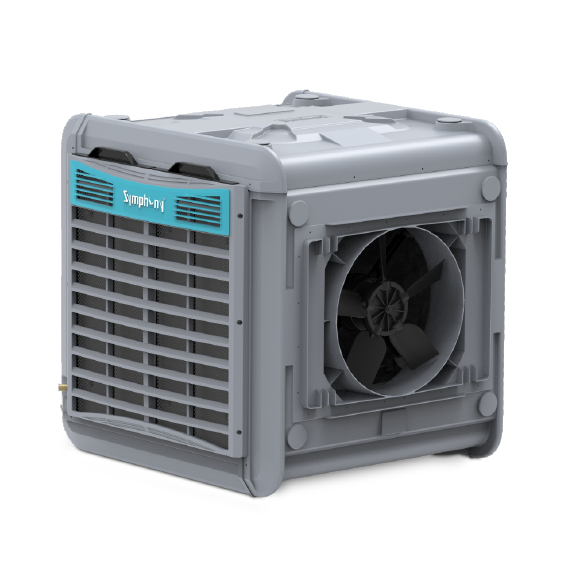
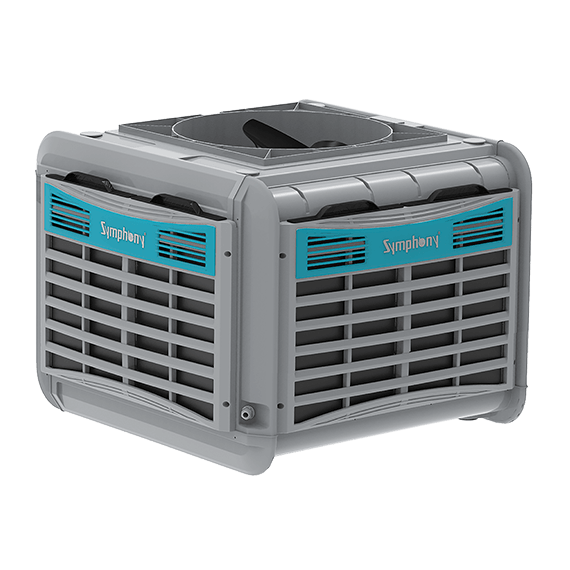
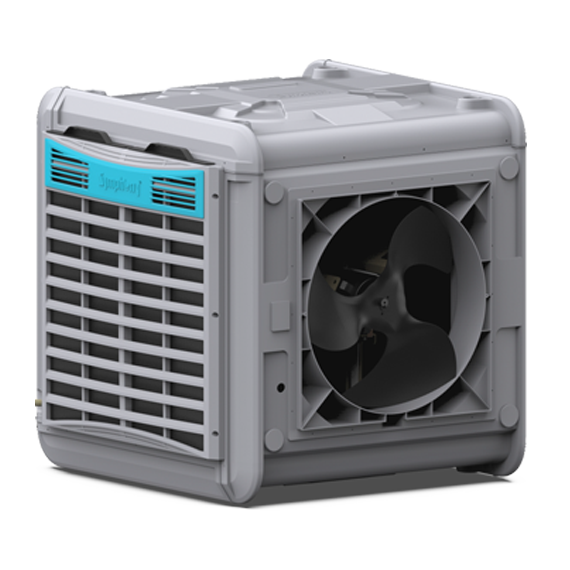
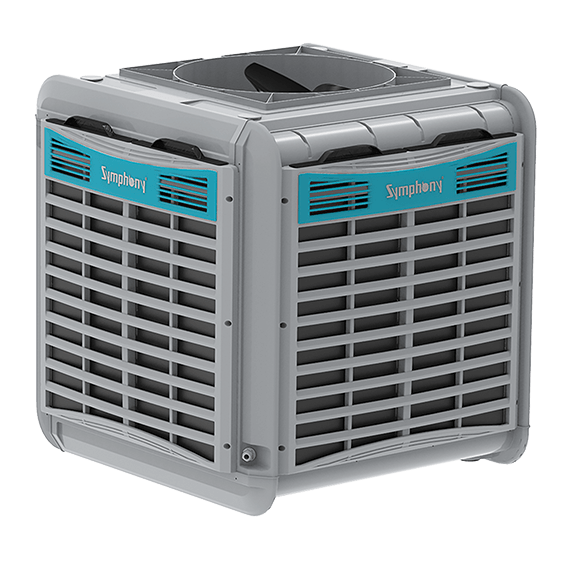
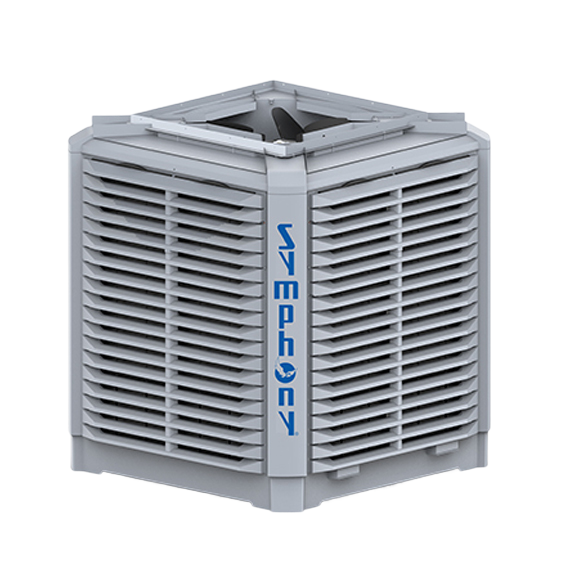
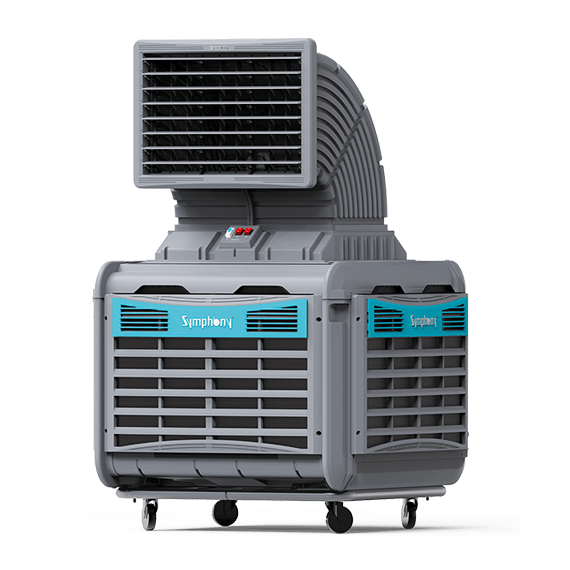
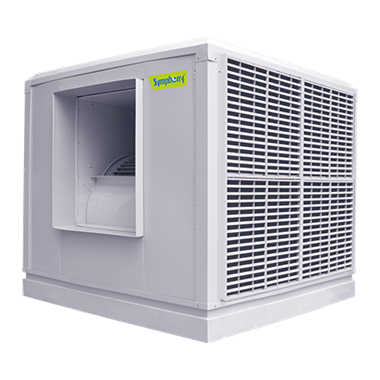
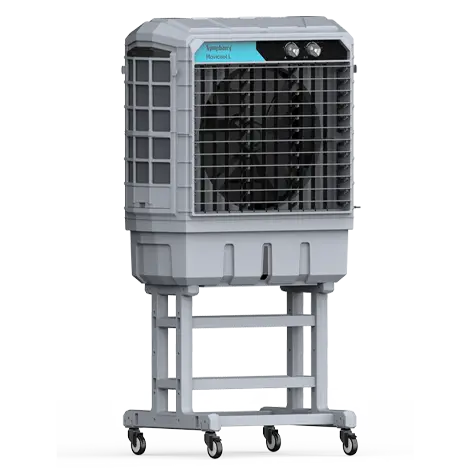
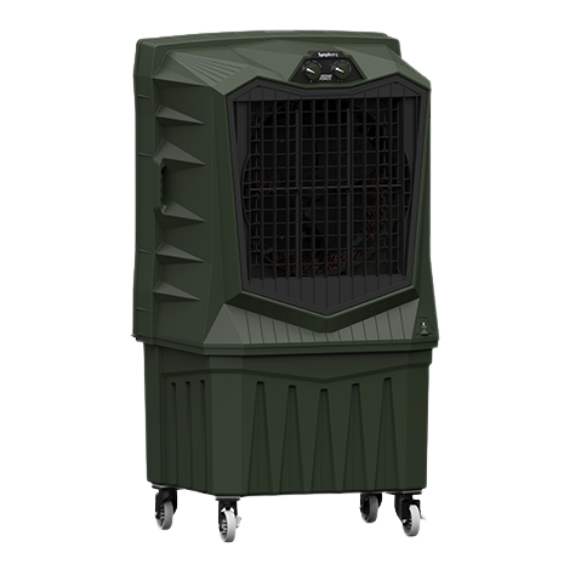
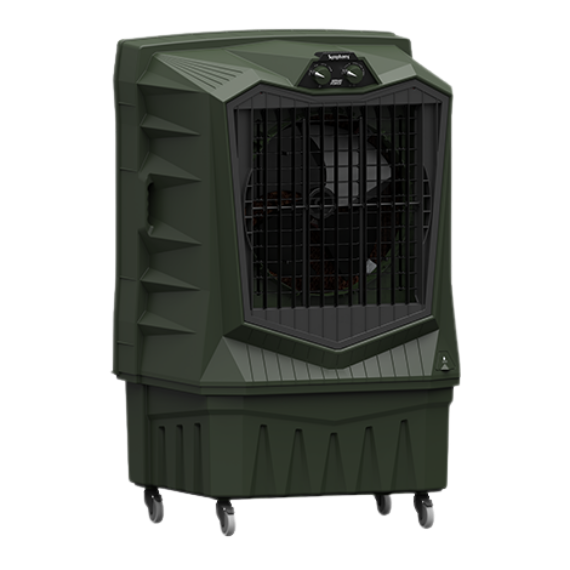
Symphony Venticool’s industrial ducting cooler range includes multiple configurations built for different installation approaches, including units with different discharge arrangements such as top, bottom and side discharge, since a configuration that suits one building may not suit another.
The selection process should weigh the airflow requirement from the CFM calculation, ceiling height, zone count requiring independent control, duct routing feasibility, and static pressure requirements against the configuration’s fan capability.
Symphony Venticool reviews layout, airflow requirement and ducting constraints together before recommending a specific Venti-Cool configuration suited to that facility.
Conclusion
Effective industrial cooler ducting design depends on far more than connecting ducts to a cooling unit. Accurate CFM calculation, correct duct sizing, controlled velocity, manageable static pressure, minimal pressure loss and well positioned outlets all work together to deliver uniform airflow distribution. Businesses that evaluate these factors alongside actual site conditions, rather than relying on cooler capacity alone, achieve more consistent cooling. Symphony Venticool supports this process by assessing site layout, airflow requirements and ducting constraints together, helping ensure the selected Venti-Cool configuration genuinely matches how each facility works.
Frequently Asked Questions About Industrial Air Cooler CFM
How Do You Design Airflow for Industrial Cooler Ducting?
What is the ideal duct size for an industrial cooler?
There is no single ideal duct size; correct sizing depends on the calculated CFM requirement, duct material, run length and branch count. Undersized ducts raise resistance and noise, while oversized ducts reduce velocity and weaken distribution. Symphony Venticool determines duct dimensions during site assessment, based on actual airflow each section carries.
How much CFM does a factory or warehouse need?
Required CFM depends on floor area, ceiling height, air change rate and heat load from machinery, lighting and occupancy. Heavier machinery areas generally need a higher air change rate than open storage. There is no fixed number for every facility, so Symphony Venticool calculates this individually for each site.
How many outlets are required for even air distribution?
Outlet count depends on zone size, ceiling height, heat sources and obstructions rather than a fixed formula. Larger open areas typically need multiple outlets instead of one central point, while smaller zones may need only one or two well placed outlets. Symphony Venticool maps outlet count against the floor plan during site evaluation.
Which duct material is commonly used for industrial cooling systems?
Industrial cooling systems commonly use galvanized sheet metal, PUF insulated panels or flexible ducting, chosen based on airflow requirement, ceiling space and budget. Each material has different friction characteristics affecting pressure loss. Symphony Venticool evaluates material selection alongside overall design.
How does static pressure affect an industrial air cooler's performance?
Static pressure is the resistance a cooling unit's fan must overcome to push air through the ducting. Long runs, sharp bends and undersized ducts increase static pressure, reducing delivered airflow below rated capacity. Symphony Venticool checks this during layout planning to keep the design within the fan's limits.
Why does airflow feel weaker at outlets far from the cooler?
Airflow often feels weaker at distant outlets because friction along the duct length, plus resistance from bends and branches, gradually reduces velocity and pressure the further air travels. This is usually a layout issue rather than an equipment issue. Symphony Venticool addresses it through balanced duct routing and, where needed, multiple distribution points.
How often should industrial cooler ducting be inspected?
Industrial cooler ducting should generally be inspected at the start of each cooling season and periodically during heavy use, checking for leaks, damaged joints, blocked outlets and damper positions. Regular inspection confirms airflow stays balanced as layouts change. Symphony Venticool's site visits can include a review of ducting condition.
What causes uneven cooling in a large factory or warehouse?
Uneven cooling is usually caused by incorrect duct sizing, unbalanced branch airflow, poor outlet placement or excessive duct length rather than insufficient cooler capacity. Heat sources and obstructions can also create localized hot spots. Symphony Venticool identifies the cause by reviewing the full ducting design during a site assessment.
Where should duct outlets be placed in a manufacturing plant?
Duct outlets should be placed near occupied work zones, machinery generating heat and areas with limited natural airflow, rather than spaced evenly across the floor. Ceiling height and obstructions such as cranes or racking also influence placement. Symphony Venticool positions outlets based on each plant's actual layout.
Who should be involved in planning industrial cooler ducting?
Planning industrial cooler ducting typically involves HVAC consultants, MEP consultants, plant engineers and facility managers, since the design touches building layout, structural constraints and operational needs. Early involvement from these roles helps avoid rework once ducting is installed. Symphony Venticool works alongside these professionals during site planning.