






Why Commercial Facilities Need to Compare Swamp Coolers and Air Conditioners
A small office can often get by with whatever cooling system was installed years ago. A factory floor or a large warehouse cannot, since these spaces are bigger, hotter from machinery and people, and often open to the outside, so a cooling approach built for a sealed room rarely performs the same way at scale. Suitability comes down to factors such as building openness, ventilation, climate, and the level of temperature or humidity control required, which is why comparing swamp coolers and air conditioners matters for facility managers and business owners planning a cooling investment.
How Does an Industrial Swamp Cooler Work Compared With an Air Conditioner?
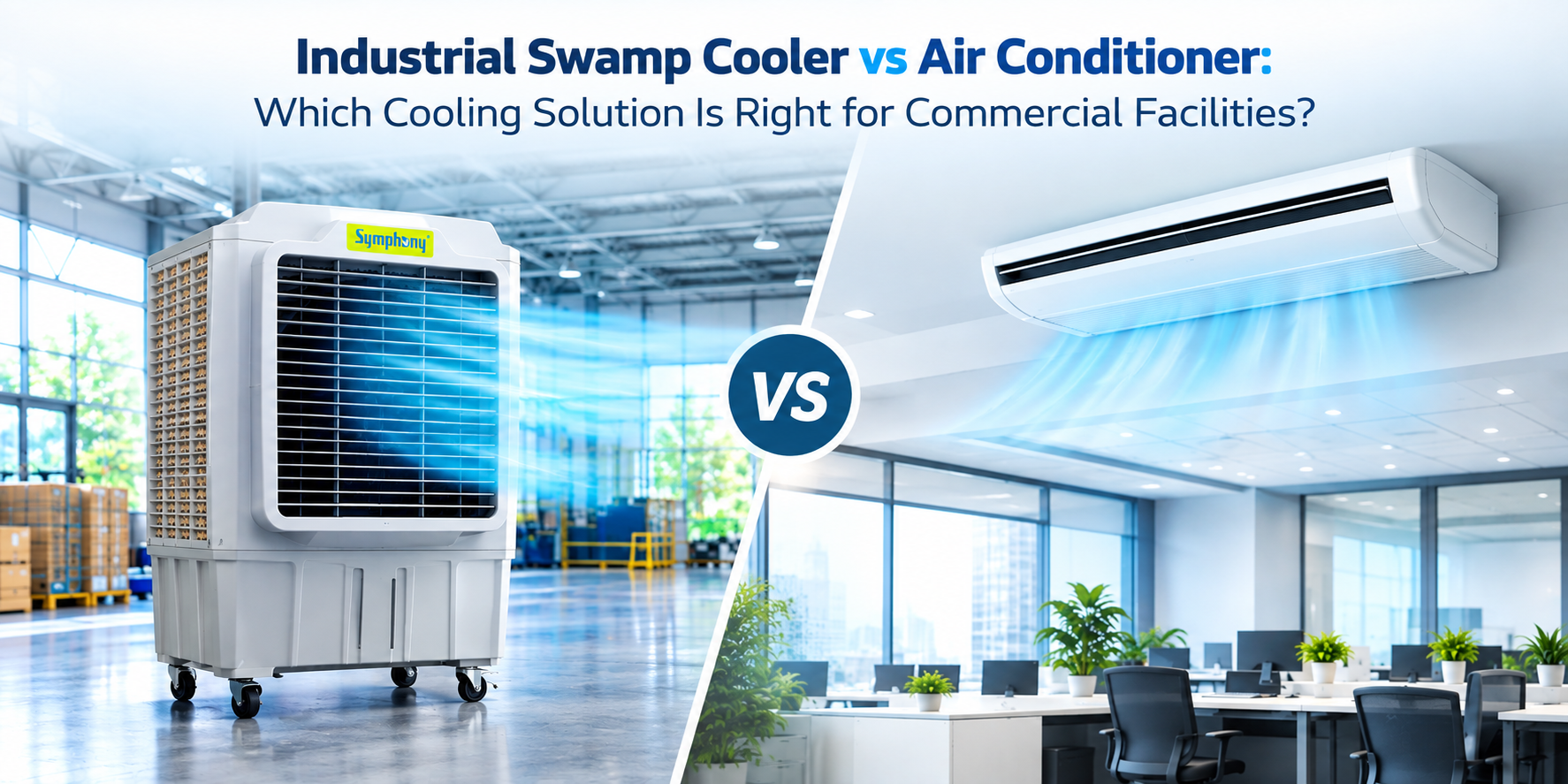
A swamp cooler, also known as an evaporative cooler, pulls warm outside air through water-soaked cooling pads. As the water evaporates, it absorbs heat, and a fan pushes this cooler, more humid air into the space while existing warm air moves out through doors, vents, or openings. Because it depends on outside air moving through the building, it performs best where genuine airflow exists rather than in a sealed box.
In a typical air conditioning system, refrigerant is used to remove heat from indoor air, while the conditioned air is recirculated through the space. Fresh air ventilation can be provided separately or as part of the HVAC design, but the core cooling process itself relies on mechanical refrigeration rather than outside air movement, which is why it suits tightly sealed spaces that need temperature and humidity held within a narrow range.
At industrial scale, this difference shows up in how a facility is laid out rather than just how the air is cooled. High ceilings, multiple work zones, ducting runs and the position of air discharge points all influence how evenly an evaporative system performs across a large floor, which is why models are typically sized and configured differently depending on the area and layout they need to cover.
Swamp Cooler vs Air Conditioner: Key Differences at a Glance
The factors below offer a quick decision framework rather than declaring one technology universally better.
Factor | Swamp Cooler / Evaporative Cooling | Air Conditioner |
Cooling principle | Cools air through water evaporation | Removes heat using a refrigerant |
Air movement | Introduces and moves fresh outside air | Primarily conditions and recirculates indoor air |
Building suitability | Works well in open or semi-open spaces | Generally better suited to enclosed spaces |
Climate considerations | Performs best in drier conditions | Provides controlled cooling across a wider range of humidity conditions |
Installation approach | Placement plus ducting and water supply | Ducting, refrigerant lines and compressor load |
Maintenance | Pads, water system, fan and motor | Refrigerant, coils, filters and compressor |
Typical application | Factories, warehouses, workshops, large halls | Offices, clean rooms, precision facilities |
What Are the Operating Cost Considerations for an Industrial Swamp Cooler?
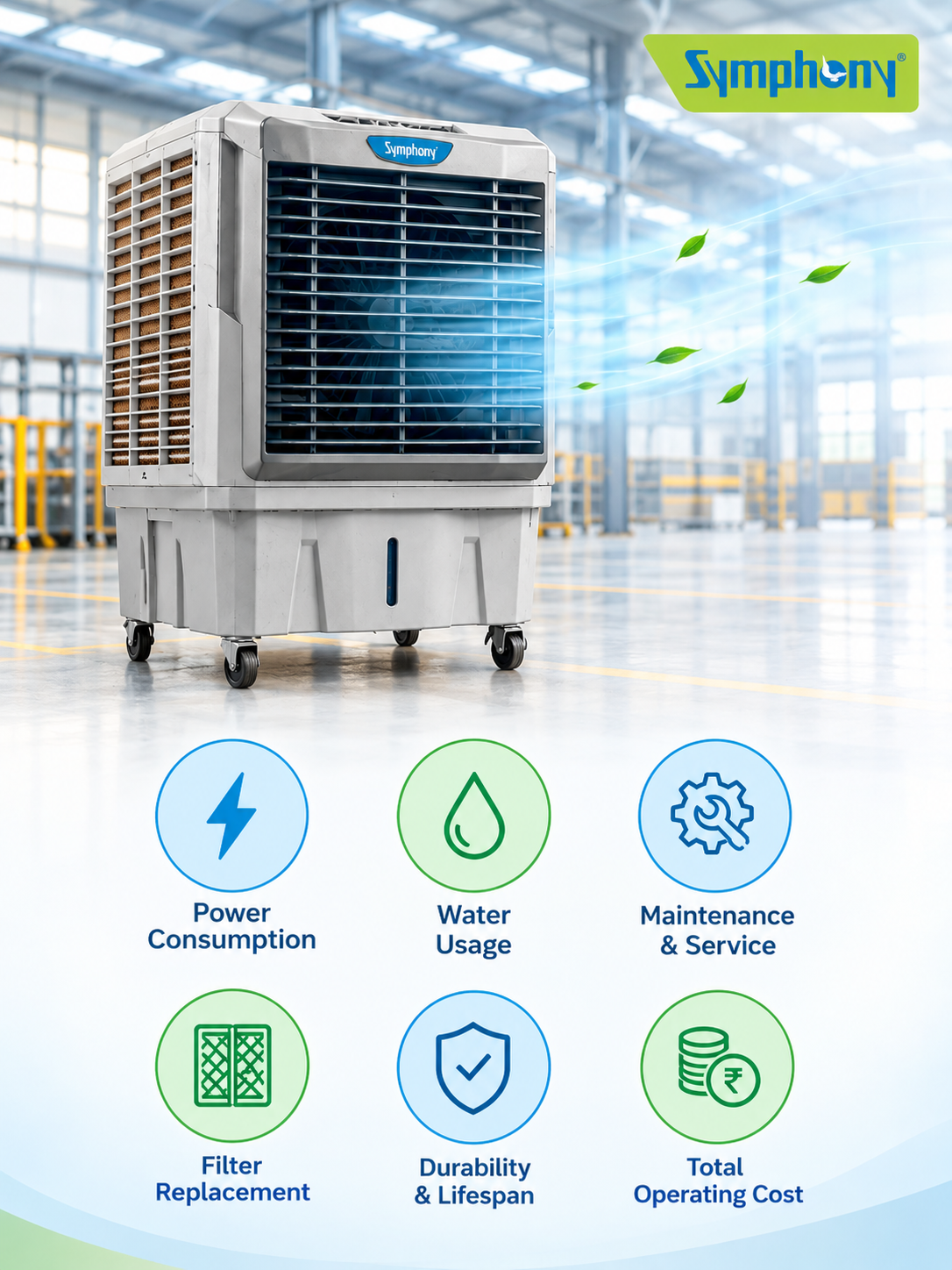
Operating cost depends less on the technology label than on the facility itself, including space size, running hours, number of units and overall cooling load, so figures vary from site to site.
Generally, evaporative systems draw less power than compressor-based refrigeration, since they are not fighting the same heat load through mechanical compression. Symphony states that its large space ventilation cooling systems can use up to 90% less electricity than conventional HVAC. Actual energy consumption and operating costs depend on factors such as electricity rates, operating hours, building characteristics, and system configuration. These are Symphony’s published figures, and actual operating costs depend on factors such as electricity rates, running hours, building characteristics, and system configuration.
What Ventilation Does an Evaporative Cooling System Need?
Because a swamp cooler continuously introduces outside air, a facility needs somewhere for that indoor air to exit before installing one. A few practical questions help with this assessment.
Where will cooled air enter the space, and where will warm air leave it? Are existing doors or loading bays enough, or are dedicated exhaust openings needed? Will internal partitions or stored goods block airflow between zones? Do different areas of the facility need separate air distribution, and will that require ducting to reach them? Working through these questions before installation, rather than after, is what determines whether an evaporative system performs as expected.
What Climate Conditions Affect Swamp Cooler Performance?
Evaporative cooling generally performs best where outdoor air is not heavily saturated with moisture, and less predictably where humidity stays consistently high. Suitability still depends on the specific site rather than a single regional rule, since conditions vary through the day and across seasons, so local humidity patterns and the building’s openness are worth assessing together rather than in isolation.
Symphony notes that its large space venti cooling approach is not recommended for sealed spaces requiring precise temperature control, humidity control or clean room conditions, since those needs are better served by conventional systems.
Our Other Product
Venti-Cool 22S - Industrial Ducting CoolerHow Do Installation Requirements Differ for Swamp Cooler and AC?
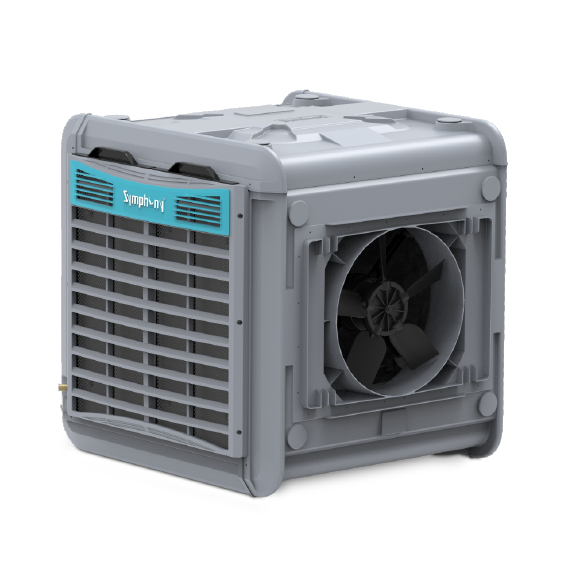
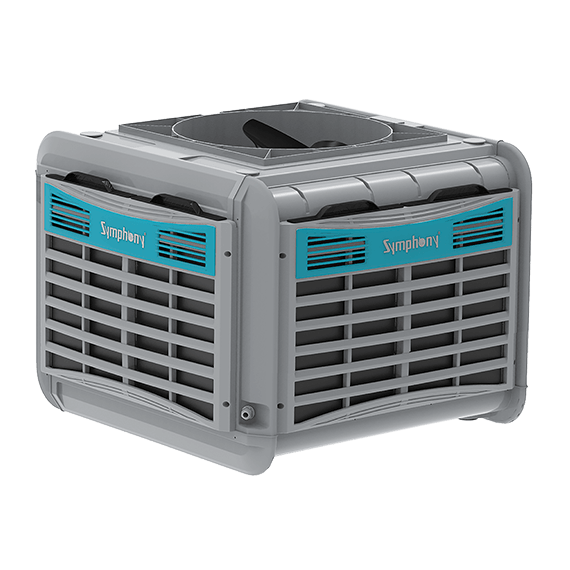
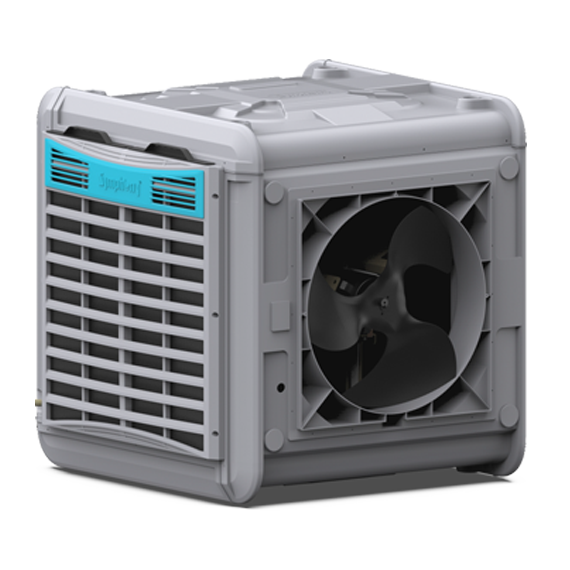
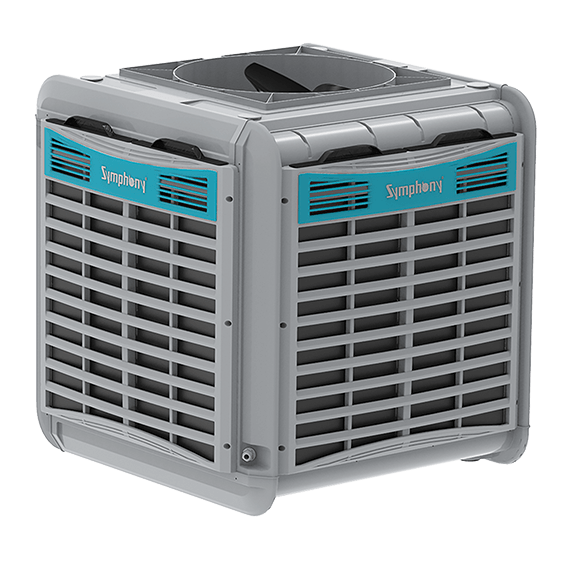
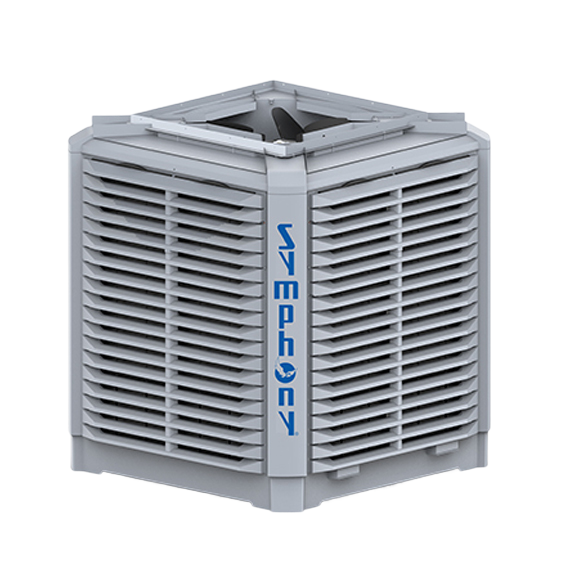
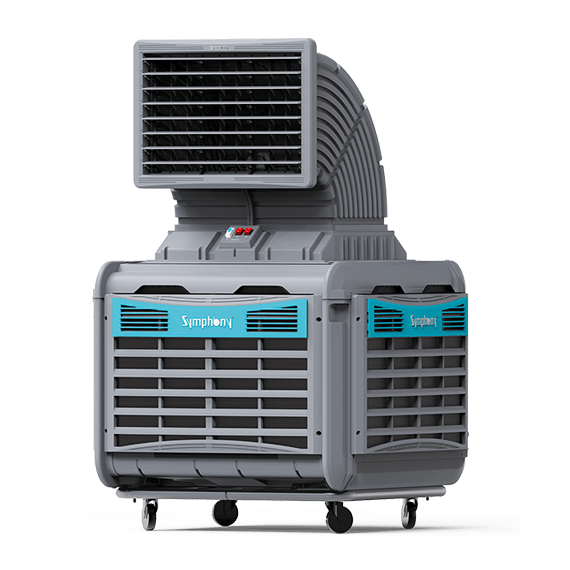
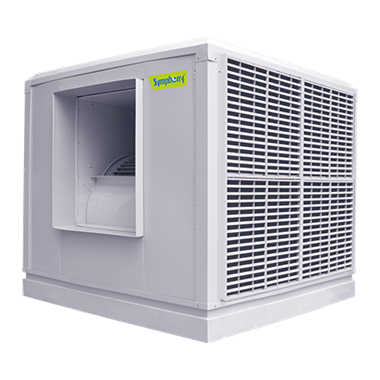
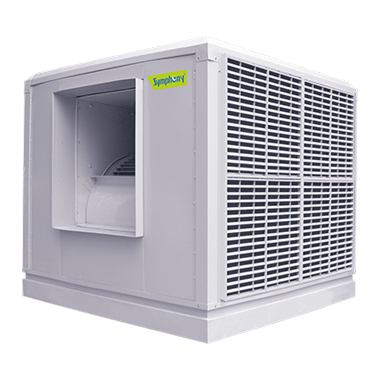
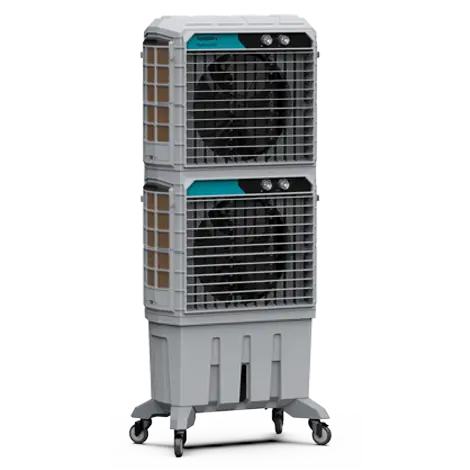
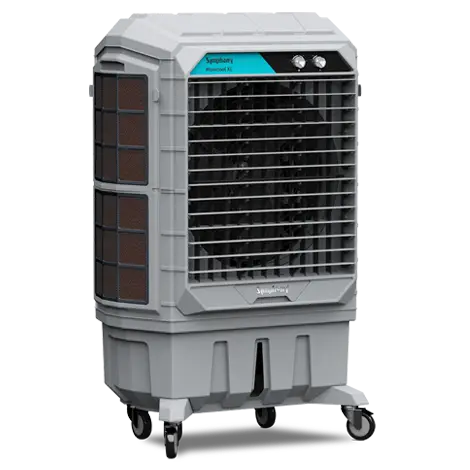
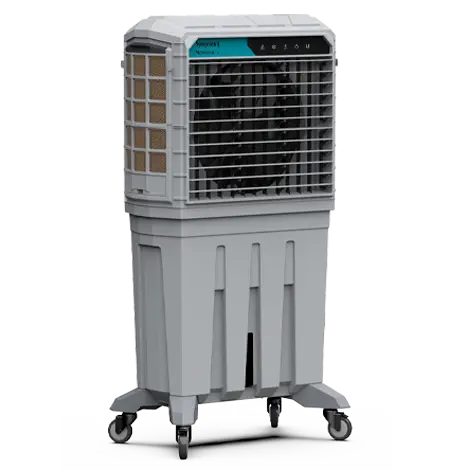
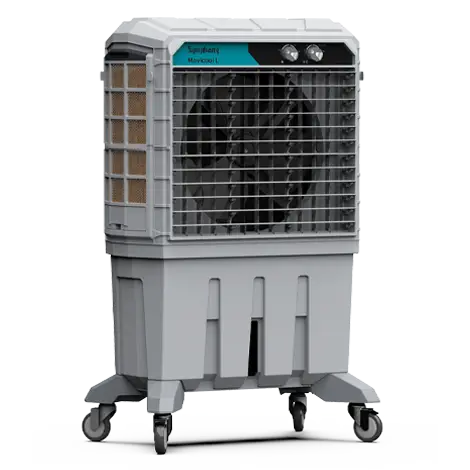
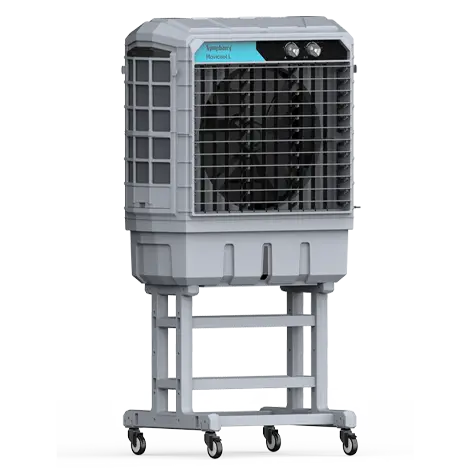
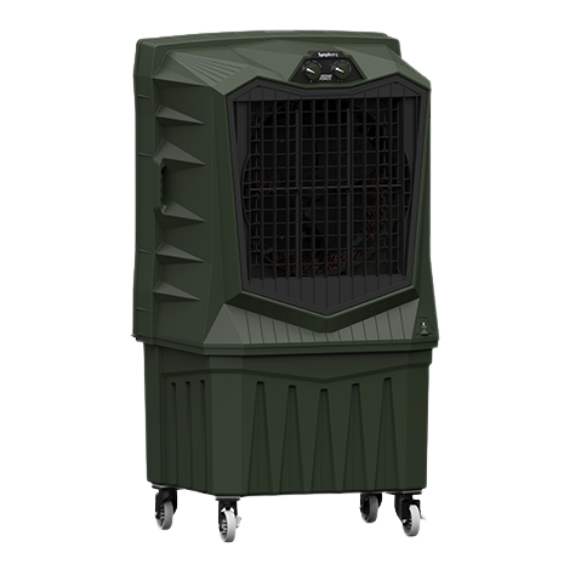
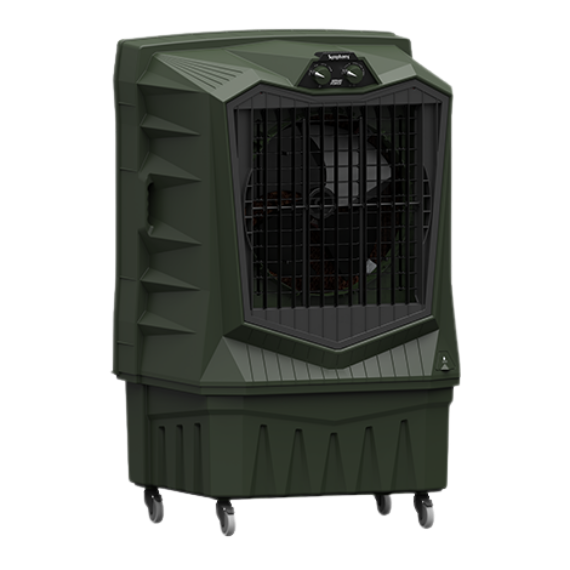
Installation for a swamp cooler generally centers on equipment placement, air discharge points and water supply access, while conventional air conditioning typically involves equipment placement, ductwork where applicable, refrigerant lines and electrical infrastructure for the refrigeration system. The exact approach varies by model. Symphony’s Venti Cool 11U discharges air from the top, bottom and side, for example, while the duct air cooler discharges from the top and bottom, and the heavy duty cooler is a portable unit with top discharge and lockable wheels, so the right configuration depends on the facility’s layout rather than a single fixed method.
Symphony positions fast installation as a practical advantage, stating that its coolers can be installed within a few hours on site, compared with weeks or months for a full HVAC setup.
What Maintenance Does Each Cooling System Require?
Both approaches need regular attention, but the components differ. Evaporative systems rely on cooling pads, water tanks, pumps and fans, so upkeep involves checking and periodically replacing pads, keeping the water system clean and inspecting the fan and motor. Air conditioning depends on refrigerant charge, coils, filters and compressors.
Maintenance needs also vary by model and operating conditions, so a facility manager should check what a specific unit requires rather than assuming every evaporative cooler follows the same schedule.
Where Are Industrial Swamp Coolers Used?
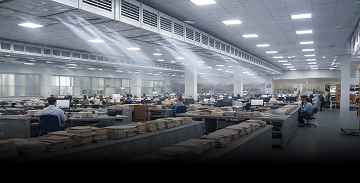
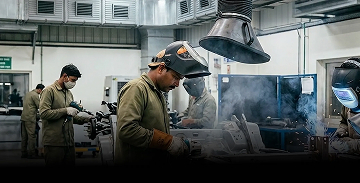
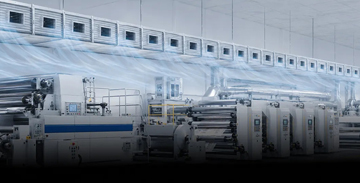
Industrial swamp coolers suit facilities that are large, partially open, and generate heat from machinery or people, since these are the conditions where conventional air conditioning becomes expensive and hard to sustain. Typical settings include factory shop floors, warehouses, workshops, and packaging areas.
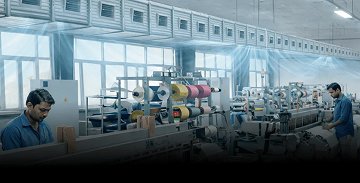
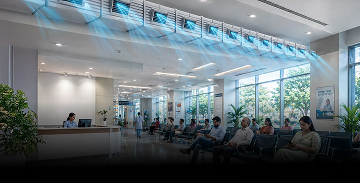
Symphony documents its large space ventilation cooling systems being used across textile manufacturing, healthcare facilities, government institutions, educational institutions, automotive plants and food processing units, reflecting the range of large or semi-open sites where the approach is applied.
How Should a Facility Evaluate the Two Options?
An evaporative approach tends to fit when the facility is open or semi-open, fresh air movement is desirable, the objective is general heat reduction rather than exact temperature control, and the site can accommodate water supply and airflow requirements.
Conventional air conditioning tends to fit when the building is enclosed, temperature needs to be held within a tight range, humidity control matters, or the process itself, such as a clean room, requires conditioned rather than fresh air.
Beyond this initial fit, a facility manager should also confirm practical points before choosing equipment: how much coverage or how many units the space needs, what installation constraints exist on site, and what ongoing maintenance access is available.
Industrial Cooler Solutions from Symphony Venticool
Symphony Venticool’s large space venti cooling range covers several capacities for open and semi-open industrial and commercial spaces. The Venti Cool 11U covers up to around 700 square feet with a 0.45 kW motor and 11,000 CMH air delivery through top, bottom and side discharge. The Venti Cool 20U covers up to around 1,200 square feet with a 1.1 kW motor and 20,000 CMH air delivery through top and bottom discharge. The Venti Cool 22S covers up to around 1,300 square feet with a 1.1 kW motor; the Venti Cool 25U covers up to around 1,600 square feet with a 1.5 kW motor, and the Venti Cool 40 covers up to around 2,500 square feet with a 3 kW motor and 40,000 CMH air delivery.
For facilities that need to reposition equipment, the Movicool XXL is a portable option offering 20,000 CMH airflow with auto swing louvers and lockable wheels, covering up to around 1,500 square feet. Across the range, units are built with UV-stabilized engineering plastic bodies. Businesses can match a model’s coverage area and discharge configuration to their facility before deciding.
Conclusion
The practical comparison is less about choosing between two cooling labels and more about matching the cooling method to the building. Commercial facilities can evaluate airflow, environmental conditions, cooling objectives, installation requirements, and operating priorities before deciding whether an industrial swamp cooler such as Symphony Venticool’s large space venti cooling range, or conventional air conditioning, fits the site.
Industrial Swamp Cooler FAQs
Industrial Swamp Cooler vs Air Conditioner: Which Cooling Solution Is Right for Commercial Facilities?
What is a swamp cooler?
A swamp cooler, also called an evaporative cooler, cools air by pulling it through water-soaked pads, then pushes the cooler, more humid air into the space while pushing warm indoor air out.
How is an industrial swamp cooler different from a household cooler?
An industrial swamp cooler is designed for larger spaces and higher airflow requirements than a typical household cooler. The Venti Cool industrial ducting cooler range includes models with airflow from 11,000 to 40,000 CMH, with stated coverage ranging from around 700 to 2,500 square feet per unit.
Does a swamp cooler use less electricity than an air conditioner?
Evaporative cooling generally uses less electricity than compressor-based air conditioning because it does not use the same refrigeration cycle. Symphony states that its large space ventilation cooling systems can use up to 90 percent less electricity than conventional HVAC, though actual consumption varies by facility, operating hours, climate, and system configuration.
Can a swamp cooler work in humid conditions?
Evaporative cooling is generally more effective in drier climates, since the process relies on water evaporating into the air. In consistently humid conditions, the cooling effect can be reduced, so local climate should be assessed before choosing this approach.
Does a swamp cooler require ventilation to work properly?
Yes. Because it continuously introduces outside air, the facility needs somewhere for indoor air to exit, whether through vents, bays, or dedicated openings, or heat and humidity can build up rather than clear.
How much maintenance does an industrial swamp cooler need?
Upkeep generally involves checking cooling pads, keeping the water tank and pump clean, and inspecting the fan and motor periodically, though specific requirements vary by model.
Where are industrial evaporative coolers used?
They are used in large or semi-open facilities such as factories, warehouses and workshops. Symphony Venticool also documents applications across textile, healthcare, education, automotive and food-processing environments.
When is conventional air conditioning more suitable than a swamp cooler?
Air conditioning is generally the better fit for sealed spaces that require precise temperature or humidity control, such as clean rooms or certain precision manufacturing lines, since evaporative cooling adds moisture to the air as part of its process.