









AI Summary
Choosing a heavy duty cooler for a hot production floor starts with one distinction: cooling an occupied workstation is a different task from cooling a wider production area. This article uses foundry, welding and furnace scenarios to show which areas need targeted airflow, where a cooler might sit and what to confirm first. This guide focuses on airflow planning for worker comfort. Confirm cooler suitability near hot processes and compatibility with existing extraction for each site.
Industrial Evaporative Air Cooler Basics for Heavy Duty Cooling
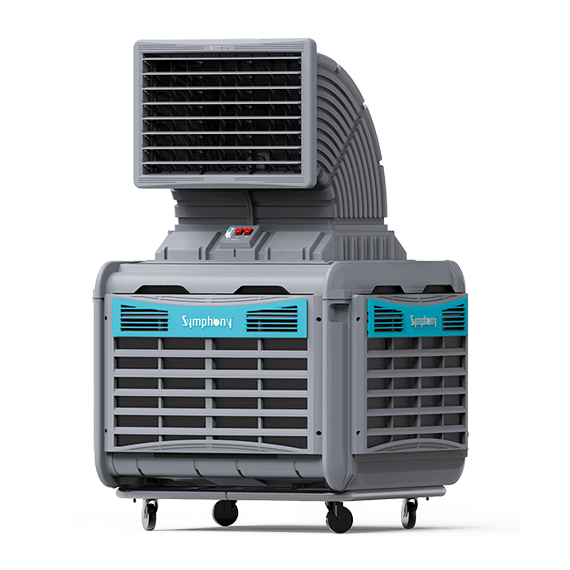
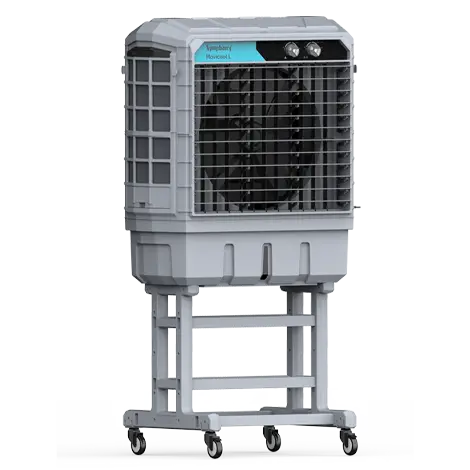
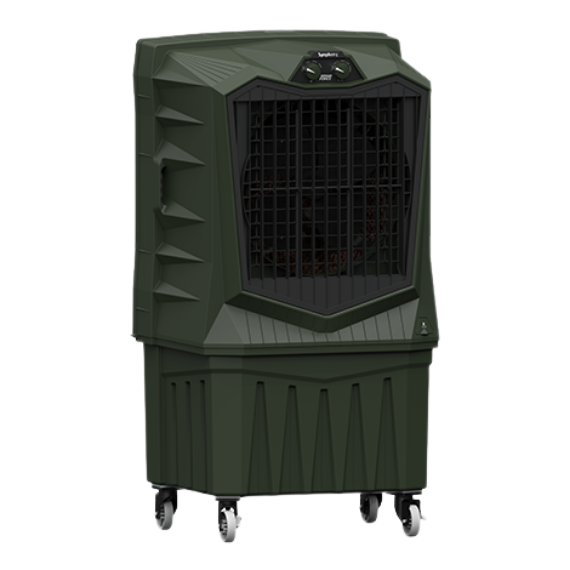
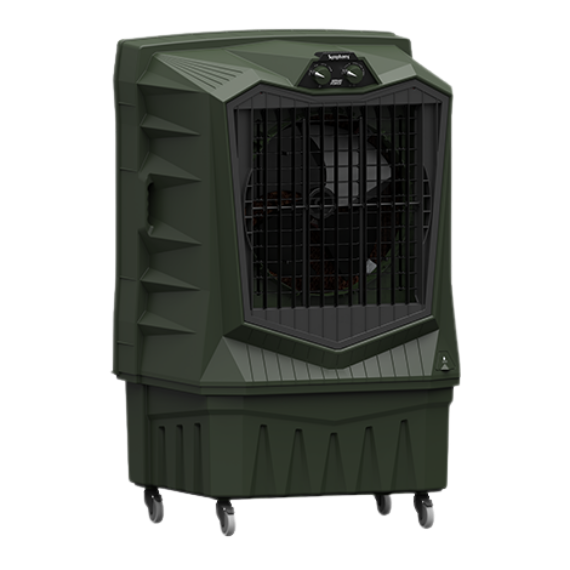
Symphony Venticool manufactures industrial evaporative air coolers, which draw warm air through wet cooling pads where evaporation lowers the air temperature. Its range includes portable units and models designed for ducting.
When selecting an industrial heavy duty air cooler, start by mapping how cooled air needs to reach the occupied work zones.
This is air cooling with ventilation: the coolers combine evaporative cooling with fresh air ventilation. That makes the building’s existing air movement part of every decision below.
The foundry and furnace examples in this article are planning scenarios. The welding discussion includes one installation documented by Symphony.
High Temperature Industrial Cooling Near Hot Processes
Symphony’s general sizing guide calculates airflow for a whole space: floor area multiplied by ceiling height multiplied by air changes per hour. Its illustrative example uses 100 m² with a 10 m ceiling and 20 air changes per hour, giving 20,000 CMH.
That figure estimates the airflow required for the space at the assumed air change rate. Airflow at each individual workstation is a separate check.
Before adding capacity near a hot process, confirm three points about the current setup:
- Whether air from the existing industrial air cooling system reaches occupied positions while production runs
- How far air must travel from the cooling unit to the work zone
- What sits along that path
Where air needs to reach more occupied positions, review distribution before adding capacity.
How a Heavy Duty Cooler Can Support Worker Comfort
Symphony’s large space cooling solutions are designed to enhance employee comfort in manufacturing units. Near hot equipment, planning for that outcome starts with a clear record of where people actually work.
Consider an illustrative foundry inspection station where staff check castings for long periods each shift. It is a planning example that shows the kind of position a cooling plan should be built around.
For each occupied position on the floor, record:
- Number of people: this helps identify which work positions need airflow.
- Time spent there during production: this shows which positions justify dedicated airflow.
Industrial Heavy Duty Air Cooler Placement Near Machinery
With occupied positions recorded, review each proposed cooler location against them.
| Check | What to confirm |
| Airflow path | Machinery or other equipment between the discharge and the work zone |
| Discharge type | Which documented arrangement suits the mounting point |
| Ducting | Whether the model is documented for ducted distribution |
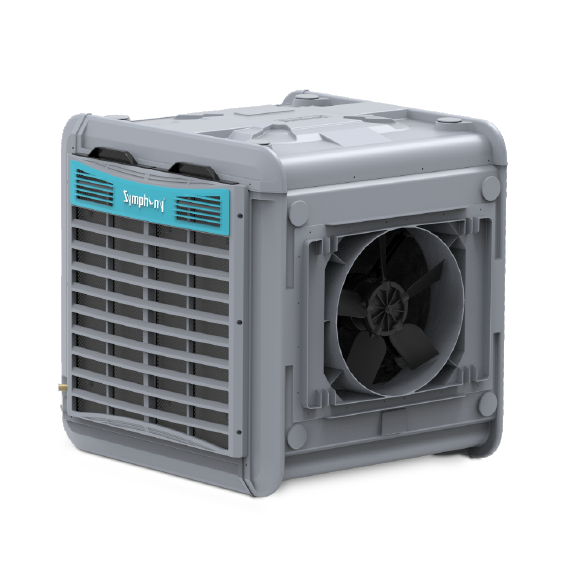
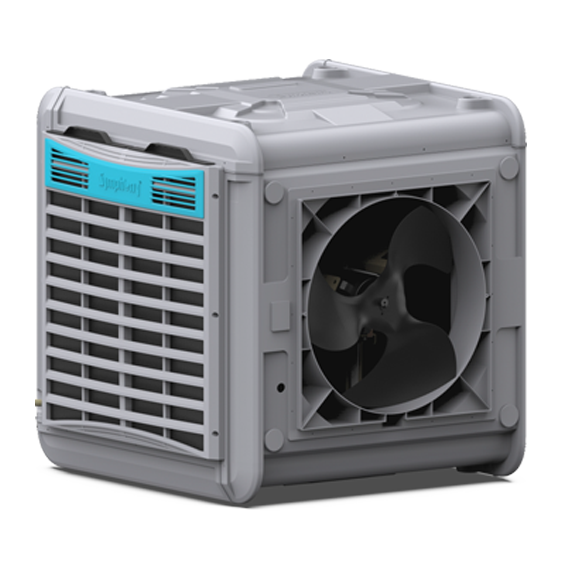
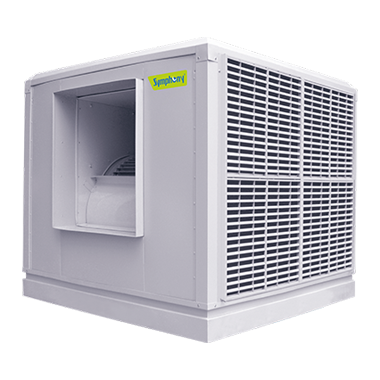
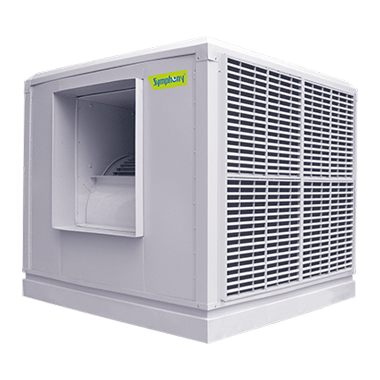
Symphony describes ductable coolers in roof installed, wall mounted, side discharge and down discharge types. If you are considering an industrial air cooler with ducting, confirm which discharge arrangement the selected model offers.
Symphony’s general installation guidance for industrial evaporative coolers recommends:
- Installing coolers outside the premises, on roofs or walls as required
- Keeping at least 10 feet of clearance from plumbing and exhaust vents
- Leaving 3 feet of clearance around the cooler for maintenance
- Connecting a water line and inspecting the float valve regularly
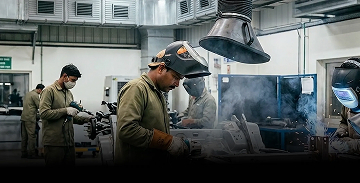
Welding shop: Confirm how the proposed discharge would interact with existing extraction. Review the positions of cooler outlets and extraction points together with your facility engineer.
Furnace area: List the operating conditions at the proposed location and confirm the operating range of the selected model. Matching the model to these conditions comes before final selection.
Spot Cooling Versus General Industrial Air Cooling
Symphony’s general guide describes two main cooler types. Portable figures vary by model, so match each model’s rating to your space.
| Type | Documented details |
| Portable evaporative cooler | Capacities up to 20,000 CMH, covering up to 1,500 sq. ft. per cooler |
| Ductable evaporative air cooler | Distributes air through rectangular or spiral ducts, discharging via nozzle diffusers or linear supply air grills |
Match the type to the work pattern:
| Work pattern | What to evaluate |
| A few defined stations, such as fixed welding booths | Whether outlets can be aimed at each station |
| Several occupied bays in a foundry | How many outlets are needed so every occupied bay is served |
| A larger occupied area | Total airflow from the sizing formula |
With a ducting installation, Symphony coolers can direct cool air to specific workstations or hot spots on the factory floor. Documented example: Tata Steel welding lab. Symphony’s installation record for Tata Steel in Jamshedpur lists two SPS 45 side discharge units serving a 4,350 sq. ft. welding lab, connected to a 90 ft duct with 10 outlets.
The record shows how one welding lab was equipped. Each new site, including welding shops and furnace areas, should be assessed on its own layout and operating conditions.
Symphony Venticool Options for Industrial Air Cooling
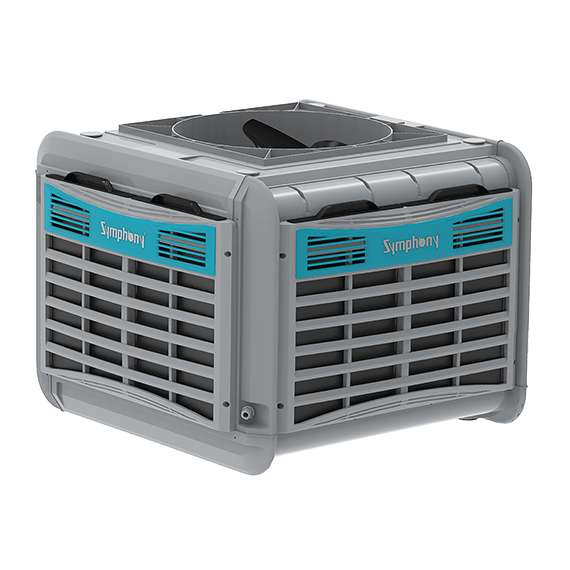
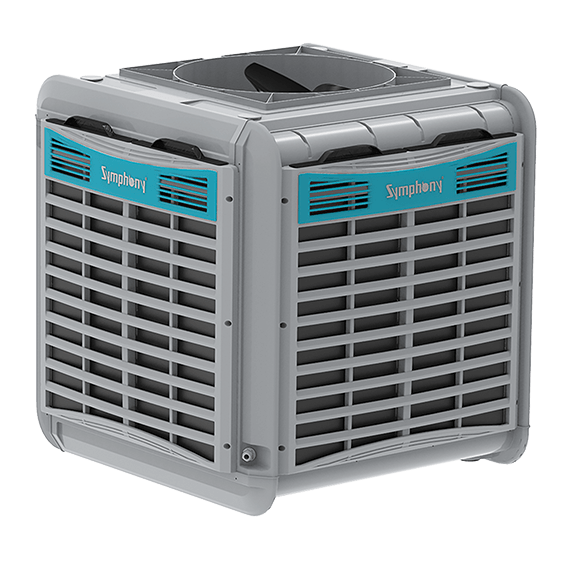
For ducted distribution, the Venticool 40 industrial ducting cooler shows how listed features connect to the decisions above.
| Feature | Listed detail | Decision it informs |
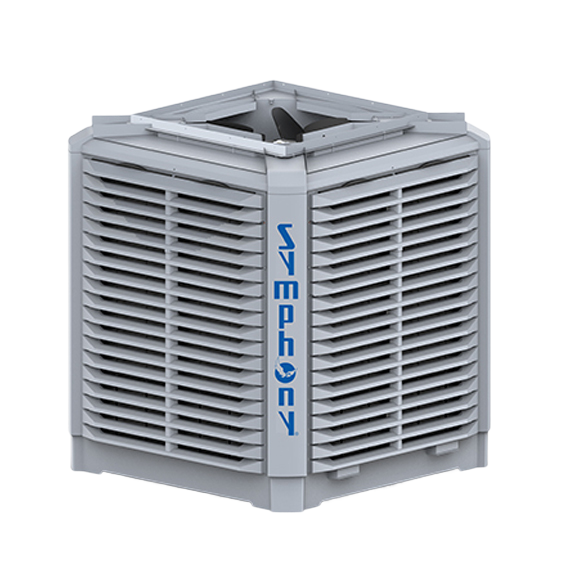
| Discharge variants | VC40D (down) and VC40T (top) | Which variant suits the mounting point |
| Nominal air delivery | 40,000 CMH | Whether capacity matches the sizing calculation |
| Listed coverage | Up to 2,500 sq. ft. listed coverage | Whether the model warrants a site assessment for the proposed area |
| Air outlets | Up to 20 | How many positions one unit’s duct layout could serve |
| Cooling media | 100 mm honeycomb pads with a pre filter to protect the pad | What routine pad care to plan for |
| Input supply | 415 V, 50 Hz, three phase | Whether suitable supply reaches the location |
| Operating weight | 181 kg | Whether the mounting point can carry the unit |
Symphony’s specified values include a standard measurement tolerance of plus or minus 15%. Symphony lists textile factories, manufacturing plants, assembly lines, warehouses, automotive workshops and semi open industrial spaces as suitable applications for this model. For foundries, welding shops and furnace areas, Symphony’s team can review your operating conditions during a free site visit.
When comparing industrial coolers, Symphony also suggests checking case material and thickness, cooling pad size and thickness, motor wiring and verified airflow volume.
About Symphony Venticool Industrial Evaporative Air Coolers
Symphony Venticool is the Large Space Venticooling (LSV) range from Symphony Limited, based in Ahmedabad, Gujarat. The range covers industrial ducting coolers and commercial portable air coolers.
Symphony lists industry solutions for textile, automotive, food processing, plastic processing, moulding and packaging, healthcare, government institutions and educational institutions. It also publishes installation records and case studies from industrial sites.
Conclusion: Heavy Duty Cooler Planning for Industrial Work Zones
Selection starts with the layout. Mark the hot equipment, occupied workstations and existing ventilation points on your plant layout. Book a free Symphony Venticool site visit and share your layout, operating conditions and existing extraction points, so cooler options can be reviewed against where your people actually work.
Frequently Asked Questions About Heavy Duty Coolers
Heavy Duty Cooler for Foundries, Welding Shops and Furnace Areas: Managing Extreme Industrial Heat Exposure
How often should cooling pads in an industrial evaporative air cooler be replaced?
Change cooling pads regularly to prevent dirt and mineral buildup. Replace them when airflow drops or the pad material looks frayed. Durable pad materials such as cellulose help pads last longer.
How is water supplied to an industrial air cooling system?
Industrial coolers draw water continuously from large tanks or a float valve connection. Connect the water line to an outdoor source fitted with cut off valves, so the system can be drained for winter.
How do running costs of an evaporative cooler compare with air conditioning?
The installation cost of an evaporative cooler is similar to or slightly higher than an air conditioner. Recurring expenses are lower, which makes evaporative cooling a practical choice for most industrial buildings.
What is the difference between top, down and side discharge coolers?
Top discharge coolers cool entire rooms or workshops. Down discharge coolers sit on roofs and release cooled air downwards into the building. Side discharge coolers sit on the sides of buildings or on roofs and deliver air through straight or U bends.
Where are industrial air coolers commonly used?
Common applications include factories, workshops, warehouses, manufacturing plants, loading docks, hangars, garages, sports arenas, gyms and commercial offices. Portable models also suit outdoor areas such as patios.
What checks come before powering up a heavy duty cooler?
Check the cooler for leaks and fill any voids around it before powering up. Seek professional help for electrical connections where needed.