
Recent advancements in Air Handling Unit (AHU) technology, highlighting improvements in energy efficiency, air quality, filtration, and smart controls. Modern AHUs use multi-stage filters, advanced heat recovery, variable-speed drives, and modular designs for better performance and lower energy use. Smart automation and predictive maintenance enhance reliability, while improved materials and acoustic features boost comfort and durability. These upgrades make AHUs more effective for ventilation and indoor climate control.





The Air Handling System (AHU) is the Heart of a Heating, Ventilating and Air Conditioning System in air coolers. Air Handling Unit takes fresh air from outside and conditions it before it is pumped into rooms through ducts. Unlike a localized Air Cooling Unit that only manages temperature in a specific zone, an AHU treats the air across an entire facility.
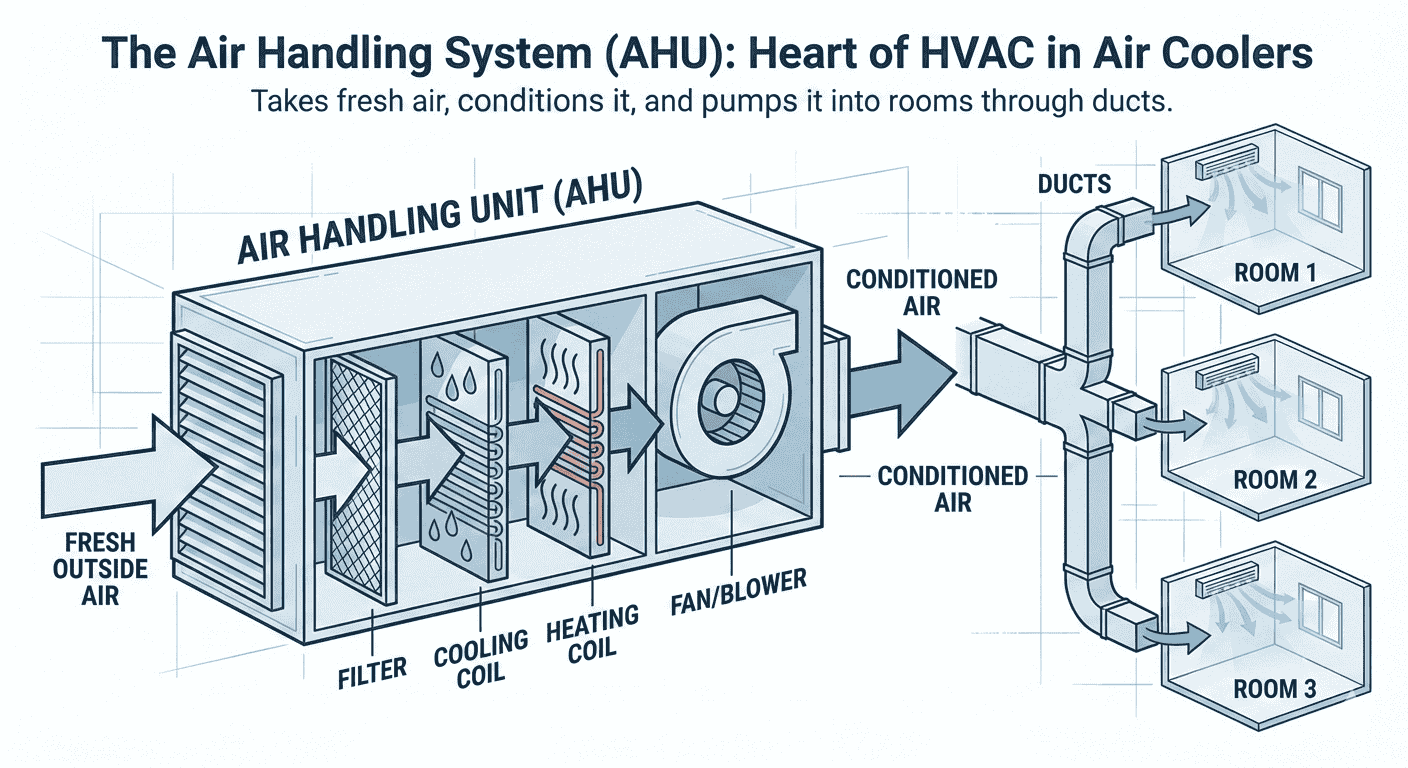
An air handling unit is a vital component of HVAC system responsible for circulating and conditioning the air within a building. This arrangement consists of various components such as fans, filters, coils, dampers, and controls. These parts work together to make sure the air is circulated properly, the temperature is controlled, and the air quality is maintained at a good level. For a long time, conventional Air Handling Units (AHUs) have been employed. However, recent progress has resulted in notable enhancements to their performance and effectiveness.
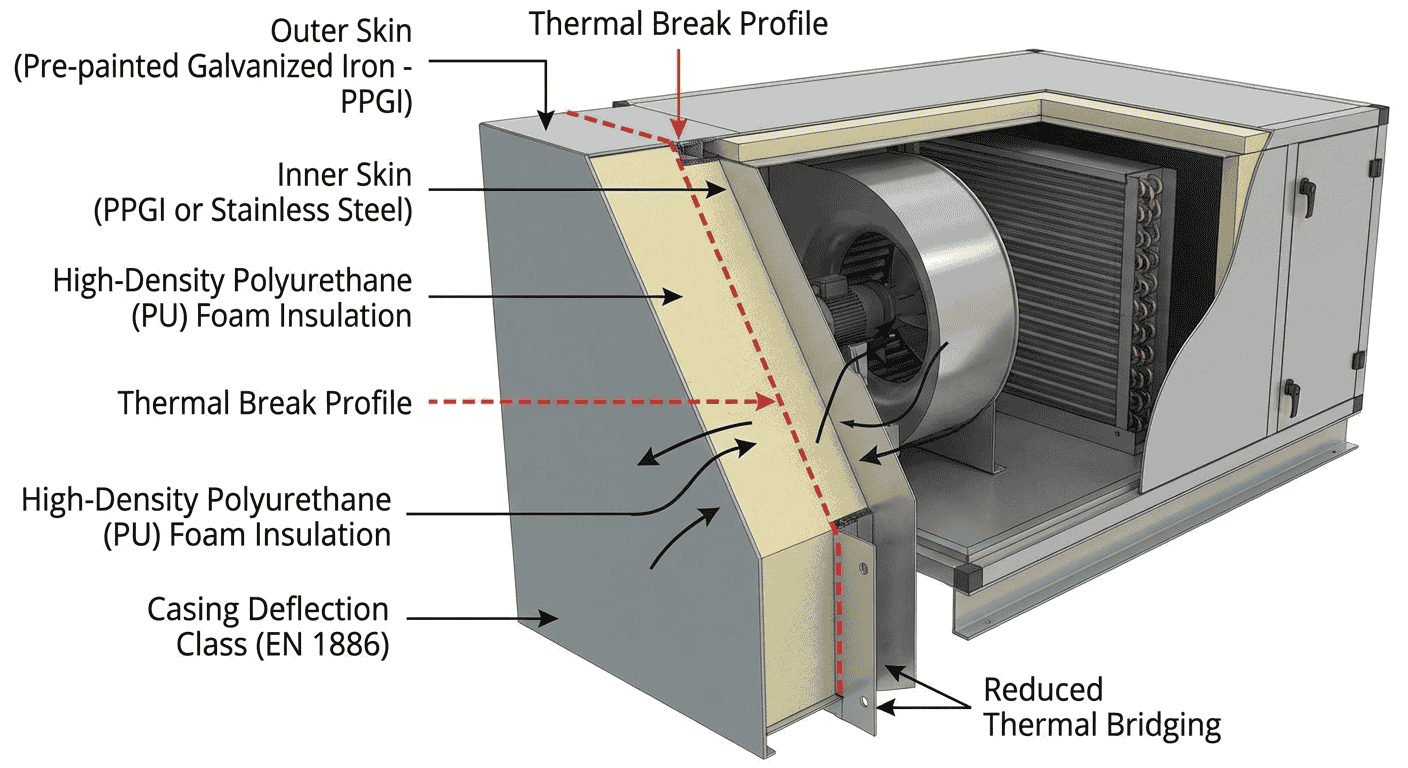
What materials and structural features are essential for a modern AHU casing’s longevity and performance?
Modern AHUs utilize double-skin panel construction with high-density polyurethane (PU) foam insulation between layers of corrosion-resistant material (e.g., pre-painted galvanized iron, or GI, and sometimes stainless steel for hygiene-critical applications). This structural integrity is measured by casing deflection (EN 1886 standard), which ensures minimal air leakage (critical for efficiency) and thermal bridging. Features like a thermal break profile prevent condensation on the exterior surface by isolating the inner and outer casings.
Why is the AHU’s acoustic performance a major commercial selling point for offices and hotels?
In premium commercial environments, noise reduction is directly tied to occupant comfort, health, and productivity. Modern AHUs minimize noise (a crucial compliance factor) through several technologies: Double-skin panel construction utilizing dense, inert acoustic insulation (e.g., mineral wool or PU foam) and Sound Attenuators (silencers) strategically placed at the fan inlet/outlet. The use of Plug Fans (centrifugal fans without a scroll) minimizes turbulence noise and allows for simpler integration into the casing. Low noise levels are vital for achieving high Noise Reduction Coefficient (NRC) standards required for a quality commercial lease.
Read Our Article: Double Skin Air Handling Units: Advantages in Industrial Cooling
Table of Contents
Energy Efficiency Improvements with AHU
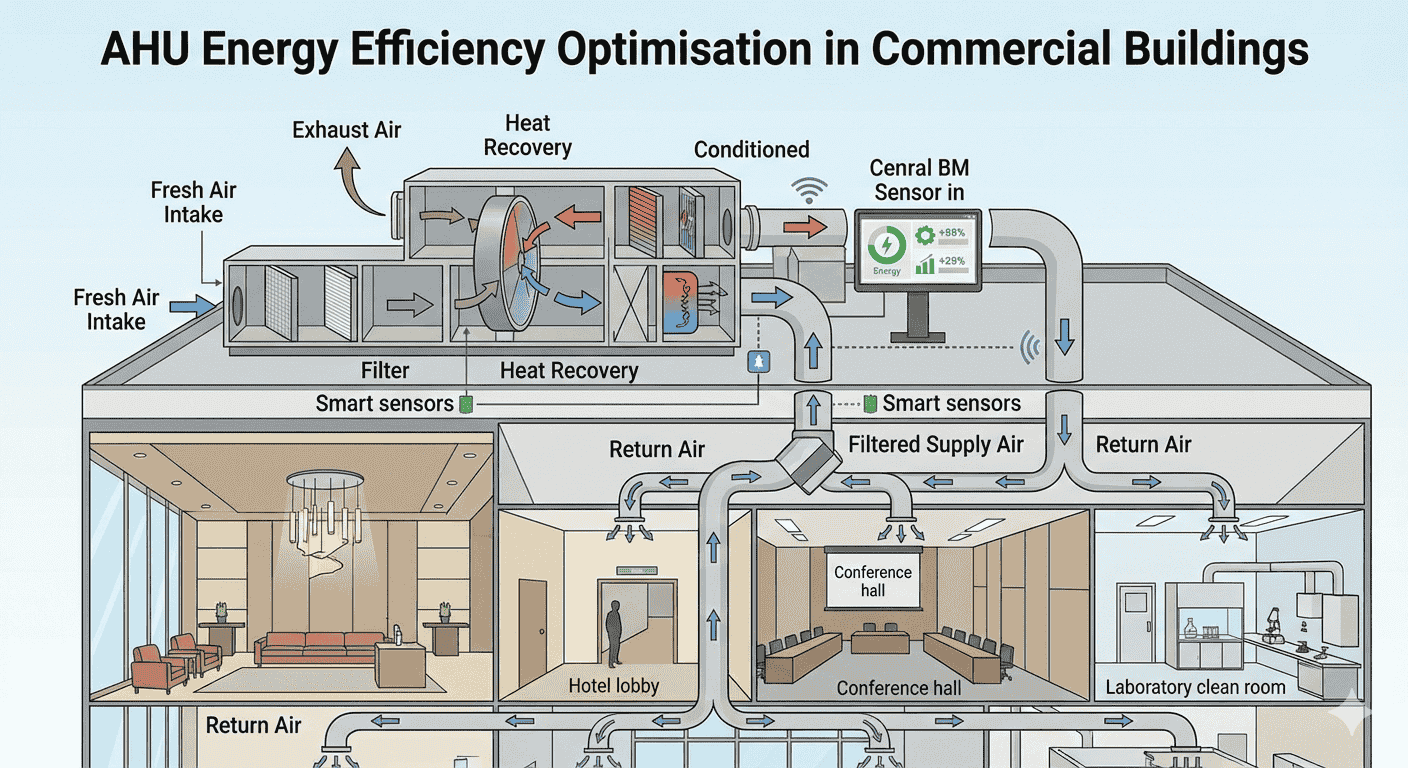
AHUs are a vital component of commercial ventilation and air-conditioning system. They manage ventilation by collecting outdoor and room (air already present in the building) air, separating them from waste air, filtering it, adjusting temperature and humidity and then distributing a fresh supply of conditioned air throughout a building using ductwork.
They are particularly useful in large spaces that have limited natural ventilation, such as hotel dining rooms and conference or convention centres, where there are many simultaneous visitors. They also help to maintain ‘clean rooms’ such as laboratories and operating theatres by removing contaminated air and replacing it with fresh air.
Beyond basic air filters, what are the current global standards for AHU filtration and why is multi-stage filtering critical?
Modern AHUs use multi-stage filtration adhering to ISO 16890 (which replaced the old EN 779 standard) or ASHRAE 52.2 (MERV rating). A typical setup involves: Pre-filters (ISO Coarse or MERV 8) to capture large particulates, Fine Filters (ePM10 or MERV 11-13) for PM10/PM2.5, and often HEPA filters (H13/H14) or ULPA filters for highly sensitive areas (like operating theaters or clean rooms, as mentioned). Multi-stage filtering is crucial because pre-filters protect the expensive high-efficiency filters from large debris, significantly extending their lifespan and maintaining low-pressure drop across the system.
Advances in energy efficiency mean that today’s air handling units are now designed to consume less energy. They do this by combining a range of technologies in an efficient package, including heat recovery and advanced control systems.
What specific types of heat recovery mechanisms are currently integrated into high-efficiency AHUs?
High-efficiency AHUs rely on various Air-to-Air Heat Recovery devices to pre-condition the fresh incoming air using the energy from the exhausted room air, significantly reducing the coil load. Key types include: 1. Run-around Coils: Uses a liquid loop to transfer sensible heat between two distant air streams. 2. Plate Heat Exchangers (or Cross-Plate Exchangers): Transfers both sensible and latent heat with no mixing of air streams, offering high energy recovery effectiveness (ERE) up to 70%. This process significantly improves ventilation cooling efficiency across wide industrial layouts. 3. Rotary Heat Exchangers (Thermal Wheels): A spinning wheel coated with an adsorbent material transfers both sensible heat and moisture (latent heat) between the air streams, achieving up to 80% ERE, making it highly effective for humidity control.
Variable-speed drives (VSDs) are now integrated into AHUs, allowing fans to operate at varying speeds based on demand, resulting in significant energy savings. Additionally, advanced control algorithms and sensors enable precise control over temperature and airflow, reducing energy wastage.
Read Our Article: The Role of AHU & Double Skin Air Handling Units in Venti Cooling for Industrial Applications
Air Handling Systems – Smart Controls and Automation
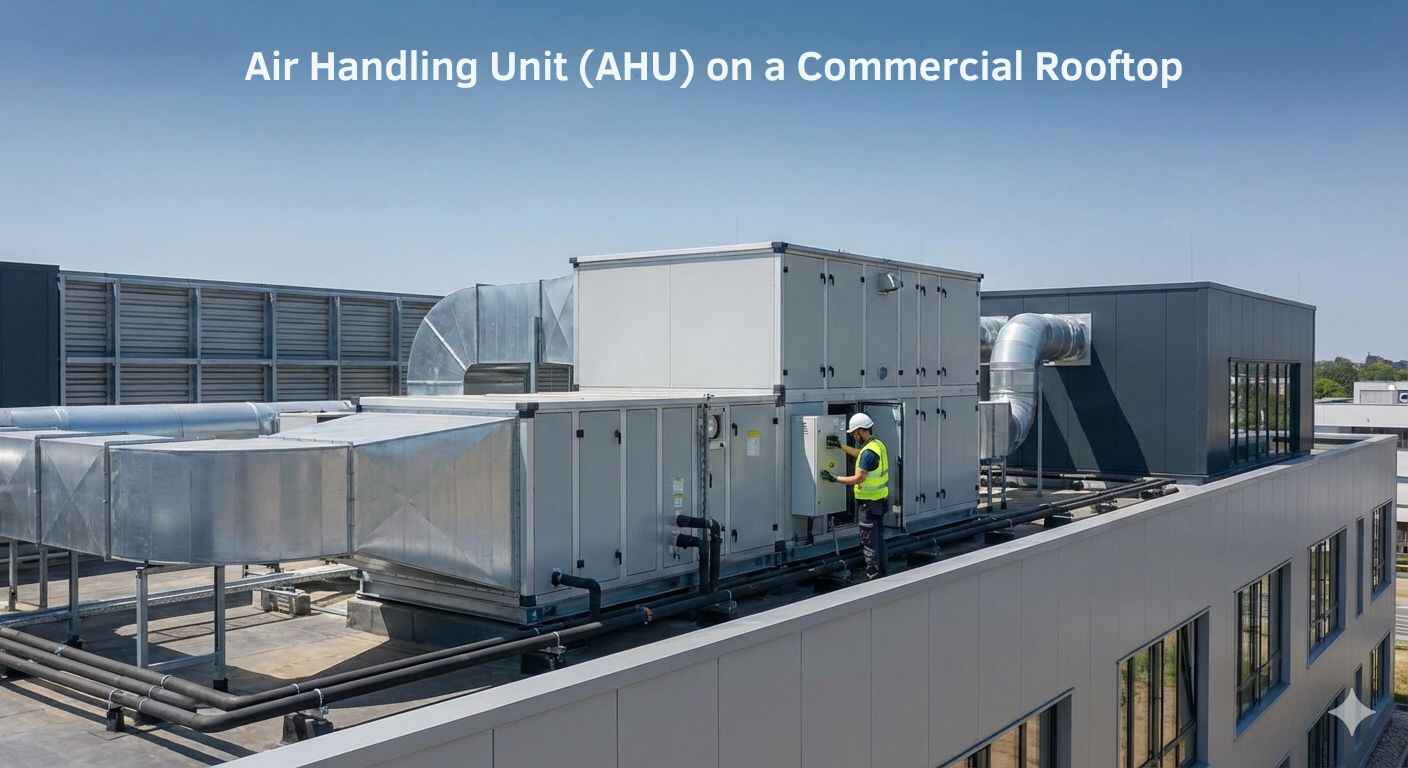
Air handlers are massive indoor units of HVAC equipment that condition and circulate a building’s interior air through ductwork. They can either draw in fresh air from outside, or recirculate and condition existing indoor air to filter, cool, and heat it.
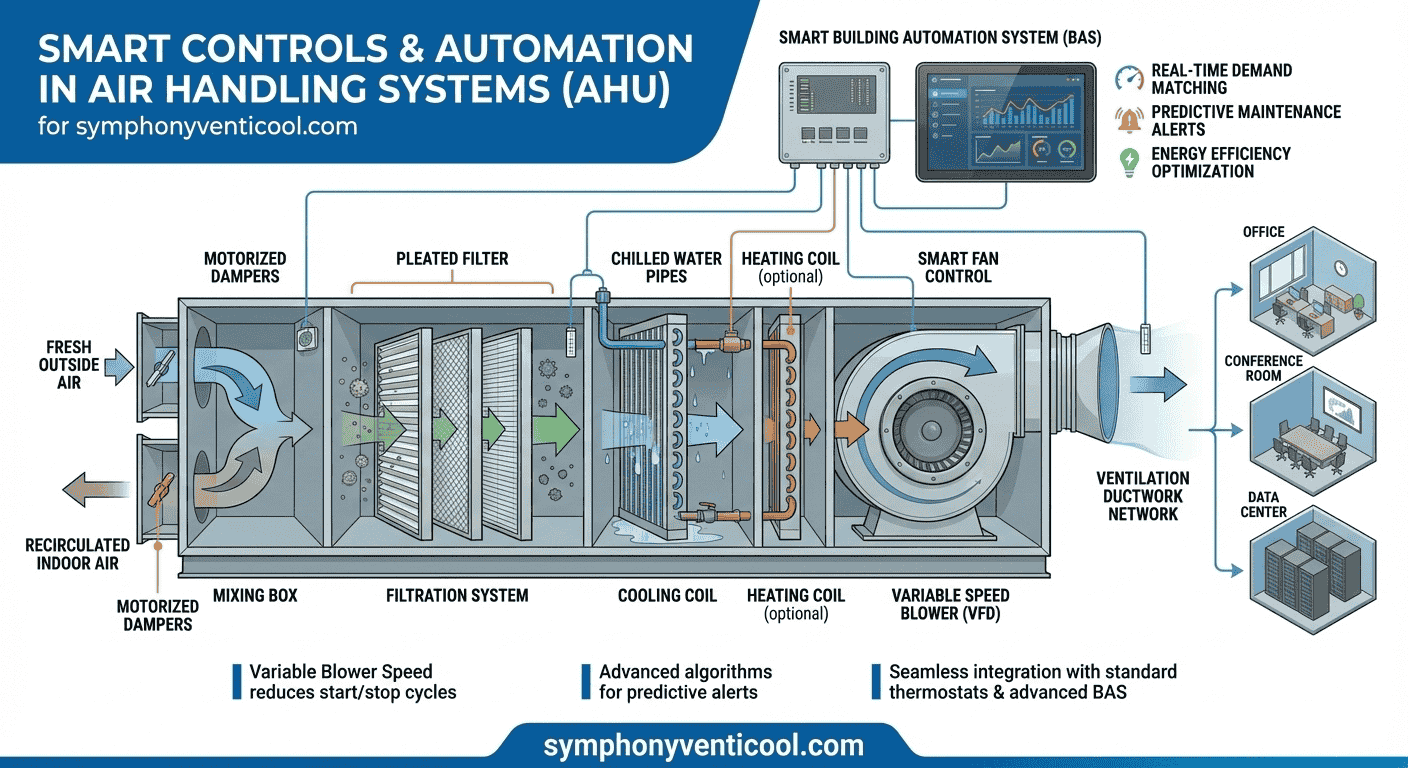
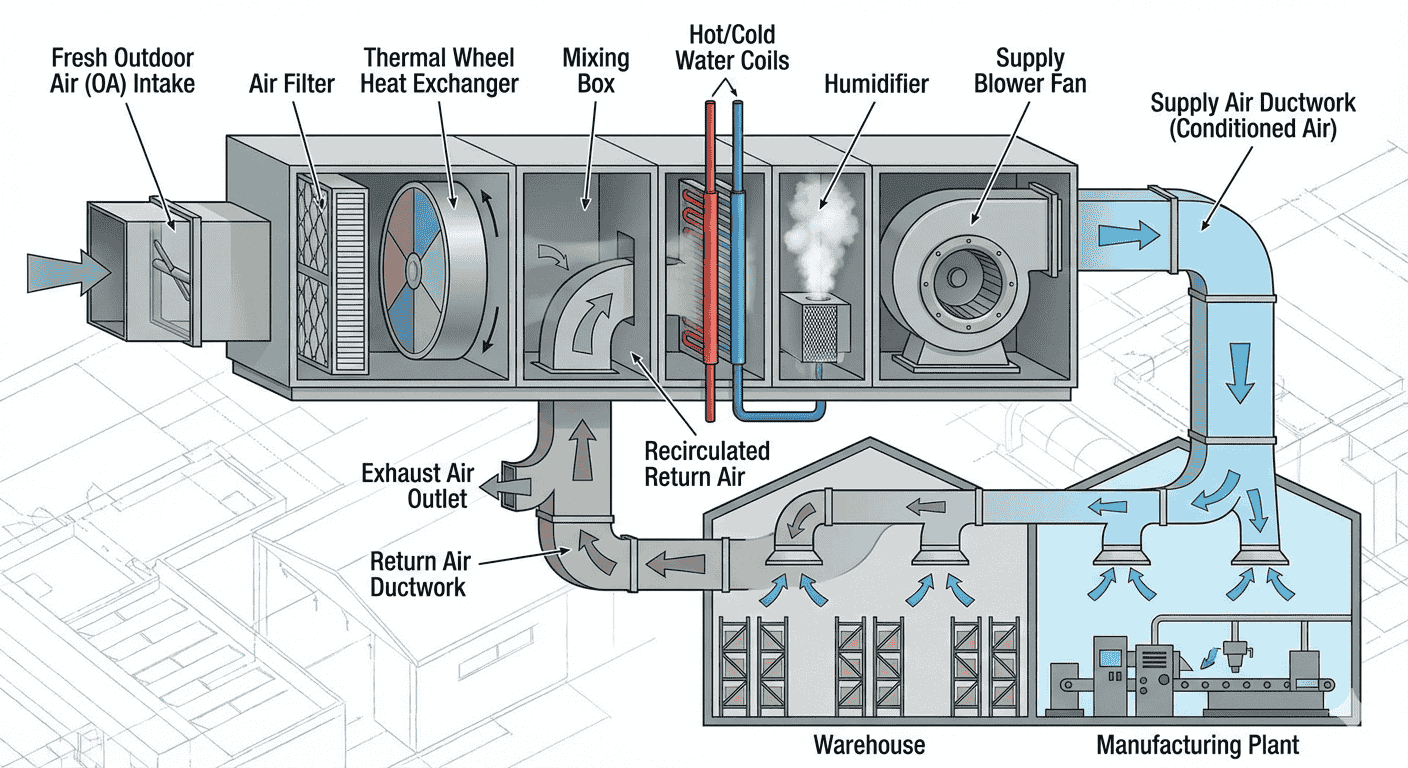
The air handlers fan blows air through its internal system of a mixing box, filters and cooling coil before it is blown into the ventilation ductwork network. They can be sized to meet different energy efficiency and comfort goals.
The most advanced air handling systems feature variable blower speeds to match demand and reduce starting and stopping. These units can be controlled by a standard on/off thermostat or by an advanced building automation system. Moreover, advanced algorithms enable predictive maintenance, alerting facility managers about potential issues before they escalate.
Air Handlers in Building Ventilation and Temperature Control
An air handler regulates and circulates as part of a building’s ventilation, heating and cooling system. It’s critical for industrial settings like warehouses and manufacturing plants to keep employees safe and productive.
Fresh, conditioned air is distributed to indoor spaces through ductwork. During times when outdoor air (OA) is not needed for space conditioning, OA is recirculated back to the AHU through return and exhaust ductwork. This air is reconditioned in the mixing box and sent to non-hazardous indoor spaces.
The AHU contains a hot/cold water coil; reheat coil, air filter, humidifier and blower fans. The mixing box utilizes a thermal wheel or cross plate heat exchanger to exchange heat between chilled/heated water or refrigerant and OA to adjust the temperature. Labeling HVAC components is an effective method to help facilities personnel identify potential issues and prevent them from occurring. This is especially important for a facility’s most critical systems such as AHUs.
What is the benefit of a modular AHU design, especially for large or complex commercial projects?
Modular design involves manufacturing AHUs in standardized sections (modules) that are assembled on-site. This offers unparalleled flexibility in configuration, allowing engineers to custom-build the AHU sequence (e.g., mixing box, filters, heating/cooling coils, fan section) to precisely fit restricted spaces or specific performance criteria. It significantly reduces installation time and labor costs compared to fully site-built units. This design also simplifies future maintenance and upgrades, as individual sections (like a dehumidifier module or an energy recovery wheel) can be accessed or replaced without dismantling the entire system.
Role of Air Handling Units (AHU) in HVAC Systems Enhancing Comfort and Safety
Air handling systems are at the heart of a heating, ventilating and air conditioning system. They collect and condition air to circulate throughout the building, removing heat, adjusting humidity and ensuring high quality fresh air for the occupants.
AHUs can also help protect people and property in large facilities visited by many people, such as theatres or shopping malls, where the amount of carbon dioxide is strictly controlled. They can do this by filtering the air, ensuring that dangerous viruses, bacteria and odours are excluded.
Advanced technologies and custom features are packed into a streamlined package that’s easy to install and maintain. They combine energy recovery technology with a humidification solution, unit control and dampers that are fully compliant with ERP (Ergonomics of the Working Environment) requirements. The result is an AHU with a high quality air supply, meeting stringent hygiene standards and delivering maximum energy savings.

Maulik Solanki is a seasoned B2B Product Marketing professional specializing in Industrial and Commercial Coolers in the LSV (Large Space Venticooling) segment. With 13+ years of experience, he drives brand building and audience engagement for Symphony’s LSV solutions through integrated offline and online strategies. Backed by an MBA in Marketing and earlier experience as a Regional Marketing Manager in banking, Maulik brings strong skills in sales, advertising, and events. He enjoys exploring new marketing ideas and cooling technologies and writes to help readers understand Symphony’s offerings.

Sourav Biswas is a senior marketing leader heading the LSV (Large Space Venticooling – B2B) marketing function at Symphony Limited. He shapes the brand’s strategic narrative, strengthens market leadership, and ensures excellence across all B2B cooling solutions. With deep expertise in Strategic Marketing, Brand Management, Advertising, and PR, he reviews content with analytical precision and alignment to Symphony’s vision. Passionate about mentoring and tracking B2B trends, Sourav ensures every content piece reflects accuracy, relevance, and strategic depth.