





Evaporative cooling systems have gained significant attention in industrial and commercial applications due to their energy-efficient cooling capabilities. When deciding which system to choose for large spaces, businesses must understand the core differences between direct and indirect evaporative cooling systems. This comparison can be pivotal in selecting the right evaporative air-cooling system to meet specific needs, such as cooling efficiency, cost-effectiveness and environmental impact.
In this guide, we will explore both types of evaporative cooling systems, compare their features and provide insights on how to choose the best evaporative cooling equipment for large spaces.
Table of Contents
Step 1: Understanding Evaporative Cooling Systems
Evaporative cooling, also known as swamp cooling, is a natural and energy-efficient method of cooling air. It works by drawing warm air through a moistened pad or filter, where the water evaporates, cooling the air before it is circulated into the space. This process is particularly useful in dry climates where humidity levels are low.
There are two main types of evaporative cooling systems: direct evaporative cooling and indirect evaporative cooling. Both have unique features, advantages and limitations depending on the application.
Read Our Article: Evaporative Air Cooler Benefits for Industry
Direct Evaporative Cooling System:
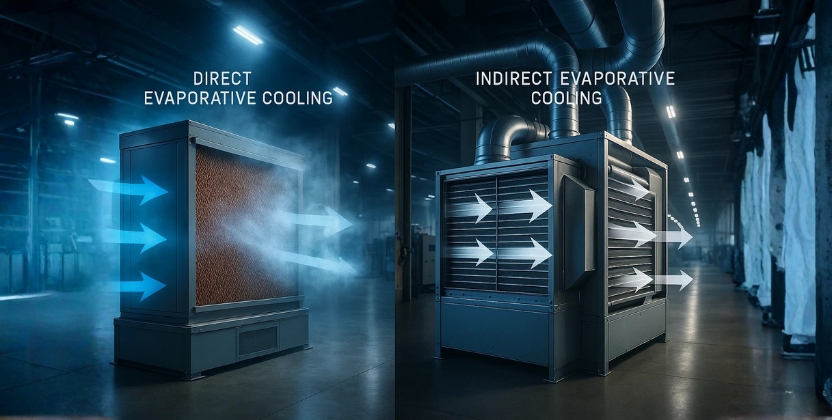
In a direct evaporative cooling system, the outdoor air is drawn through water-saturated pads. As the air passes through these pads, it loses heat due to the evaporation process and the cooled air is directly pumped into the indoor space. This system works effectively by directly cooling the air, reducing its temperature and humidity levels.
Indirect Evaporative Cooling System:
Unlike the direct method, an indirect evaporative cooling system uses a heat exchanger to cool the air. In this system, two air streams are separated, where one air stream passes through a water-saturated medium and the other absorbs the cooled air via a heat exchange. As a result, the cooled air does not come into direct contact with water but is cooled indirectly by the heat transfer process.
Step 2: Key Differences Between Direct and Indirect Evaporative Cooling Systems
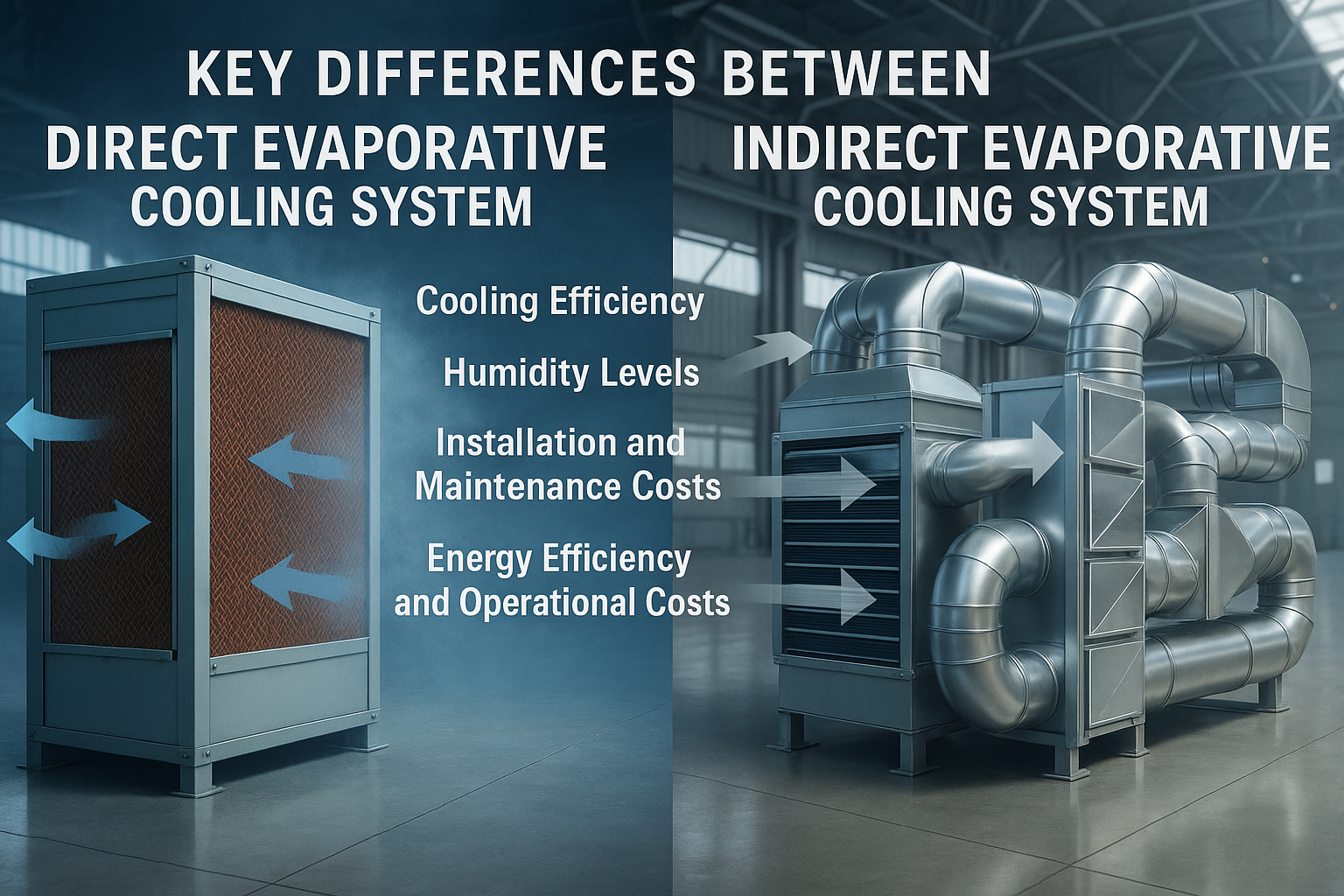
To make a well-informed choice between direct and indirect evaporative coolers, several factors should be evaluated, including efficiency, installation, operational costs and environmental impact. Here’s a comparison of the two systems based on key parameters:
Cooling Efficiency:
-
Direct Evaporative Cooling:
The Evaporative Air Cooler used in direct cooling systems is highly efficient in reducing air temperature. The air is cooled directly as it passes through water-saturated pads. This method is most effective when there is ample dry outdoor air and the indoor space has low humidity. Direct systems may reduce the temperature, which is ideal for areas where outdoor temperatures are high and humidity is low. -
Indirect Evaporative Cooling:
Indirect evaporative cooling systems do not cool the air directly but instead use a heat exchanger to transfer coolness to incoming air. This method is more efficient in terms of energy consumption as the cooler air does not come in direct contact with water, preventing increased humidity inside the building. These systems can provide similar or even better cooling performance in areas where humidity control is crucial.
Which to Choose:
- For larger spaces where cooling efficiency is paramount, direct evaporative systems may be ideal in hot, dry climates. However, for spaces where humidity control is important, indirect systems may perform better.
Humidity Levels:
-
Direct Evaporative Cooling:
As the air is directly humidified in direct evaporative cooling systems, it increases the moisture content of the air inside the space. This could be beneficial in arid regions, but in places where high humidity is a concern, this may make the indoor air uncomfortable.
-
Indirect Evaporative Cooling:
One of the main advantages of indirect systems is that they don’t add extra moisture to the air. This is particularly advantageous for facilities that require precise control over humidity levels, such as data centers, libraries or museums where air evaporative cooling systems are essential.
Which to Choose:
- If humidity control is a concern (for example, in locations with high humidity or for sensitive environments), the indirect system is the better choice. In drier climates, the direct evaporative cooling system is ideal.
Installation and Maintenance Costs:
-
Direct Evaporative Cooling:
Direct evaporative coolers are generally more affordable to install and maintain than indirect systems. They involve less complex technology, which means simpler setup and fewer maintenance requirements. The cost of evaporative cooling systems for large spaces is typically lower for direct systems, making them an economical option for many facilities. -
Indirect Evaporative Cooling:
Indirect systems, while efficient, require a more sophisticated setup due to the use of heat exchangers and complex components. The installation costs are typically higher and maintenance may require specialized expertise. However, these systems may have lower energy consumption over time, which could result in reduced operational costs.
Which to Choose:
- For businesses with a limited budget or those looking for simple, cost-effective solutions, direct evaporative cooling is a good choice. For organizations that prioritize long-term energy savings and don’t mind a higher initial investment, indirect systems may be more advantageous.
Energy Efficiency and Operational Costs:
-
Direct Evaporative Cooling:
Direct evaporative coolers are typically more energy-efficient than traditional air conditioning systems. Since they only require the energy to run fans and pumps, they use a fraction of the energy compared to refrigeration-based systems. However, they can consume more water than indirect systems, especially in large applications. -
Indirect Evaporative Cooling:
Indirect systems also offer significant energy savings, particularly in environments where air conditioning would otherwise be required. Since they don’t add moisture to the air, they don’t increase humidity levels, which can improve comfort without additional energy consumption. Indirect systems tend to have lower water usage than direct systems, making them more efficient in water-scarce regions.
Which to Choose:
- For energy savings and lower operational costs, both systems offer benefits, but indirect systems may perform better over time in humid climates, while direct evaporative cooling systems may be the most efficient option in dry climates with fewer concerns over water usage.
Step 3: Considerations for Large Spaces
When implementing an evaporative cooling system in a large space, it’s essential to consider the specific needs of the facility. Whether choosing a direct or indirect system, several factors must be taken into account:
-
Space Design and Ventilation Needs:
Large spaces with high ceilings or open layouts may benefit from direct evaporative cooling, which can cover extensive areas quickly. However, indirect systems are ideal for spaces that require precise cooling control and humidity management. -
Climate and Regional Conditions:
Direct evaporative coolers are most effective in hot, dry climates where moisture levels can be managed efficiently. On the other hand, indirect evaporative cooling systems are well-suited for areas with more variable humidity levels. -
Energy and Water Availability:
Businesses in water-scarce regions may prefer indirect systems to minimize water usage. In contrast, direct evaporative cooling systems may be acceptable for businesses located in areas where water is abundant and energy costs are a concern.
Conclusion:
Choosing between direct and indirect evaporative cooling systems depends on your unique operational needs, budget and environmental factors.
- Direct evaporative cooling offers a simple, energy-efficient solution that works well in dry climates, reduces upfront costs and is ideal for businesses looking for a cost-effective and low-maintenance option.
- Indirect evaporative cooling, while more expensive to install, offers excellent energy efficiency in more humid regions and is better suited for facilities that require strict humidity control.
By evaluating your space’s size, humidity requirements, energy efficiency goals and budget, you can choose Symphony Venticools’ – evaporative air-cooling system to meet your needs effectively.
FAQs About Evaporative Cooling Systems for Large Spaces
How to Compare Direct and Indirect Evaporative Cooling Systems for Large Spaces?
What is the primary difference between direct and indirect evaporative cooling systems?
Direct systems cool the air directly by evaporating water into it, increasing humidity, while indirect systems use a heat exchanger to cool air without adding moisture.
Which system is better for hot and dry climates?
For hot and dry climates, direct evaporative cooling systems are more effective, as they utilize the dry outdoor air for cooling and efficiently reduce temperatures.
Are indirect evaporative cooling systems more energy-efficient than direct systems?
Indirect systems are more energy-efficient when humidity control is essential, but direct systems offer significant energy savings in dry conditions.
Can I use an evaporative cooler in a humid environment?
While direct evaporative coolers may not be effective in humid environments, indirect evaporative cooling systems are ideal as they don't increase humidity levels.
What are the maintenance requirements for these systems?
Direct evaporative cooling systems generally require less maintenance and are more affordable to install. Indirect systems, being more complex, require higher maintenance but offer long-term energy savings.

Maulik Solanki is a seasoned B2B Product Marketing professional specializing in Industrial and Commercial Coolers in the LSV (Large Space Venticooling) segment. With 13+ years of experience, he drives brand building and audience engagement for Symphony’s LSV solutions through integrated offline and online strategies. Backed by an MBA in Marketing and earlier experience as a Regional Marketing Manager in banking, Maulik brings strong skills in sales, advertising, and events. He enjoys exploring new marketing ideas and cooling technologies and writes to help readers understand Symphony’s offerings.

Sourav Biswas is a senior marketing leader heading the LSV (Large Space Venticooling – B2B) marketing function at Symphony Limited. He shapes the brand’s strategic narrative, strengthens market leadership, and ensures excellence across all B2B cooling solutions. With deep expertise in Strategic Marketing, Brand Management, Advertising, and PR, he reviews content with analytical precision and alignment to Symphony’s vision. Passionate about mentoring and tracking B2B trends, Sourav ensures every content piece reflects accuracy, relevance, and strategic depth.