





Symphony Venticool

Direct vs Indirect Evaporative Cooling System for Large Spaces
0:00 / 0:00

Evaporative cooling systems have gained significant attention in industrial and commercial applications due to their energy-efficient cooling capabilities. When deciding which system to choose for large spaces, businesses must understand the core differences between direct and indirect evaporative cooling systems. This comparison can be pivotal in selecting the right evaporative air-cooling system to meet specific needs, such as cooling efficiency, cost-effectiveness and environmental impact.

In this guide, we will explore both types of evaporative cooling systems, compare their features and provide insights on how to choose the best evaporative cooling equipment for large spaces.

Evaporative cooling, also known as swamp cooling, is a natural and energy-efficient method of cooling air. It works by drawing warm air through a moistened pad or filter, where the water evaporates, cooling the air before it is circulated into the space. This process is particularly useful in dry climates where humidity levels are low.

There are two main types of evaporative cooling systems: direct evaporative cooling and indirect evaporative cooling. Both have unique features, advantages and limitations depending on the application.

Direct Evaporative Cooling System:

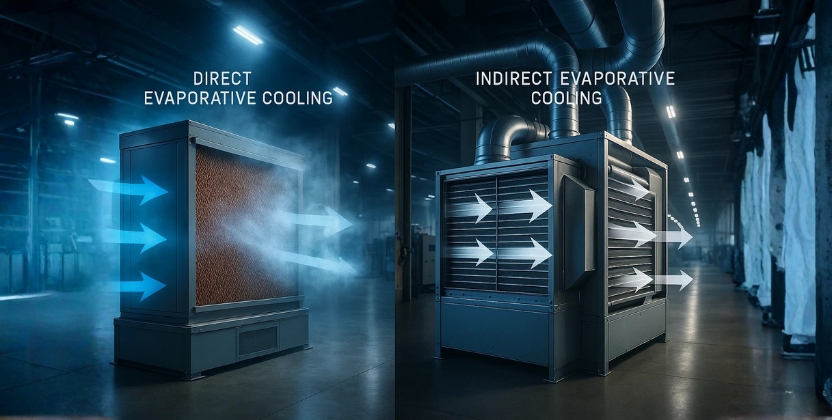
In a direct evaporative cooling system, the outdoor air is drawn through water-saturated pads. As the air passes through these pads, it loses heat due to the evaporation process and the cooled air is directly pumped into the indoor space. This system works effectively by directly cooling the air, reducing its temperature and humidity levels.

Indirect Evaporative Cooling System:

Unlike the direct method, an indirect evaporative cooling system uses a heat exchanger to cool the air. In this system, two air streams are separated, where one air stream passes through a water-saturated medium and the other absorbs the cooled air via a heat exchange. As a result, the cooled air does not come into direct contact with water but is cooled indirectly by the heat transfer process.

We are Fast in Response.

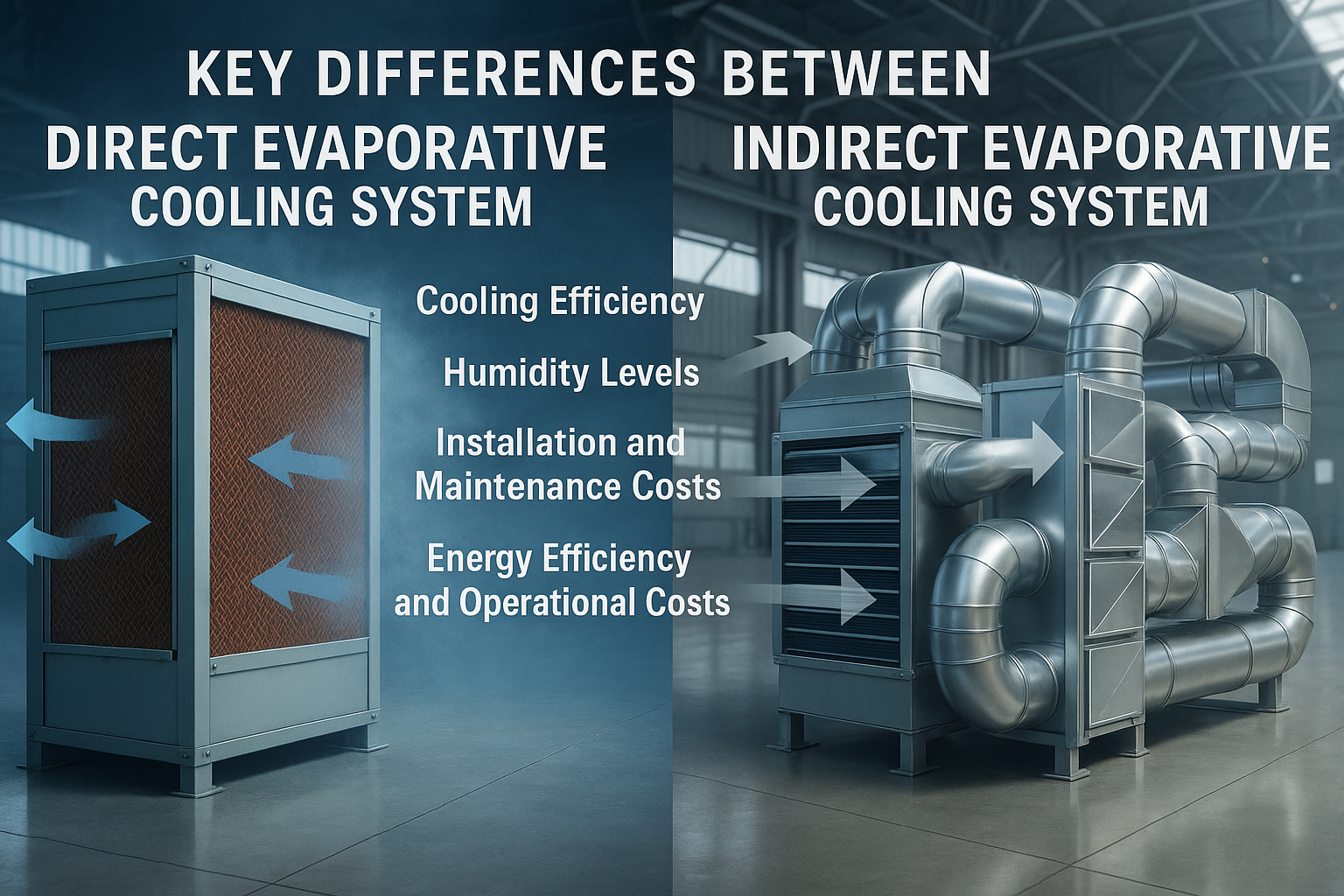
Step 2: Key Differences Between Direct and Indirect Evaporative Cooling Systems

To make a well-informed choice between direct and indirect evaporative coolers, several factors should be evaluated, including efficiency, installation, operational costs and environmental impact. Here’s a comparison of the two systems based on key parameters:

Cooling Efficiency:

Which to Choose:

Humidity Levels:

Which to Choose:

Installation and Maintenance Costs:

Which to Choose:

Energy Efficiency and Operational Costs:

Which to Choose:

Step 3: Considerations for Large Spaces

When implementing an evaporative cooling system in a large space, it’s essential to consider the specific needs of the facility. Whether choosing a direct or indirect system, several factors must be taken into account:

Quick Response Guaranteed

Conclusion:

Choosing between direct and indirect evaporative cooling systems depends on your unique operational needs, budget and environmental factors.

By evaluating your space’s size, humidity requirements, energy efficiency goals and budget, you can choose Symphony Venticools’ – evaporative air-cooling system to meet your needs effectively.

FAQs About Evaporative Cooling Systems for Large Spaces

How to Compare Direct and Indirect Evaporative Cooling Systems for Large Spaces?

What is the primary difference between direct and indirect evaporative cooling systems?

Direct systems cool the air directly by evaporating water into it, increasing humidity, while indirect systems use a heat exchanger to cool air without adding moisture.

Which system is better for hot and dry climates?

For hot and dry climates, direct evaporative cooling systems are more effective, as they utilize the dry outdoor air for cooling and efficiently reduce temperatures.

Are indirect evaporative cooling systems more energy-efficient than direct systems?

Indirect systems are more energy-efficient when humidity control is essential, but direct systems offer significant energy savings in dry conditions.

Can I use an evaporative cooler in a humid environment?

While direct evaporative coolers may not be effective in humid environments, indirect evaporative cooling systems are ideal as they don't increase humidity levels.

What are the maintenance requirements for these systems?

Direct evaporative cooling systems generally require less maintenance and are more affordable to install. Indirect systems, being more complex, require higher maintenance but offer long-term energy savings.

<< 1 >>


About the Author
About the Reviewer

Sourav Biswas is a senior marketing leader heading the LSV (Large Space Venticooling – B2B) marketing function at Symphony Limited. He shapes the brand’s strategic narrative, strengthens market leadership, and ensures excellence across all B2B cooling solutions. With deep expertise in Strategic Marketing, Brand Management, Advertising, and PR, he reviews content with analytical precision and alignment to Symphony’s vision. Passionate about mentoring and tracking B2B trends, Sourav ensures every content piece reflects accuracy, relevance, and strategic depth.


×
×
Index