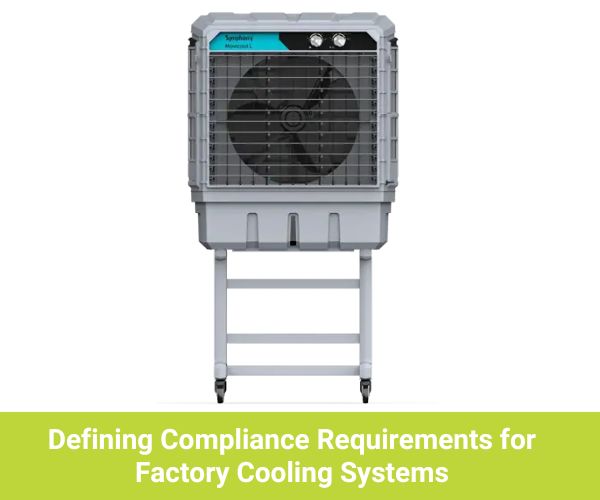
Every summer, factory floors across India become battlegrounds between rising temperatures and worker productivity. In textile mills in Surat, automobile plants in Pune, pharmaceutical units in Ahmedabad, and food processing facilities in Chennai, the question of how to keep workers safe and comfortable is not just an operational matter — it is a legal one.
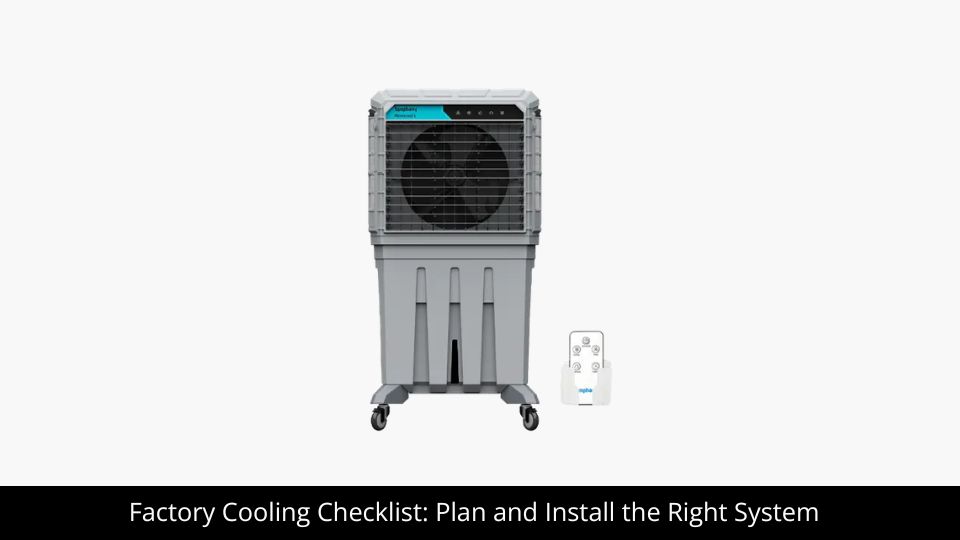
Every year, Indian factory owners wait until April to think about cooling — and by June they are making rushed decisions that cost them money and still leave workers uncomfortable. The right factory cooling system is never the right purchase made in a hurry. It is a planned investment that begins with a thorough assessment of your facility, moves through system design, and concludes with professional installation and commissioning.
This checklist gives facility managers, plant engineers, and business owners a structured approach to assessing, planning, and installing the right cooling system for factory operations before summer arrives. Whether you are looking at an evaporative air cooler, a ducted industrial cooling system, or a centralised LSV solution from Symphony Venti-Cool, the process is the same.
Table of Contents
Step 1: Assess Your Facility Before You Buy Anything
The single most common and expensive mistake in factory cooling is choosing a product before understanding the space it needs to cool. A facility assessment takes two to three hours and saves years of regret.
Measure your total floor area in square feet and your ceiling height. These two numbers define your minimum CFM (cubic feet per minute) requirement — the fundamental specification that determines which cooling system for factory use is appropriately sized for your space. A factory with 20,000 sq ft of floor area and a 20-foot ceiling requires a dramatically different system than a 5,000 sq ft unit with a 12-foot ceiling.
Identify all heat sources. Machines, motors, ovens, compressors, direct sunlight through roofing, and workers themselves all add to the heat load. A facility with heavy presses or furnaces has a higher heat load per square foot than a light assembly line. Your industrial air cooler manufacturer needs this information to correctly size the system.
Check your local climate. Evaporative cooling — the technology behind Symphony Venti-Cool’s LSV systems — is most effective in dry climates with humidity below 60–65%. In Rajasthan, Gujarat, Madhya Pradesh, and most of peninsular India during pre-monsoon months, evaporative cooling delivers a temperature drop of 10–15°C. In coastal regions during monsoon, supplementary ventilation is required.
Note the layout of your workrooms. Are they open-plan or subdivided? Do you have high-bay areas, mezzanine floors, or separate processing rooms? Each zone may require its own cooling approach.
Step 2: Define Your Compliance Requirements
Section 13 of the Factories Act, 1948 requires adequate ventilation and temperature control in every workroom. This is not optional. Before specifying a cooling system, confirm what your State Factories Rules require in terms of temperature standards, and whether your facility has any special requirements — such as humidity control under Section 15 for textile mills, or dust extraction integration for manufacturing environments.
Industrial cooling systems deployed in factories with more than 250 workers should also meet BOCW welfare provisions for rest areas and welfare facilities.
Step 3: Choose the Right Architecture
Once you know your space requirements and compliance obligations, you can select the right system architecture:
A centralised ducted system using Symphony LSV Air Handling Units is ideal for facilities above 15,000 sq ft where consistent temperature uniformity across all workrooms is required. A centralised cooling system routes cooled fresh air through duct networks to every zone.
Portable industrial air coolers — including Symphony’s heavy duty cooler range — are appropriate for spot cooling of specific work areas, open sheds, or facilities with rapidly changing layouts.
A decentralised arrangement with multiple LSV units placed at strategic positions works well for facilities between 5,000 and 15,000 sq ft with open floor plans.
Work with a qualified industrial air cooler manufacturer like Symphony Venti-Cool to get a site-specific system recommendation before purchasing.
Step 4: Plan the Installation
For any cooling system for factory use, installation planning covers: unit placement and mounting points, duct routing and discharge grille positions, water supply connections and float valve installation, electrical supply capacity and wiring routes, and drainage for the water tank.
Ducted systems require ceiling clearance for duct runs and consideration of airflow direction — discharge should be directed across the length of the workroom, not against walls or machinery.
Plan installation timing to allow at least two weeks before peak summer arrives — commissioning and airflow balancing take time to complete correctly.
Step 5: Commission and Document
After installation, commissioning involves verifying actual CFM output at each discharge point, checking water distribution across CELdek pads, measuring temperature differential between inlet and discharge air, and confirming electrical loads are within specification.
Document everything: unit serial numbers, installation dates, CFM readings, and water consumption. This documentation is your evidence of Factories Act compliance and your warranty record with the industrial air cooler manufacturer.
Frequently Asked Questions
Factory Cooling Checklist: How to Assess, Plan and Install the Right Cooling System?
How far in advance should I plan factory cooling installation?
Ideally 8–12 weeks before peak summer. Site assessment, system design, procurement, and installation each take time. Rushing any stage increases cost and reduces system performance. In India, the planning window is October to February for a summer-ready system.
What is the most important specification to get right in a factory cooling system?
CFM — cubic feet per minute of air delivery. Under-specified systems fail to cool the space; over-specified systems waste capital. CFM is calculated from floor area, ceiling height, and required air changes per hour for your specific process environment.
Can I install a factory cooling system myself or do I need professional installation?
Ducted industrial cooling systems require professional installation — incorrect duct sizing or routing significantly reduces performance. Portable and individual unit installations can be managed by an in-house maintenance team, but electrical and water connections should be handled by qualified contractors.
Does Symphony Venti-Cool provide site assessments before purchase?
Yes. Symphony Venti-Cool offers site assessment and system design services for industrial and commercial facilities. A site assessment ensures the system recommendation is matched to your specific floor plan, heat load, and climate conditions.
What cooling system maintenance should I plan for after installation?
CELdek pad inspection and cleaning monthly, float valve and water distributor checks monthly, motor and belt inspection quarterly, and a full service including pad replacement annually before each summer season. A documented maintenance schedule also supports Factories Act compliance records.
Is evaporative cooling effective year-round in Indian factories?
In most Indian climates, evaporative cooling is highly effective from March through June and again in September and October. During monsoon months in high-humidity regions, the cooling differential reduces. Many facilities supplement with ventilation-only mode during peak monsoon and resume full cooling in October.

Maulik Solanki is a seasoned B2B Product Marketing professional specializing in Industrial and Commercial Coolers in the LSV (Large Space Venticooling) segment. With 13+ years of experience, he drives brand building and audience engagement for Symphony’s LSV solutions through integrated offline and online strategies. Backed by an MBA in Marketing and earlier experience as a Regional Marketing Manager in banking, Maulik brings strong skills in sales, advertising, and events. He enjoys exploring new marketing ideas and cooling technologies and writes to help readers understand Symphony’s offerings.

Sourav Biswas is a senior marketing leader heading the LSV (Large Space Venticooling – B2B) marketing function at Symphony Limited. He shapes the brand’s strategic narrative, strengthens market leadership, and ensures excellence across all B2B cooling solutions. With deep expertise in Strategic Marketing, Brand Management, Advertising, and PR, he reviews content with analytical precision and alignment to Symphony’s vision. Passionate about mentoring and tracking B2B trends, Sourav ensures every content piece reflects accuracy, relevance, and strategic depth.