Symphony Venticool

Read AI-Generated Summary:

Suprint Textiles, a Jaipur-based garment manufacturer that makes garments for Tata, Reliance and Pantaloons, was facing the problem of workplace heat generated by stitching machines. The company adopted Symphony Industrial Coolers and installed them across multiple factories in a phased manner. Positive results were observed within the first month. After a successful one-year trial, the company installed Symphony coolers across all four factories. According to Prakash Singh, Supervisor at Suprint, Symphony Industrial Coolers have significantly improved worker comfort, productivity and long-term reliability.
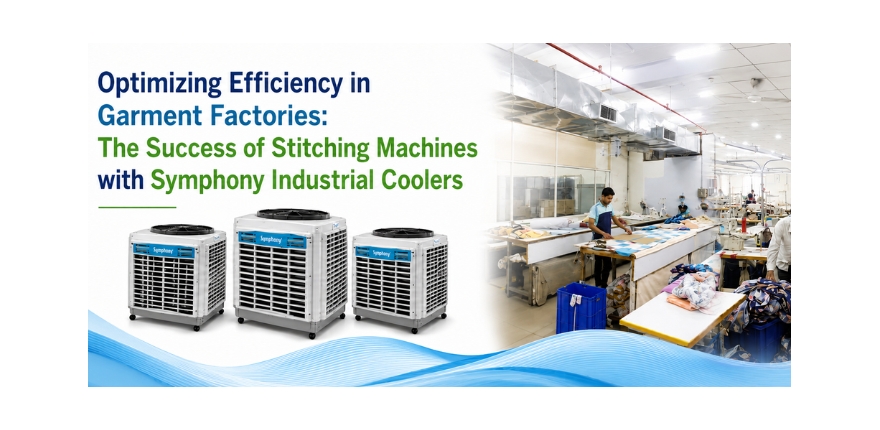

Optimizing Efficiency in Garment Factories - The Success of Stitching Machines with Symphony Industrial Coolers
0:00 / 0:00

Case Study Snapshot

Client

 Suprint Textiles, Jaipur – Garment & Apparel Manufacturing Unit


IndustryTextile & Garment Manufacturing
Key Clients ServedTata, Reliance, Pantaloons
Core ChallengeExcessive heat generated by stitching machines causing workforce discomfort and productivity concerns
Solution DeployedSymphony industrial air coolers, piloted on one production floor and scaled across multiple factory units
Rollout LocationsG1X1 Sitapura unit (five floors), Mal Road facility, and the Mansarovar head office
Trial DurationSingle-floor trial with results visible within the first month (June–July)
Scale-Up TimelineExpanded company-wide after one full year of consistent performance
OutcomeImproved workplace ventilation, sustained year-long performance, and company-wide adoption across four factories
Voice of CustomerPrakash Singh, Supervisor & Maintenance, Suprint Textiles

Business Summary

Suprint Textiles is a garment manufacturing unit located in Jaipur that produces fabrics and garments for some of India’s largest retail and lifestyle brands, such as Tata, Reliance and Pantaloons. Since manufacturing volumes were associated with high-profile retail accounts, maintaining a productive and safe working environment for the stitching workforce became a business priority. This case study highlights the strategy and outcomes of adopting Symphony Industrial Coolers.

Speak with an Expert

How the Heat Generated by Stitching Machines in a Garment Stitching Unit Affects Worker Productivity

Garment manufacturing at Suprint Textiles follows a structured process in which the fabric is first cut and then sent to the stitching floor, where it is assembled using stitching machines. While stitching operations are essential, stitching machines generate a considerable amount of heat during operation. This heat build-up directly created a workplace challenge for the stitching workforce.

What Were the Main Problems Faced by Suprint Textiles Without Symphony Industrial Coolers?

  • Impact of machine-generated heat: Stitching machines generated considerable heat during continuous operation, making working conditions difficult for workers stationed at the stitching stations.
  • Reduction in worker productivity: Continuous discomfort on the floor became an obstacle to maintaining consistent productivity in stitching operations.
  • Need for improvement in cutting and stitching: The management recognised the need for an effective ventilation solution for cutting and stitching operations.
  • Multi-site scalability: The solution needed to be reliable enough to be expanded across multiple factory sites serving large retail clients.

Why Did Suprint Textiles Choose Symphony for Its Industrial Air-Cooling Solution?

After researching the market for industrial ventilation providers, Suprint Textiles selected Symphony as its cooling partner. Instead of immediately committing to a full-scale deployment, the company adopted a careful, phased approach that allowed it to evaluate performance under actual manufacturing conditions.

What Was the Installation Strategy for Symphony Industrial Coolers?

Phase 1 – Trial Installation on a Single Production Floor
Symphony coolers were first installed as a trial deployment on a single production floor. This allowed Suprint Textiles to evaluate real-world performance under actual manufacturing conditions before expanding to additional floors and factories.

Phase 2 – Cooling Installation Across Five Floors at the G1X1 Sitapura Factory

The positive results from the trial, which became visible within the first month of use, encouraged Suprint Textiles to expand the cooling installation across five production floors at its G1X1 Sitapura manufacturing unit.

Phase 3 – Company-Wide Expansion of Industrial Coolers Across Four Factories

After one full year of consistent and reliable performance at the Sitapura facility, Suprint Textiles expanded the Symphony cooling installation to its remaining factory locations, including the Mal factory and the Mansarovar head office.

What Results Did Suprint Textiles Achieve After Installing Symphony Industrial Coolers?

  • Immediate improvement in workplace conditions: A significant improvement in workplace conditions was reported within the first month of the trial (June–July).
  • Long-term reliability: Continuous and reliable performance was maintained for a full year at the Sitapura unit.
  • Confidence to expand: Confidence in the results was strong enough to justify expansion across five floors and three additional factory sites.
  • Company-wide standardisation: This progression from a single-floor pilot to a company-wide standard reflects more than one year of consistent satisfaction with Symphony’s industrial cooling performance across four factories.

“After continuous use for one year, we installed Symphony coolers across our four factories and they are truly very good. You will get better results. You should definitely use them.” – Prakash Singh, Supervisor and Maintenance, Suprint Textiles (Manufacturing Partner for Tata, Reliance and Pantaloons)

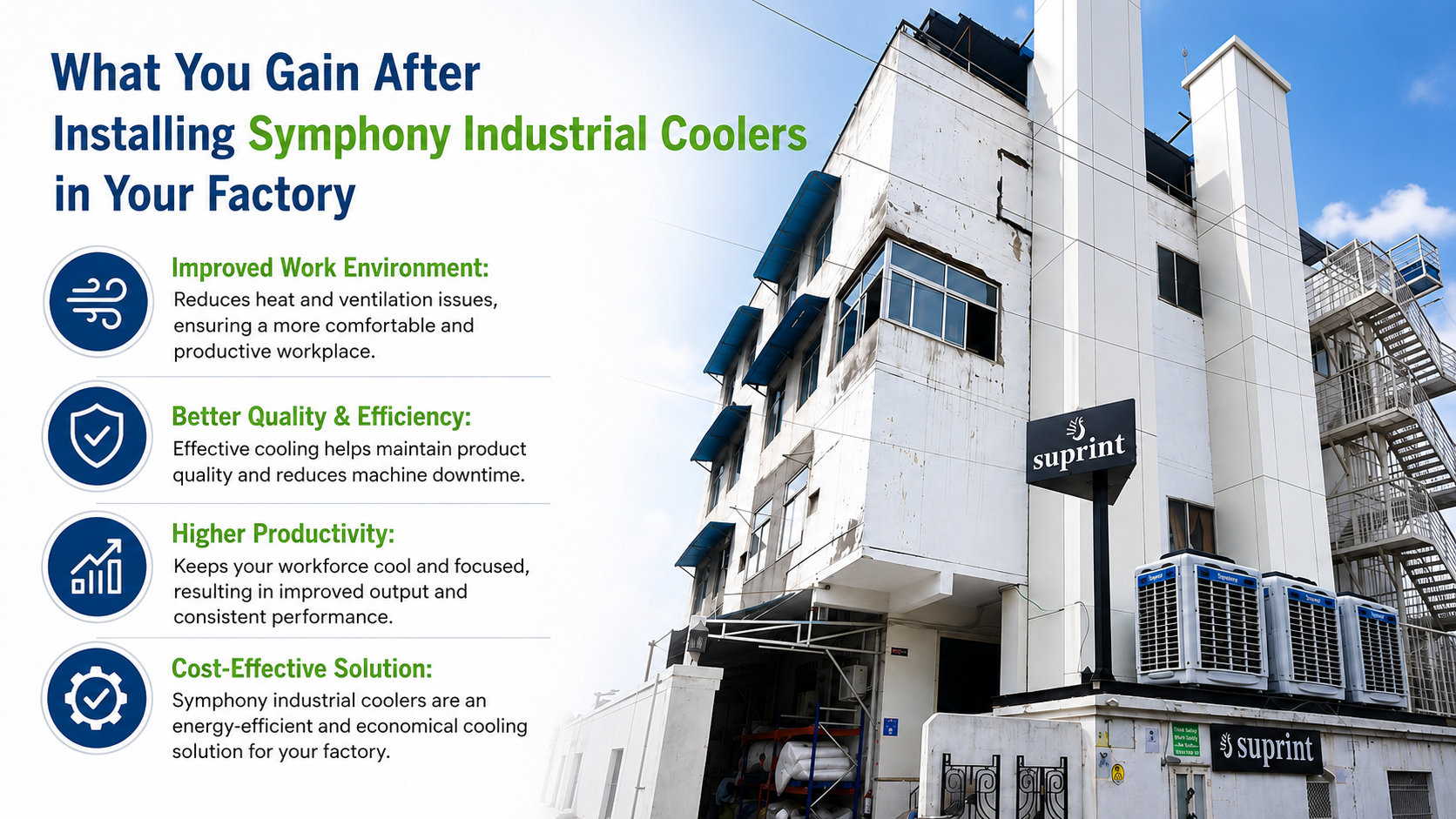
What You Gain After Installing Symphony Industrial Coolers in Your Factory

Why Are Symphony Industrial Coolers Important for Textile and Garment Manufacturers?

For garment and textile manufacturers supplying large retail brands, worker comfort directly affects production continuity. Heat generated by stitching and cutting machinery is a common operational challenge in textile manufacturing environments. Symphony Industrial Coolers address this challenge efficiently and improve worker comfort and productivity.

We are Available on Chat, Call, Email!

Frequently Asked Questions

Solving Productivity Problems Caused by Stitching Machine Heat in a Garment Factory: The Success of Symphony Industrial Coolers

Why Do Garment Factories Need Symphony Industrial Air Coolers?

The Company’s stitching machines generated considerable heat during continuous operation, making working conditions difficult for the workforce on the production floor. Suprint Textiles required an effective ventilation solution to support worker comfort in cutting and stitching operations.

How Do Manufacturers Evaluate an Industrial Cooling Solution Before a Full Rollout?

Suprint Textiles first researched the cooling solution market and then conducted a single-floor trial installation to evaluate actual manufacturing performance before expanding to additional floors and factories.

How Quickly Do Symphony Industrial Coolers Show Results in a Factory Setting?

Positive results were reported within the first month of the trial (during the June–July period), which gave the company the confidence to expand the installation further.

<< 1 >>


About the Author
About the Reviewer

Sourav Biswas is a senior marketing leader heading the LSV (Large Space Venticooling – B2B) marketing function at Symphony Limited. He shapes the brand’s strategic narrative, strengthens market leadership, and ensures excellence across all B2B cooling solutions. With deep expertise in Strategic Marketing, Brand Management, Advertising, and PR, he reviews content with analytical precision and alignment to Symphony’s vision. Passionate about mentoring and tracking B2B trends, Sourav ensures every content piece reflects accuracy, relevance, and strategic depth.


×
×
Index