





Symphony Venticool

Industrial Cooling in Ahmedabad for High Ceilings and Open Workshops
0:00 / 0:00

Ahmedabad, one of India’s most prominent industrial cities, is a powerhouse of textile, chemical, engineering and pharmaceutical manufacturing. With its vast expanse of industrial estates – ranging from Naroda and Vatva to Sanand and Changodar – the city hosts thousands of manufacturing units. These facilities typically feature high ceilings and open workshop layouts, designed to accommodate large machinery and streamlined operations.

However, Ahmedabad’s scorching summer climate – often breaching 44°C – poses a significant challenge to worker comfort and equipment safety. Without effective cooling, the internal temperature of these workshops can rise dramatically, leading to reduced productivity and health concerns. To address this, industries are increasingly turning to industrial air coolers as a practical solution.

This article explores the cooling challenges specific to Ahmedabad’s industrial environment and how modern industrial cooling systems adapt to large open spaces and high ceilings with cost-efficient, reliable performance.

Cooling large, open industrial spaces is not as straightforward as it seems. Key challenges in Ahmedabad include:

These conditions render standard cooling techniques ineffective or prohibitively expensive. However, industrial air coolers are engineered precisely for such environments. Air cooling high-volume airflow and evaporative cooling process make them ideal for tackling Ahmedabad’s industrial heat.

Quick Response Guaranteed

How Industrial Air Coolers Offer the Ideal Solution?

Air coolers for industrial use work on the principle of evaporative cooling. They draw hot outside air through water-saturated cooling pads, reducing its temperature before pushing it indoors. This process not only cools the air but also adds a slight increase in humidity, which can be beneficial in dry environments.

Key advantages for high-ceiling and open-space workshops include:

Industrial Cooler Design with Architectural Facility

Modern industrial air cooler manufacturer design systems tailored to different spatial dynamics. In Ahmedabad’s industrial zones, common cooling adaptations include:

This adaptability allows businesses in Ahmedabad’s diverse sectors to choose a configuration that aligns with their building structure and operational flow – without overcooling or incurring unnecessary costs.

Workshop Environments: Unique Cooling Needs and Practical Solutions

Workshops – especially those common in Ahmedabad’s engineering, fabrication and woodworking industries – present unique challenges when it comes to indoor cooling. These setups are typically semi-open, with large shutter openings, side canopies and continuous movement of manpower and materials. Moreover, the nature of work – welding, grinding, painting and machine operation – generates additional internal heat, compounding the external temperature burden.

Here’s why conventional systems fall short in such environments:

In contrast, industrial air coolers are engineered to thrive in such dynamic environments. Their robust air throw can reach workers even in the farthest corners of open bays. More importantly, their evaporative mechanism naturally filters and cools incoming air, making it suitable for continuous industrial operation without sealed insulation.

In Ahmedabad, workshops located in different areas frequently adopt these solutions due to:

With rising emphasis on employee welfare and industrial compliance, many workshop owners now treat cooling as part of core infrastructure – rather than an afterthought. This strategic shift boosts not only productivity but also enhances safety, particularly in workshops handling flammable materials or operating high-intensity machinery.

Call Now for Instant Assistance!

Integrating Industrial Cooling Systems into Existing Infrastructure

One of the main benefits of industrial cooling systems is their non-intrusive installation. Unlike centralized air conditioning, which may require architectural modifications, these systems can be integrated into existing facilities with minimal downtime.

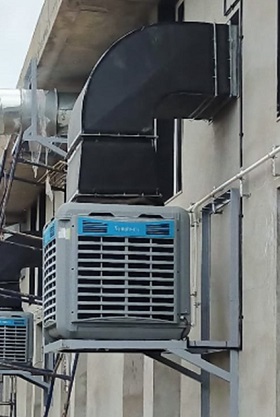
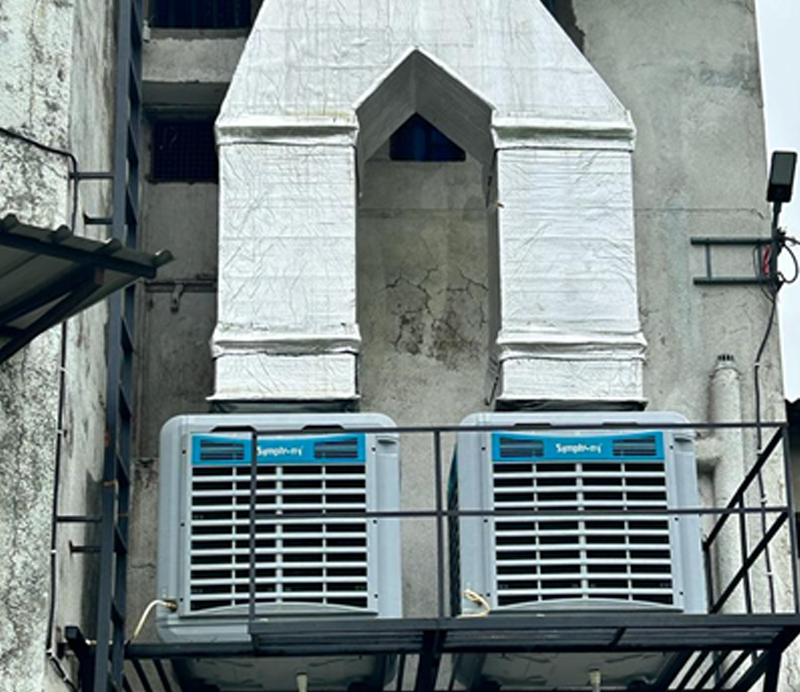
In Ahmedabad’s older industrial sheds – common in areas like Odhav and Narol – building modifications may be restricted due to structural or cost limitations. Fortunately, industrial coolers can be installed on side walls, rooftops or placed as freestanding units. This allows businesses to modernize their climate control systems without halting production or undergoing major refurbishments.

Key integration tips include:

By planning integration carefully, industries in Ahmedabad can enhance indoor environments even in legacy buildings – achieving long-term cooling and operational benefits.

Considering the Industrial Cooler Price and ROI

Affordability is a key concern, especially for small and medium enterprises in Ahmedabad. The industrial cooler price varies based on air delivery capacity, tank size, build quality and added features like automation or remote monitoring. However, when compared to Commercial HVAC systemsplastic air coolers are significantly less expensive to purchase, install and operate.

Over time, the return on investment becomes apparent through:

Industries with marginal budgets often find industrial air coolers to be the only practical way to ensure a safe and comfortable environment without financial strain.

Conclusion

Ahmedabad’s industrial sector is built on productivity, resilience and innovation. However, its harsh climate and widespread use of high-ceiling, open-structure buildings present serious challenges when it comes to maintaining a cool, efficient workspace. From large-scale factories to minimal workshops, businesses across the region need reliable, cost-effective solutions to beat the heat.

Symphony’s Industrial air coolers emerge as a clear choice – combining powerful performance with low energy consumption and high adaptability. Whether installed in automotive clusters, chemical plants or textile workshops, these industrial cooling units meet Ahmedabad’s unique environmental and architectural demands.

They are not merely add-ons but essential infrastructure for health, efficiency and competitiveness in the modern industrial era.

FAQs About Industrial Air Coolers

Industrial Cooling in Ahmedabad: Adapting to High Ceilings and Open Workshops

Why are industrial air coolers preferred over air conditioners in Ahmedabad's workshops?

Because of their open design and high ceilings, workshops can't retain cooled air from ACs. Industrial air coolers deliver effective airflow at lower costs and thrive in such open setups.

How does ceiling height affect cooler performance?

In high-ceiling buildings, cool air tends to rise. Industrial coolers with strong air throw can direct airflow effectively downwards, ensuring that working areas remain cool.

Are there portable cooling options for small workshops in Ahmedabad?

Yes. Portable industrial coolers are available for localized cooling and are ideal for small to medium-sized workshops with movable operations.

How frequently should industrial coolers be maintained?

Typically, cooling pads should be cleaned every 2-3 months and water tanks should be monitored for hygiene. Routine checks help extend the unit's life.

<< 1 >>


About the Author
About the Reviewer

Sourav Biswas is a senior marketing leader heading the LSV (Large Space Venticooling – B2B) marketing function at Symphony Limited. He shapes the brand’s strategic narrative, strengthens market leadership, and ensures excellence across all B2B cooling solutions. With deep expertise in Strategic Marketing, Brand Management, Advertising, and PR, he reviews content with analytical precision and alignment to Symphony’s vision. Passionate about mentoring and tracking B2B trends, Sourav ensures every content piece reflects accuracy, relevance, and strategic depth.


×
×
Index