





Ludhiana stands as one of Punjab’s most vital industrial cities, known for its strong base in textiles, engineering, bicycle components and metalwork. As the city continues to power large-scale production across these sectors, another reality is becoming increasingly evident: rising internal temperatures in factories and workshops.
Due to intense machinery use, enclosed layouts and long operational hours, indoor heat levels often surpass tolerable limits. This directly affects work performance, product quality and machinery stability. As a result, industrial cooling systems have become an operational necessity across Ludhiana’s key industries.
Let’s explore how different sectors in Ludhiana are addressing their cooling needs to maintain efficiency and comfort under thermal stress.
Table of Contents
Garment and Hosiery Units: Maintaining Comfort and Fabric Integrity
Ludhiana’s economic backbone lies in its textile and garment sector. From spinning yarn to stitching and packaging garments, each stage adds significant heat to the workspace.
Key Heat Challenges for Garment Industry:
- Midday heat turns processing zones into overheated, enclosed environments.
- Fabric storage areas risk damage due to elevated temperatures.
- Tailoring and inspection stations slow down during peak heat hours.
Cooling Strategy for Garment Industry:
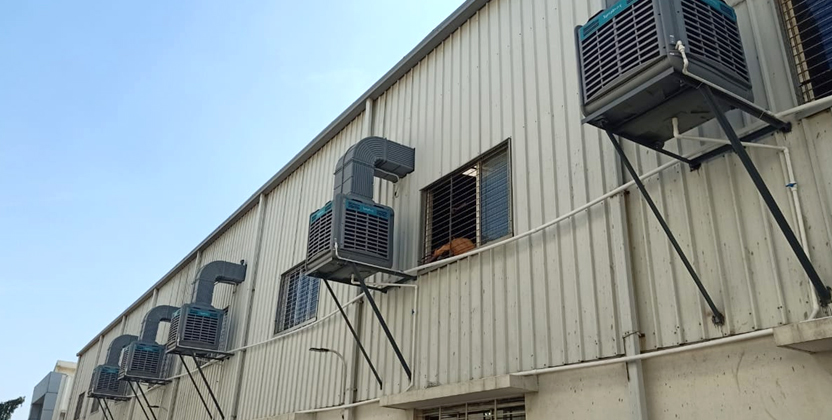
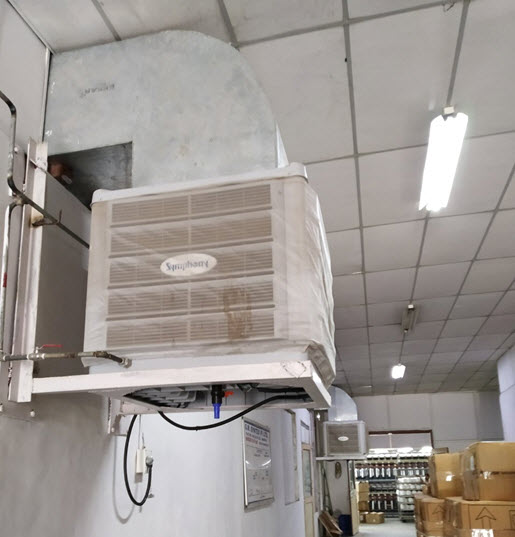
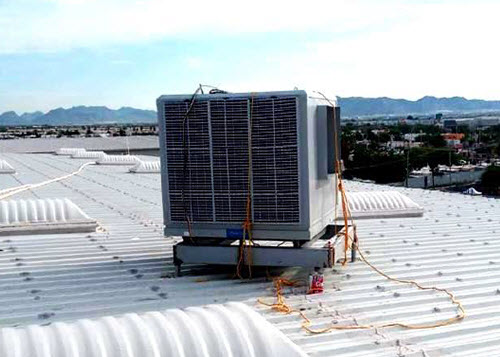
Large garment factories are now installing ducted air coolers to channel cool air across production lines. These systems ensure consistent internal temperatures, which help preserve fabric quality, enhance stitching precision and improve shift productivity in Hosiery, especially during Ludhiana’s intense summer months.
Bicycle and Component Manufacturing in Industrial Cooling: Ensuring Precision in High Heat
Ludhiana is a hub for bicycle manufacturing, producing parts such as pedals, chains, rims and frames. The work environment often includes long shifts and minimal ventilation, increasing heat-related fatigue and material instability.
Heat-Related Issues in Bicycle Manufacturing:
- Workers experience heat stress in closed, high-activity areas.
- Hydraulic press and welding zones create concentrated heat pockets.
- Excess heat causes minor deformities in precision metal parts.
Cooling Strategy for Bicycle Industry:
Industrial air coolers with wide-area airflow are helping manufacturers create breathable, temperature-controlled spaces. Improved thermal conditions lead to more accurate component assembly and reduce downtime caused by material warping or worker fatigue.
Agricultural Machinery Workshops: Controlling Foundry-Level Heat
From threshers to tractor parts, Ludhiana’s agricultural machinery workshops involve intense processes like welding, forging and large-scale fabrication. These operations take place in semi-open sheds or covered bays with poor airflow.
On-Site Challenges:
- Heat from furnaces and tools builds up quickly, making the air dense and dry.
- Elevated temperatures cause tool misalignment and faster wear.
- Welders and grinders face concentration issues and physical discomfort.
Cooling Strategy:
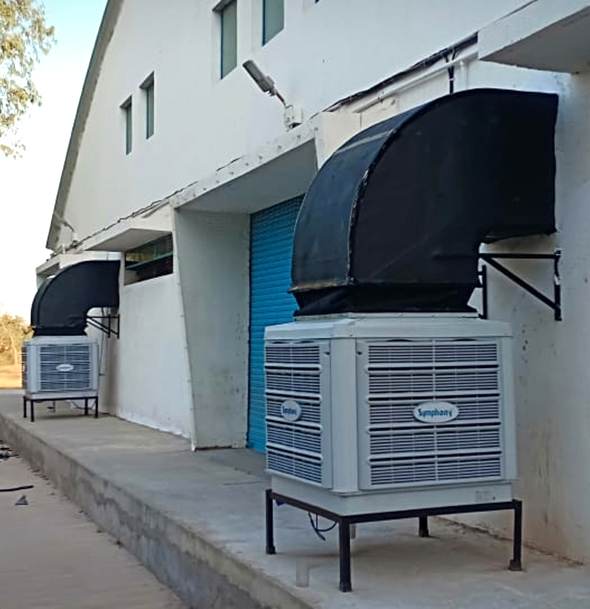
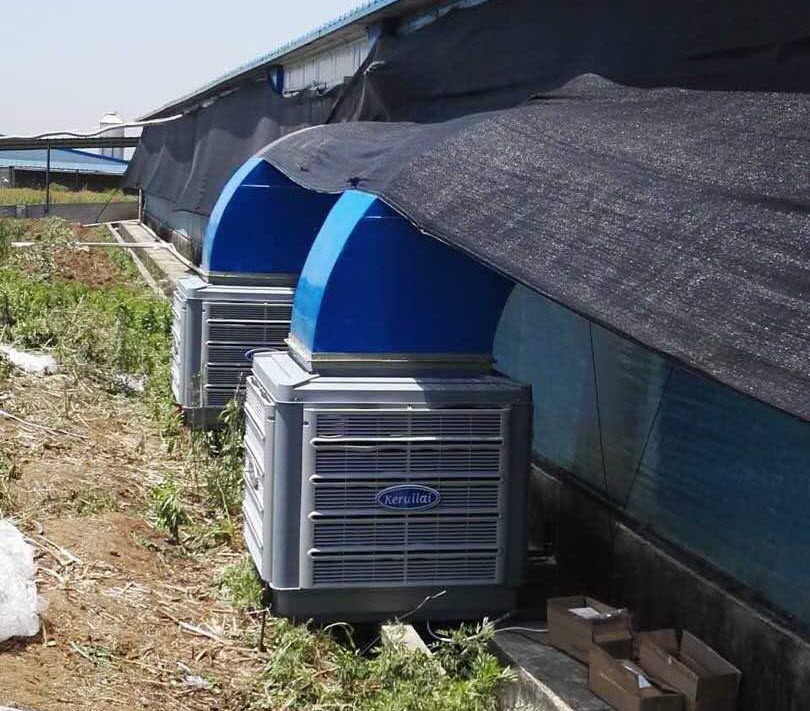
Heavy-duty air coolers, positioned near critical areas like finishing zones, help reduce ambient temperature and improve safety. Depending on the layout, businesses choose either ducted or standalone systems to optimize airflow and maintain precision in large-format component work.
Metal and Steel Fabrication: Managing Heat from Sparks to Storage
In Ludhiana’s mid-sized fabrication units, operations like wire drawing, sheet cutting and laser shaping are standard. Despite being compact, these facilities experience rapid heat accumulation.
Common Thermal Challenges:
- Laser and folding machines produce continuous localized heating.
- Wire tensioning rooms become overheated without active airflow.
- Processed metal stored in hot zones risks deformation.
Cooling Strategy:
Duct air coolers help circulate air across workstations, reducing the risk of heat distortion and maintaining machine calibration. With consistent cooling, workers complete longer runs more efficiently, even in heat-intensive zones.
Conclusion
Ludhiana’s industrial growth is impressive-but with it comes the challenge of managing internal heat loads in increasingly mechanized environments. Traditional ventilation systems often fall short, especially in large or enclosed production units. In this context, industrial cooling systems are becoming essential infrastructure.
From textiles to metalwork, manufacturers in Ludhiana are no longer viewing cooling as optional. They now see it as a necessary upgrade for protecting materials, improving worker efficiency and meeting production targets. With modern solutions like duct air coolers, Ludhiana is ensuring its industries stay resilient-even in the face of rising operational temperatures.
FAQs About Industrial Cooling Solutions
Major Sectors in Ludhiana Seeking Industrial Cooling Solutions
Why are industrial cooling systems important in Ludhiana?
Ludhiana’s factories operate in high-heat environments due to machinery and long shifts. Industrial cooling systems help manage indoor temperatures, reduce worker fatigue and improve product quality.
Which sectors in Ludhiana rely most on industrial cooling?
Key sectors include textiles, hosiery, bicycle component manufacturing, agricultural machinery production and metal fabrication.
How do ducting coolers help in apparel manufacturing?
Ducting coolers distribute cool air across stitching, dyeing and packaging zones, helping maintain fabric integrity and keeping workers comfortable during extended shifts.
Are heavy-duty coolers effective in welding and metalwork areas?
Yes. Heavy-duty coolers are ideal for high-temperature zones like welding and cutting stations, where stable temperatures are crucial for worker safety and operational precision.

Maulik Solanki is a seasoned B2B Product Marketing professional specializing in Industrial and Commercial Coolers in the LSV (Large Space Venticooling) segment. With 13+ years of experience, he drives brand building and audience engagement for Symphony’s LSV solutions through integrated offline and online strategies. Backed by an MBA in Marketing and earlier experience as a Regional Marketing Manager in banking, Maulik brings strong skills in sales, advertising, and events. He enjoys exploring new marketing ideas and cooling technologies and writes to help readers understand Symphony’s offerings.

Sourav Biswas is a senior marketing leader heading the LSV (Large Space Venticooling – B2B) marketing function at Symphony Limited. He shapes the brand’s strategic narrative, strengthens market leadership, and ensures excellence across all B2B cooling solutions. With deep expertise in Strategic Marketing, Brand Management, Advertising, and PR, he reviews content with analytical precision and alignment to Symphony’s vision. Passionate about mentoring and tracking B2B trends, Sourav ensures every content piece reflects accuracy, relevance, and strategic depth.