Symphony Venticool

Read AI-Generated Summary:

Industrial evaporative cooler maintenance keeps large cooling units running at full capacity, extends component life, and prevents costly downtime in factories and warehouses. A complete preventive maintenance schedule covers daily, weekly, monthly, preseason, and annual checks across cooling pads, water tanks, pumps, fans, motors, and ducting. This guide outlines a full industrial cooler maintenance schedule, explains how to clean cooling pads effectively, covers hard water treatment, troubleshooting, and component replacement, and shows how Symphony Venticool can support factories with reliable industrial air cooler servicing.

0:00 / 0:00

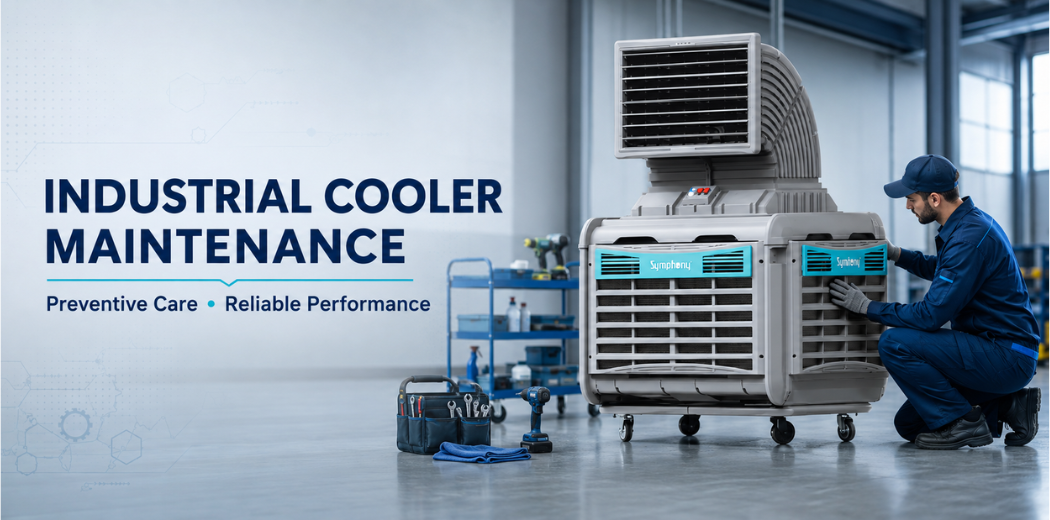
Large evaporative cooling systems work harder than any household unit, running for long shifts across dusty factory floors, warehouses, and open industrial sheds. Without a structured industrial evaporative cooler maintenance routine, airflow drops, water quality suffers, and components wear out faster than expected. This guide lays out a complete industrial air cooler maintenance schedule, covering everything from daily checks to annual servicing, so facility teams can keep cooling performance consistent through every season.

Why Industrial Evaporative Cooler Maintenance Matters

Industrial air coolers rely on continuous evaporation across wet honeycomb pads, a constant water supply, and steady airflow from the fan and motor assembly. When any one of these elements is neglected, cooling output drops noticeably, energy consumption rises, and the unit is put under unnecessary strain.

  • Consistent evaporative cooler maintenance protects airflow capacity, so factories and warehouses maintain a stable working temperature through peak summer months.
  • Regular industrial cooler cleaning reduces the buildup of dust, mineral scale, and organic growth inside the pads and water tank, which directly affects indoor air quality.
  • Scheduled industrial cooler preventive maintenance reduces unplanned breakdowns, which in a production environment can translate into real downtime and lost output.
  • Proper water hygiene practices, in line with recognized guidance from bodies such as the World Health Organization on water system hygiene, help limit microbial growth in standing water and cooling pads.
  • Routine servicing extends the working life of the fan, motor, pump, and cooling pads, protecting the original investment made in the cooling system.
Call Now for Instant Assistance!

Industrial Air Cooler Maintenance Schedule

A well planned industrial cooler maintenance schedule spreads tasks across five intervals, daily, weekly, monthly, pre season, and annual, so that small issues are caught before they turn into major repairs.

Daily Checks

  • Confirm the water tank has adequate water and the float valve is filling correctly.
  • Listen for unusual noise from the fan or pump during startup.
  • Check that all cooling pads are evenly wet and that water is distributing across the full pad surface.
  • Look for visible water leaks around the tank, pump housing, or duct joints.

Weekly Checks

  • Inspect cooling pads for dust buildup or dry patches that reduce evaporation efficiency.
  • Clean the exterior grille and louvers to remove accumulated dust.
  • Check the water pump for consistent flow and listen for straining sounds.
  • Verify airflow at duct outlets to confirm even distribution across the cooled area.

Monthly Checks

  • Drain and clean the water tank to remove sediment, algae, and mineral deposits.
  • Inspect and tighten fan belt tension where applicable.
  • Check electrical connections, plugs, and control panel for signs of wear or corrosion.
  • Examine duct joints and diffusers for dust blockage that reduces airflow.

Pre-Season Maintenance

  • Deep clean or replace cooling pads before the start of the hot season for maximum cooling efficiency.
  • Flush the entire water circuit, including the tank, pump, and distribution pipes.
  • Test the motor and fan under full load before continuous seasonal operation begins.
  • Inspect and service water treatment components, such as scale inhibitors, ahead of peak usage.

Annual Maintenance

  • Conduct a full inspection of the fan, motor, bearings, and belt drive system.
  • Assess overall pad condition and plan replacement if efficiency has dropped below acceptable levels.
  • Review ducting for structural wear, insulation damage, or leakage over the past year.
  • Carry out a complete electrical safety audit, including earthing and wiring insulation checks.

Maintenance Frequency at a Glance

Frequency Primary Focus Area Purpose
Daily Water level, pad wetting, unusual noise Catch immediate operational issues
Weekly Pads, exterior grille, pump flow, airflow Maintain steady cooling performance
Monthly Tank cleaning, belt tension, electrical points Prevent scale buildup and wear
Pre Season Pad condition, water circuit, motor test Prepare the unit for peak demand
Annual Full mechanical and electrical inspection Extend equipment life and safety

Cooling Pad Maintenance

Cooling pads, usually made of cellulose honeycomb material, are the core component behind every evaporative cooler. As warm air passes through the water saturated pad, evaporation lowers the air temperature before it is pushed into the workspace. Dust, hard water scale, and biological growth on the pad surface reduce this evaporation efficiency significantly over time.

How to Clean Industrial Evaporative Cooler Pads Effectively: Step by Step

  • Switch off the cooler and disconnect the power supply before beginning any pad maintenance.
  • Remove the outer panel to access the cooling pad frame without damaging the honeycomb structure.
  • Rinse the pad gently with clean, low pressure water to loosen dust and surface scale.
  • For mineral deposits, soak the pad in a mild descaling solution recommended for evaporative cooling media, then rinse thoroughly.
  • Inspect the pad for tears, crumbling edges, or hardened scale that will not clear with rinsing.
  • Allow the pad to air dry partially before reinstalling to avoid trapping debris behind the frame.
  • Reassemble the panel and run the unit briefly to confirm even water distribution across the full pad surface.

Cooling pads that show persistent dry spots, brittle texture, or reduced airflow even after cleaning have likely reached the end of their usable life and should be considered for replacement rather than repeated cleaning.

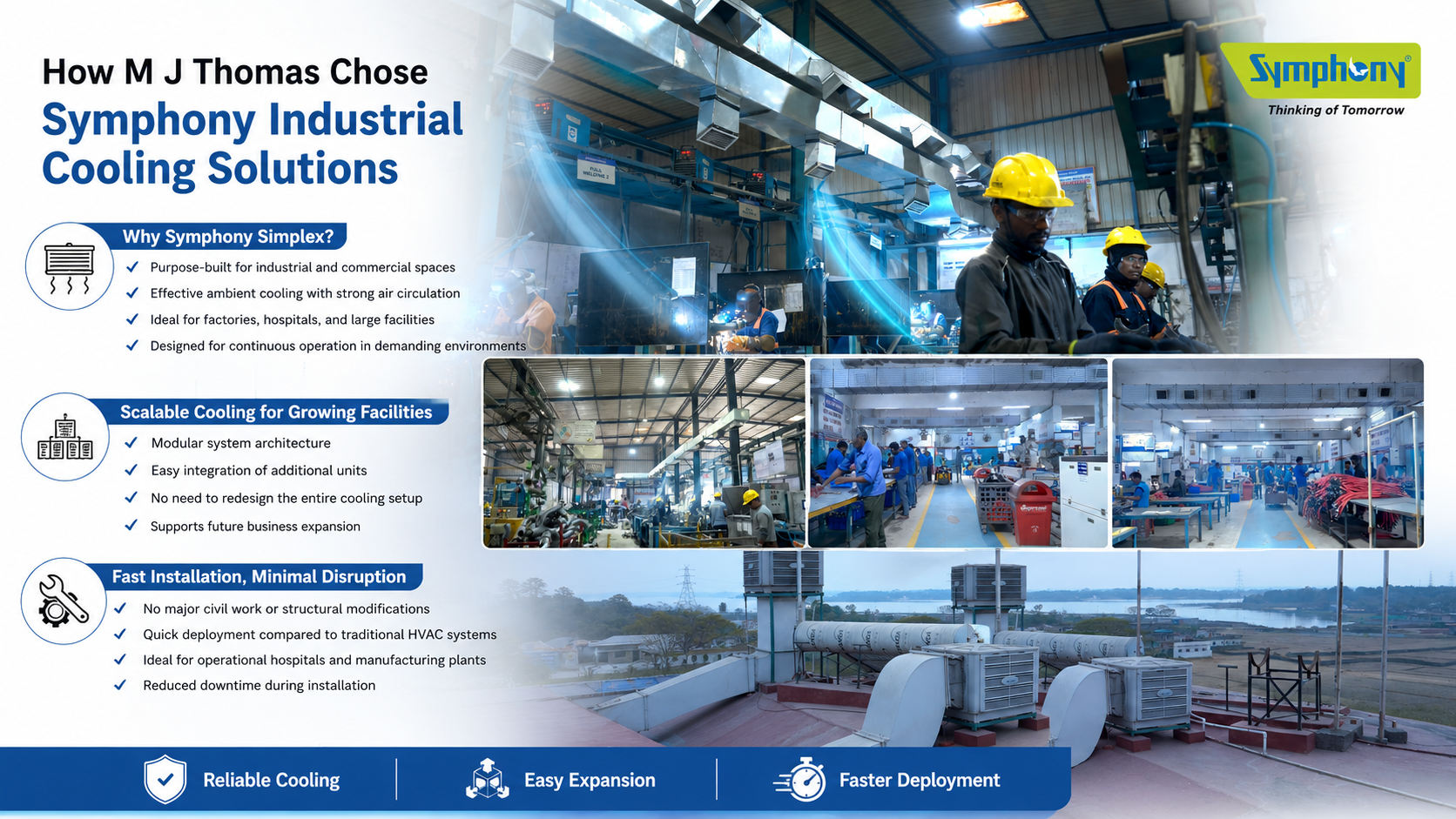
How M J Thomas Chose Symphony Industrial Cooling Solutions

Water Tank and Pump Maintenance

The water tank and pump keep the cooling pads consistently saturated, and both are directly affected by local water quality. Hard water, common across many parts of India, deposits calcium and magnesium scale on tank walls, pump components, and pad surfaces, gradually reducing efficiency.

  • Drain and scrub the tank monthly to remove sediment and prevent algae growth, especially in units exposed to sunlight or warm ambient conditions.
  • Check the pump intake for blockages caused by scale flakes or debris that has settled at the base of the tank.
  • Install a scale inhibitor or use treated water where hardness levels are high, since untreated hard water is one of the leading causes of reduced pad and pump life.
  • Where feasible, use a small inline water softening or filtration unit to reduce mineral load entering the cooler.

Recommended Water Treatment by Hardness Level

Water Hardness Level Typical Impact on Coolers Recommended Treatment
Soft to moderate Minimal scale buildup Routine tank cleaning is usually sufficient
Hard water Visible scale on pads and tank walls Scale inhibitor tablets or periodic descaling rinse
Very hard water Frequent pad clogging, reduced pump life Inline water softener or filtration before the inlet

Fan and Motor Inspection

The fan and motor assembly drives airflow through the pads and out through the ducting, so consistent inspection protects both cooling capacity and energy efficiency.

  • Check belt tension and alignment monthly, since a loose or misaligned belt reduces fan speed and increases wear on the motor.
  • Lubricate motor bearings as specified by the manufacturer to prevent overheating during long duty cycles.
  • Listen for grinding, rattling, or humming sounds that indicate bearing wear or an unbalanced fan blade.
  • Clean dust and debris from the motor housing to prevent overheating, particularly in dusty industrial environments.

Duct and Airflow Inspection

In ducted industrial cooling systems, airflow efficiency depends heavily on duct condition and diffuser placement.

  • Inspect duct joints for leakage that allows cooled air to escape before reaching the intended zone.
  • Clear diffusers and outlet grills of dust buildup that restricts airflow volume.
  • Confirm that duct length and layout still match the original design, since modifications to the workspace can affect airflow distribution over time.
  • Check insulation on exposed ducting, especially where it passes through unconditioned areas, to minimize heat gain before the air is delivered.

Electrical and Safety Checks

Industrial coolers run for extended hours, which makes electrical safety checks essential for both equipment protection and workplace safety.

  • Inspect wiring, plugs, and control panels for signs of wear, corrosion, or loose connections.
  • Confirm proper earthing at the unit, in line with standard electrical safety practice for water based cooling equipment.
  • Test capacitors and starter components annually, since worn capacitors are a common cause of motor start failures.
  • Ensure moisture does not accumulate near electrical enclosures, particularly in humid or coastal installations.

Signs Your Industrial Cooler Needs Professional Servicing

  • Noticeably reduced airflow or cooling output compared to previous seasons.
  • Persistent musty or foul odor coming from the unit, which often signals stagnant water or biological growth.
  • Water leakage around the tank, pump housing, or duct connections.
  • Unusual vibration, rattling, or grinding noise from the fan or motor assembly.
  • Visible white scale deposits on the pads, tank, or nearby surfaces indicating advanced hard water buildup.
  • Higher humidity in the workspace without a corresponding drop in temperature, which often points to saturated or clogged pads.
How M J Thomas Chose Symphony Industrial Cooling Solutions

When to Replace Key Components

Not every issue can be resolved through cleaning alone. Recognizing when a component has reached the end of its service life prevents repeated repair costs and protects overall cooling performance.

  • Cooling pads: replace when scale buildup, tearing, or dry patches persist despite regular cleaning, typically every one to two cooling seasons under heavy industrial use.
  • Water pump: replace when flow output drops noticeably or the motor runs hot despite a clean tank and clear intake.
  • Fan belt: replace at the first sign of cracking, fraying, or persistent slipping after retensioning.
  • Motor bearings: replace when noise or vibration continues after lubrication and alignment checks.
  • Float valve and water level sensors: replace if the tank consistently overfills, underfills, or fails to shut off properly.

Keeping a stock of recommended spare parts such as cooling pads, pump assemblies, belts, and float valves reduces downtime when a component does need urgent replacement.

Common Issues With Large Evaporative Cooling Units and Troubleshooting

Problem Likely Cause Recommended Action
Weak or no airflow Blocked duct, worn belt, or motor fault Inspect ducting, check belt tension, test motor load
Reduced cooling despite full airflow Dry or scaled cooling pads Clean or replace pads, verify even water distribution
Foul smell from the unit Stagnant water or algae in the tank Drain, scrub, and disinfect the tank and pads
Water leakage Loose fittings or cracked tank seal Check seals, tighten fittings, replace damaged parts
Excess humidity indoors Overwatered or clogged pads Adjust water flow, clean or replace pads
Frequent motor tripping Electrical fault or overheating motor Schedule an electrical and motor safety inspection

How to Choose a Maintenance Service Provider for Industrial Evaporative Coolers

When selecting support for industrial evaporative cooler maintenance, facility managers typically look for a provider with genuine product expertise, access to genuine spare parts, and the ability to service large scale ducted systems rather than only small household units.

  • Experience specifically with industrial and large space cooling systems, not only residential air coolers.
  • Access to genuine spare parts, including cooling pads, pumps, and motors matched to the original specification.
  • A structured preventive maintenance schedule rather than one time repair visits alone.
  • Clear guidance on water treatment suited to local water hardness conditions.

Symphony Venticool, as the manufacturer of the VentiCool range of industrial ducting coolers, provides servicing support built around the original design specification of its own units, which helps ensure that replacement parts, water flow settings, and airflow configuration match what the cooler was engineered for. Businesses running Symphony Venticool systems can reach out directly to the Symphony Venticool team for scheduled maintenance visits, genuine spare parts, and technical guidance suited to their specific model and facility layout.

Quick Response Guaranteed

Preventive Maintenance Checklist

  • Daily: check water level, pad wetting, and listen for unusual noise.
  • Weekly: inspect pads, clean exterior grille, verify pump flow and duct airflow.
  • Monthly: drain and clean the tank, check belt tension, inspect electrical connections.
  • Pre season: deep clean or replace pads, flush the water circuit, load test the motor.
  • Annual: full mechanical inspection, pad condition review, complete electrical safety audit.
  • Ongoing: monitor water hardness and adjust treatment, keep key spare parts in stock.

Frequently Asked Questions

Industrial Evaporative Air Cooler Maintenance: Complete Preventive Maintenance Schedule

How often should an industrial air cooler be serviced?

A basic inspection should be carried out weekly, tank cleaning done monthly, and a full professional servicing scheduled at least once before every cooling season, with an additional annual check covering the motor, fan, and electrical components.

How often should cooling pads be cleaned?

Cooling pads should be checked weekly for dust buildup and cleaned at least once a month during active use, with a deeper clean or inspection carried out before the start of each cooling season.

When should evaporative cooler pads be replaced?

Pads should be replaced when cleaning no longer restores even water distribution, when tearing or crumbling is visible, or when scale buildup has hardened, which typically happens every one to two seasons under continuous industrial use.

How do you maintain an industrial air cooler for optimal performance?

Consistent performance depends on following a structured schedule that covers daily water and noise checks, weekly pad and airflow inspection, monthly tank cleaning, pre season deep cleaning, and an annual full mechanical and electrical review.

Does hard water affect industrial air coolers?

Yes, hard water is one of the most common causes of reduced cooling efficiency, since calcium and magnesium minerals gradually form scale on the cooling pads, tank walls, and pump components, restricting water flow and evaporation.

How often should the water tank be cleaned?

The water tank should be drained and cleaned at least once a month during regular use, with more frequent cleaning recommended in areas with hard water or high dust exposure, since sediment and mineral buildup accelerate under these conditions.

<< 1 >>


Conclusion

A structured, season aware maintenance schedule is what separates an industrial evaporative cooler that performs reliably for years from one that loses efficiency within a single season. Consistent attention to cooling pads, water quality, pumps, fans, and ducting keeps energy consumption low and airflow strong, even during peak summer demand across factories, warehouses, and large commercial spaces.

For businesses running Symphony Venticool industrial ducting coolers, professional support is available directly from the Symphony Venticool team, covering scheduled preventive maintenance, genuine spare parts, and technical guidance tailored to each installation. Reach out to Symphony Venticool to plan a maintenance schedule suited to your facility and keep your cooling system running at its best through every season.


About the Author
About the Reviewer

Sourav Biswas is a senior marketing leader heading the LSV (Large Space Venticooling – B2B) marketing function at Symphony Limited. He shapes the brand’s strategic narrative, strengthens market leadership, and ensures excellence across all B2B cooling solutions. With deep expertise in Strategic Marketing, Brand Management, Advertising, and PR, he reviews content with analytical precision and alignment to Symphony’s vision. Passionate about mentoring and tracking B2B trends, Sourav ensures every content piece reflects accuracy, relevance, and strategic depth.


×
×
Index