




Table of Contents
How are modern outdoor cooling systems different from old fans and misters?
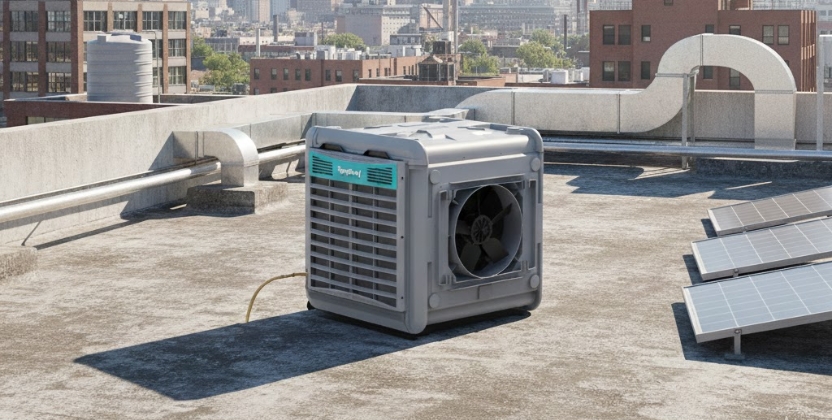
The global imperative for comfortable, usable outdoor space, driven by rising urban temperatures and evolving social habits, has positioned the outdoor cooling system at the forefront of modern climate engineering. These sophisticated devices are no longer restricted to simple fans or misters. They now represent complex, integrated solutions that merge principles of thermodynamics, aerodynamics, and advanced materials science to create sustainable microclimates. The technology is shifting focus from merely mitigating heat to proactively managing the thermal environment, making once unusable public and commercial areas vital parts of the urban fabric year round. This new generation of transportable climate control is defined by efficiency, intelligent operation, and a profound commitment to resource conservation, particularly in water and energy consumption.
What is a hybrid outdoor cooling system and how does it create comfort?
The most effective approach to establishing thermal comfort in an open air environment is not through a single mechanism but through the thoughtful integration of several core principles. This is the foundation of the hybrid outdoor cooling system, a concept that strategically merges passive strategies like shading with active methods like high pressure misting and targeted air movement. The system operates on the understanding that addressing multiple sources of heat simultaneously yields superior results compared to tackling them in isolation.
How does shade engineering work in an outdoor cooling unit?
- This is the first critical and passive layer, providing immediate heat rejection.
- By blocking solar radiation before it hits surfaces and occupants, the perceived temperature can drop immediately by 10 to 15 degrees Fahrenheit.
- Modern structures use adjustable louver systems that track the sun’s path or materials engineered to block specific UV wavelengths while allowing visible light.
Why is air movement so important in outdoor cooling?
- This layer uses fans or specialized air handlers to create an artificial breeze.
- Airflow accelerates the body’s natural evaporative cooling process by moving warm, humid air away from the skin.
- High volume, low speed (HVLS) fans are frequently integrated to move massive quantities of air efficiently over a wide area, ensuring thermal uniformity.
How is high pressure misting used to cool the air rapidly in outdoor cooling system?
- This is the most active layer, utilizing high pressure pumps to atomize water into ultrafine droplets, often less than 10 microns in diameter.
- These fine droplets flash evaporate almost instantly, and since evaporation is an endothermic process, it efficiently draws heat from the surrounding air, rapidly lowering the ambient temperature.
- Advanced controls continuously monitor ambient temperature and humidity, dynamically adjusting the misting frequency to prevent oversaturation and maintain optimal comfort without creating a damp environment.
Can evaporative cooling systems really solve the Urban Heat Island effect in cities?
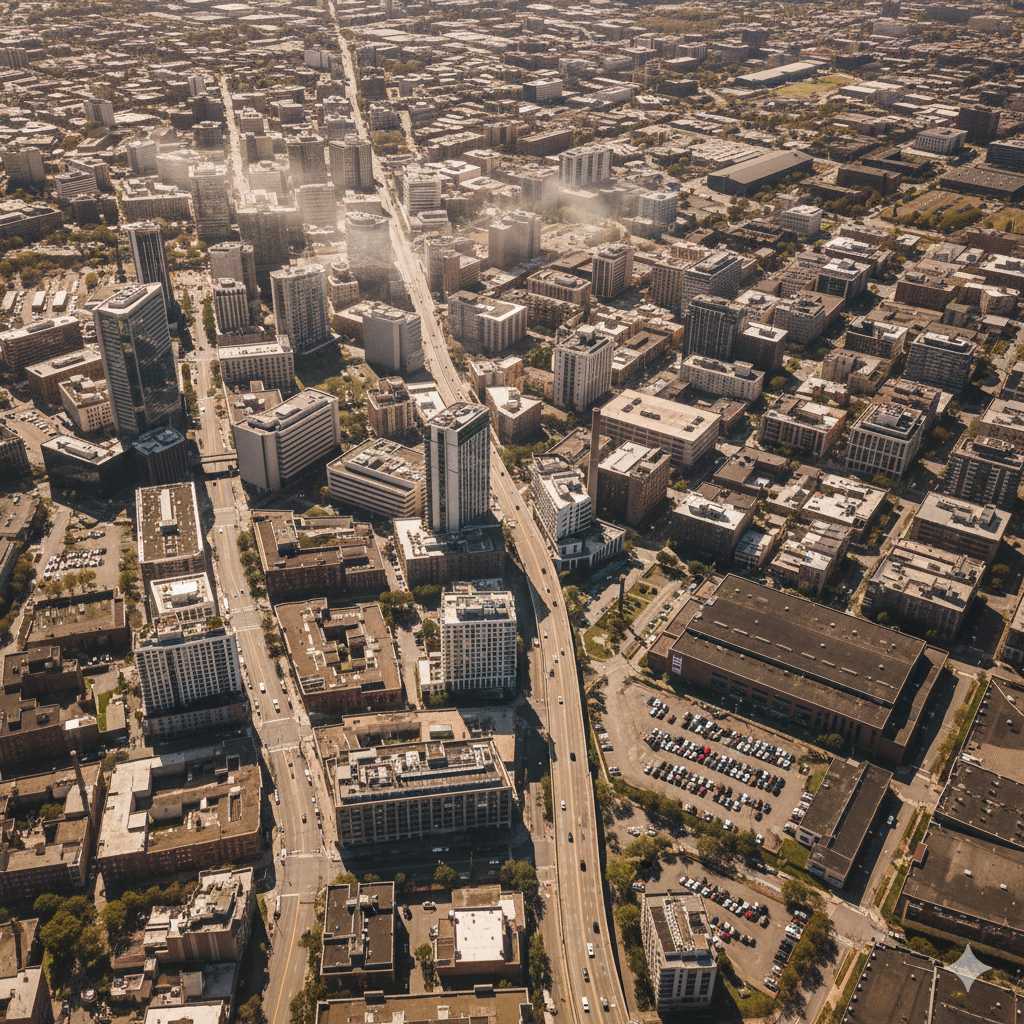
The phenomenon known as the Urban Heat Island (UHI) effect, where dense infrastructure, asphalt, and concrete absorb and retain heat, makes urban centers significantly hotter than surrounding rural areas. Evaporative cooling systems are emerging as a core solution for mitigating this localized overheating and reinventing outdoor comfort in dense urban hotspots. These systems are being deployed at the civic scale, transforming public spaces like plazas, bus stops, and open air markets into thermally safe havens.
How are industrial-grade cooling units integrated into public spaces?
- Industrial grade evaporative cooling units are being integrated into public infrastructure like transit shelters and park structures.
- These units draw in hot ambient air, pass it over specialized wetted media, and then discharge the cooler, heavier air back into the environment, providing measurable temperature decreases.
How do smart water injection systems prevent humidity buildup in outdoor coolers?
- The use of smart water curtains and sprinklers is employed in strategic urban locations.
- These systems operate with sophisticated weather sensors, programmed to start only when the temperature surpasses a certain threshold and when the relative humidity remains low enough for effective evaporation.
- This sensor controlled operation prevents unnecessary water use and mitigates the risk of excessive humidity buildup.
What is Broad Civic Impact in Outdoor Cooling Systems :
- The collective effect of numerous, strategically placed evaporative cooling points can notably lower the local peak temperatures in dense neighborhoods.
- This reduction lessens the reliance on energy intensive mechanical air conditioning units in nearby buildings, contributing to a lower regional ecological footprint.
- The technology utilizes water as its primary cooling agent, avoiding chemical refrigerants and offering an economically sensible and ecologically sound solution.
How do materials like nanocoatings improve the efficiency and durability of outdoor cooling systems?
The mechanical performance and energy efficiency of any outdoor cooling system are fundamentally limited by the materials used in its construction, particularly in components responsible for heat exchange and radiation. A key technological advancement addressing this limitation is the application of heat resistant nanocoatings. These coatings, engineered at the atomic level, are designed to significantly manipulate the optical, thermal, and surface properties of components.
Enhancing Heat Dissipation with Nanocoatings in Cooling Systems
- Nanocoatings are applied to external casings and heat sinks to create a high emissivity surface.
- By increasing a material’s ability to radiate energy, these coatings allow the unit to more effectively dissipate waste heat into the atmosphere.
- This effective heat rejection keeps internal components running cooler, maximizing efficiency, particularly under high thermal loads.
Reducing Solar Absorption with specialized coatings in outdoor cooling system
- Other nanocoatings are designed to be highly reflective to solar radiation, specifically the near infrared (NIR) wavelengths.
- When applied to the exterior shell or air intake of an outdoor cooling system, these coatings prevent the unit itself from heating up internally.
- Reflecting solar energy decreases the initial heat load the cooling system must manage, leading to lower energy consumption.
Improving Durability and Maintenance in Outdoor Cooling Solutions:
- The coatings provide superior corrosion resistance against mineral rich water and environmental pollutants found in industrial or coastal settings.
- They enhance anti fouling properties by preventing the buildup of scale, dirt, and biological agents on cooling pads or heat exchange surfaces.
- This protection reduces maintenance frequency and ensures continuous peak heat transfer efficiency, extending the operational lifespan of the entire transportable climate control unit.
Why are outdoor cooling systems now considered crucial public health infrastructure?
The increasing frequency and intensity of heatwaves have driven a fundamental social and governmental shift: viewing outdoor cooling not as a luxury, but as a crucial component of public health infrastructure and climate justice. The implementation of smart cooling systems in public spaces reflects this realization, transforming how cities protect vulnerable populations and maintain social and economic activity during extreme thermal events.
Data Driven Resource Allocation in Outdoor Cooling Systems:
- Smart outdoor cooling system installations are equipped with sensors that continuously monitor not just temperature, but also the Wet Bulb Globe Temperature (WBGT).
- WBGT is a holistic measure of heat stress that accounts for air temperature, humidity, radiant heat, and wind speed.
- AI algorithms use this real time data, combined with population density metrics, to dynamically allocate cooling resources, such as increasing misting near a crowded public transit point.
Promoting Equity and Resilience in Outdoor Cooling Systems:
- The push for heat safe outdoor public spaces recognizes that low income communities, outdoor workers, and the unhoused are disproportionately affected by heat exposure.
- City leaders are incorporating low energy radiant cooling technologies into public benches and structures.
- These systems circulate chilled water through panels, cooling the human body directly through radiation, which is highly energy efficient compared to cooling ambient air.
Autonomous and Sustainable Operation in Outdoor Cooling Systems:
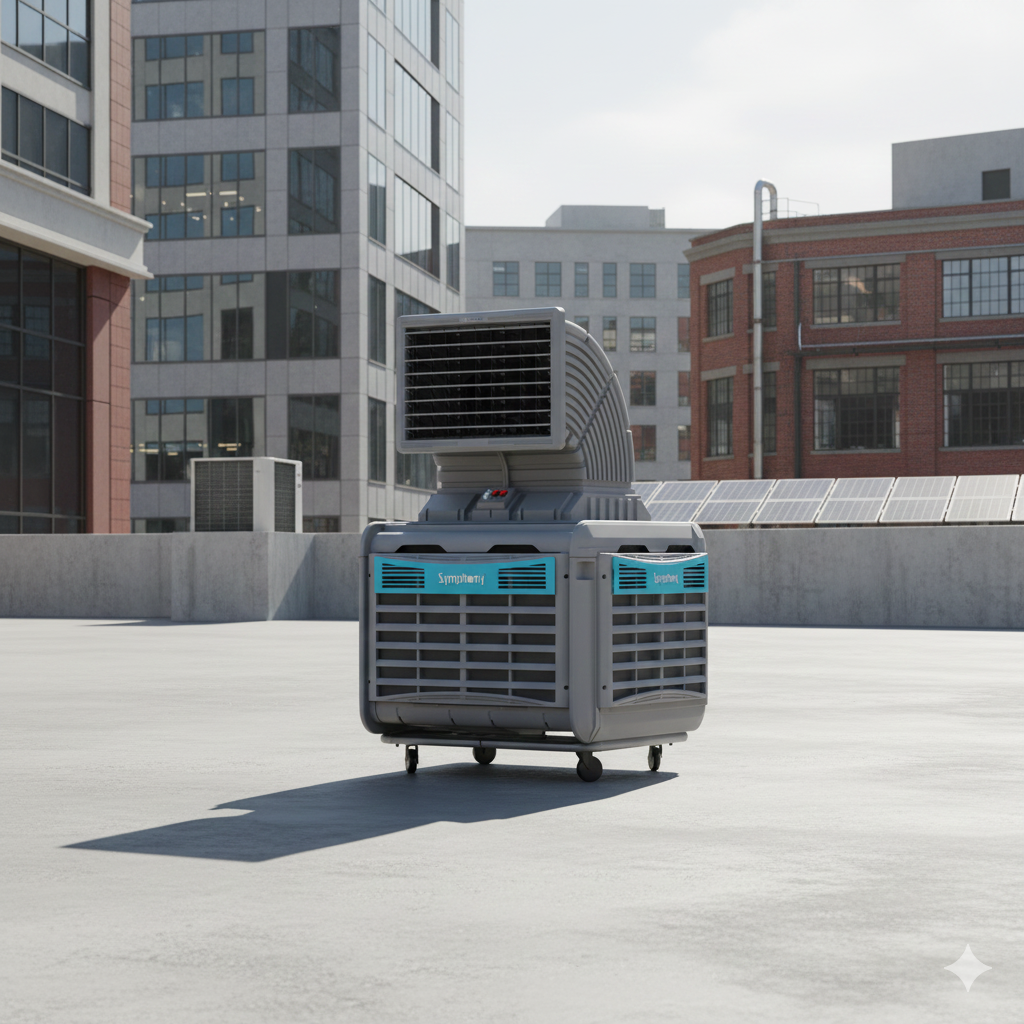
- Many public cooling zones utilize integrated solar canopies, making the system self sufficient and reducing reliance on the main power grid during peak demand.
- Establishing publicly funded, monitored, and intelligently managed cooling zones is a proactive approach to thermal governance.
- This strategy is a clear commitment to enhancing urban resilience and equity, demonstrating that smart cooling is indispensable for the future of public life and preventing heat related illnesses.
Final consensus on the future of outdoor cooling technology
The contemporary outdoor cooling system has evolved far beyond its simple predecessors, emerging as a critical piece of the urban adaptation puzzle.
- The success of hybrid cooling solutions proves that combining passive design principles like shading with active, resource managed techniques like high pressure misting and dynamic airflow yields the most effective and efficient thermal environment.
- This commitment to efficiency is further amplified by material science advancements, where heat resistant nanocoatings fundamentally improve the thermal performance, longevity, and reliability of the equipment itself.
- Crucially, the widespread adoption of these systems, particularly in dense urban hotspots, is driven by a societal understanding that outdoor comfort is tied to public health and equity.
- The use of smart, sensor driven systems allows cities to proactively manage heat stress, protecting vulnerable populations and sustaining public life during extreme weather events.
cooling system will be one characterized by greater integration, where the technology disappears into the environment, offering seamless, sustainable, and intelligent microclimate management that supports resilient and livable cities worldwide.
Why Symphony LSV Leads in Outdoor Cooling System?
Symphony Large Space Venti-Cooling (LSV) systems redefine outdoor comfort by delivering a powerful, continuous stream of fresh, cooled air, making them the superior choice for open and semi-open environments where traditional air conditioning is ineffective. Built with durable, weather-resistant UV-stabilized engineering plastic, these units are specifically designed to withstand harsh outdoor conditions while maintaining peak performance in settings like open-air restaurants, industrial yards, and large events. By utilizing advanced evaporative technology, they not only lower ambient temperatures significantly but also filter out dust and pollutants, all while operating at roughly 10% of the installation cost of HVAC systems and consuming 90% less energy. This unique combination of heavy-duty durability, massive coverage area, and operational economy makes Symphony LSV the most efficient and reliable system for large-scale outdoor cooling needs.
FAQs About Outdoor Cooling System
Outdoor Cooling System for Urban and Industrial Climate Control
What is an outdoor cooling system, and how does it work?
An outdoor cooling system is a type of cooling solution designed for large, open-air environments such as commercial patios, event spaces, warehouses, and industrial settings. These systems use outdoor air cooling technology, typically relying on evaporative cooling, to reduce the temperature by using water evaporation. Warm air is drawn through water-saturated pads, cooled, and then circulated back into the environment, providing a natural and energy-efficient cooling effect.
What are the benefits of using an outdoor cooler for commercial spaces?
Outdoor coolers provide numerous benefits for commercial applications, including:
- Cost-effective cooling: They are more affordable and energy-efficient than traditional air conditioning units.
- Quick and efficient: They can cool large outdoor areas, such as patios, event venues, and outdoor dining spaces, rapidly and effectively.
- Environmentally friendly: Outdoor air cooling systems use water evaporation, a natural process, which consumes less electricity and reduces environmental impact.
- Easy to install and move: These systems are portable and can be relocated as needed to accommodate changing requirements.
Can an outdoor air cooling system be used in large industrial environments?
Yes, outdoor air cooling systems are ideal for large industrial applications such as factories, warehouses, and construction sites. They provide a cost-effective solution for cooling vast, open-air spaces where traditional air conditioning is impractical. Outdoor cooling systems can reduce ambient temperatures and improve worker comfort and productivity in industrial settings.
How does an outdoor air cooler differ from traditional air conditioning systems?
The primary difference between outdoor air coolers and traditional air conditioning lies in the cooling technology used. Outdoor coolers rely on evaporative cooling, which cools the air by passing it through water-soaked pads. This method is more energy-efficient and environmentally friendly compared to traditional air conditioners, which use refrigerants and consume more power to cool the air.
What types of outdoor environments are suitable for outdoor cooling systems?
Outdoor cooling systems are versatile and suitable for various environments, including:
- Commercial spaces: Restaurants, cafes, and event venues that need to keep outdoor areas comfortable for guests.
- Industrial environments: Warehouses, factories, and construction sites that require cooling solutions for large, open spaces.
- Public outdoor areas: Parks, stadiums, and open-air markets where cooling is necessary during hot weather.
These systems work best in low to moderate humidity areas, but they can still offer relief in more humid environments with reduced cooling efficiency.
Are outdoor air coolers energy-efficient?
Yes, outdoor air coolers are highly energy-efficient compared to traditional air conditioning systems. Outdoor cooling relies on water evaporation, which uses far less electricity than the refrigerant-based systems of conventional air conditioning units. This makes outdoor coolers a more sustainable and affordable option for businesses looking to reduce their energy consumption.
How do outdoor air coolers handle high humidity?
Outdoor air cooling systems are generally more effective in environments with low to moderate humidity. In highly humid areas, the cooling efficiency of outdoor coolers may decrease since the air is already saturated with moisture. However, some advanced models are designed to work in higher humidity levels, offering cooling with a slightly reduced effect. It's important to assess the humidity level in your location before selecting an outdoor cooling system.
Are outdoor air coolers easy to maintain?
Yes, outdoor air coolers are relatively low-maintenance. Routine maintenance includes:
- Cleaning the water tank to prevent mold and bacteria buildup.
- Changing cooling pads periodically to ensure optimal cooling performance.
- Checking water levels to make sure the system operates effectively.
- Inspecting the fan and motor for any blockages or damage.
These systems are designed for easy upkeep to ensure long-term performance.
Can outdoor coolers be used in all climates?
While outdoor coolers are suitable for most climates, their effectiveness depends on the level of humidity in the area. Outdoor air cooling systems work best in dry, hot climates where the evaporation process can cool the air effectively. In humid climates, their efficiency may be reduced, and additional cooling methods may be necessary. It’s important to consider your local climate conditions when choosing the right outdoor cooling solution.
How do I determine the right size of an outdoor cooler for my space?
The size of the outdoor air cooler you need depends on the area you wish to cool and the environmental conditions. Factors to consider include:
- The size of the space (in square feet or square meters).
- The airflow capacity required (measured in CFM - Cubic Feet per Minute).
- Ambient temperature and humidity levels.
- Whether the cooler will be used in a highly open area or a more confined space.
Choosing the correct size will ensure the cooler provides efficient and effective cooling.
How long does an outdoor air cooler last?
With proper maintenance, outdoor air coolers can last for many years. Routine upkeep, such as replacing cooling pads, cleaning the water tank, and ensuring proper airflow, will help extend the lifespan of the cooler. Outdoor air cooling systems are designed for durability and are built to withstand outdoor conditions, making them reliable for long-term use.
Are outdoor cooling systems suitable for events and outdoor gatherings?
Yes, outdoor cooling systems are perfect for events, outdoor gatherings, and festivals. Whether you’re hosting an outdoor wedding, concert, or trade show, outdoor air coolers provide quick and effective relief from the heat, ensuring that guests are comfortable throughout the event. Their portability allows them to be moved around to different areas as needed.

Maulik Solanki is a seasoned B2B Product Marketing professional specializing in Industrial and Commercial Coolers in the LSV (Large Space Venticooling) segment. With 13+ years of experience, he drives brand building and audience engagement for Symphony’s LSV solutions through integrated offline and online strategies. Backed by an MBA in Marketing and earlier experience as a Regional Marketing Manager in banking, Maulik brings strong skills in sales, advertising, and events. He enjoys exploring new marketing ideas and cooling technologies and writes to help readers understand Symphony’s offerings.

Sourav Biswas is a senior marketing leader heading the LSV (Large Space Venticooling – B2B) marketing function at Symphony Limited. He shapes the brand’s strategic narrative, strengthens market leadership, and ensures excellence across all B2B cooling solutions. With deep expertise in Strategic Marketing, Brand Management, Advertising, and PR, he reviews content with analytical precision and alignment to Symphony’s vision. Passionate about mentoring and tracking B2B trends, Sourav ensures every content piece reflects accuracy, relevance, and strategic depth.