


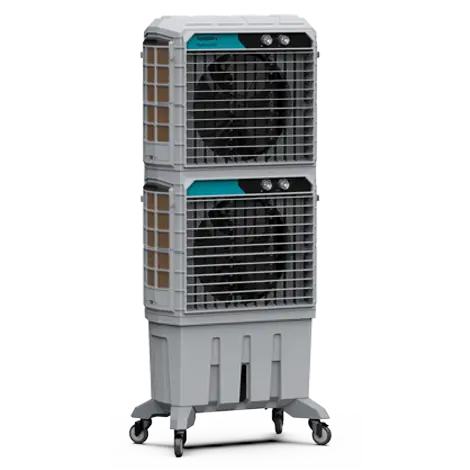
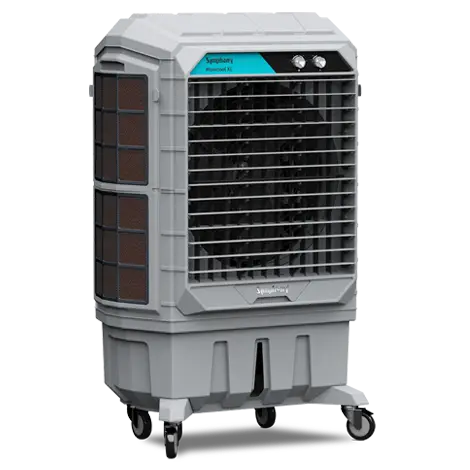
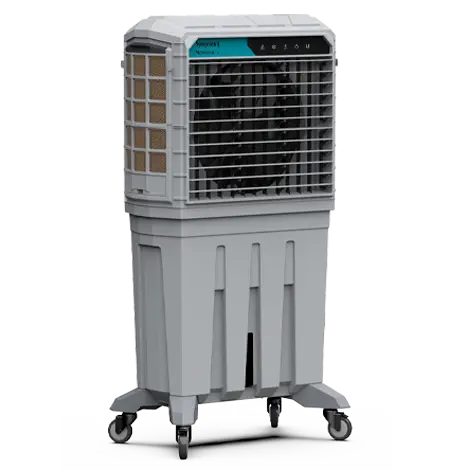
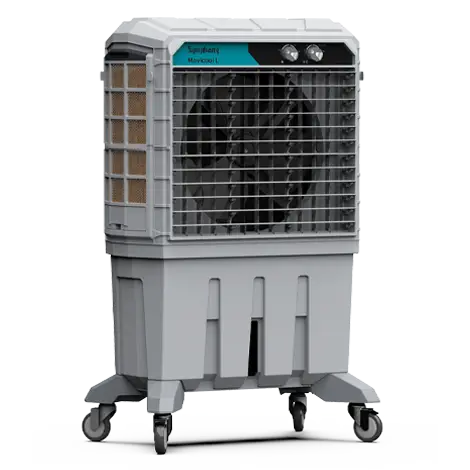

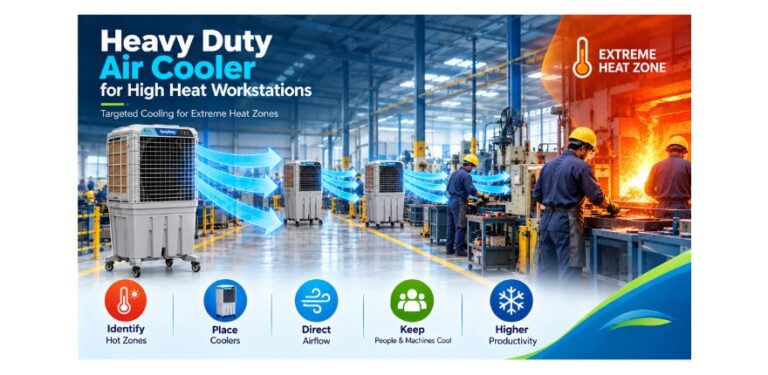
Heavy Duty Air Cooler for High Heat Workstations: Designing Targeted Cooling for Extreme Heat Zones
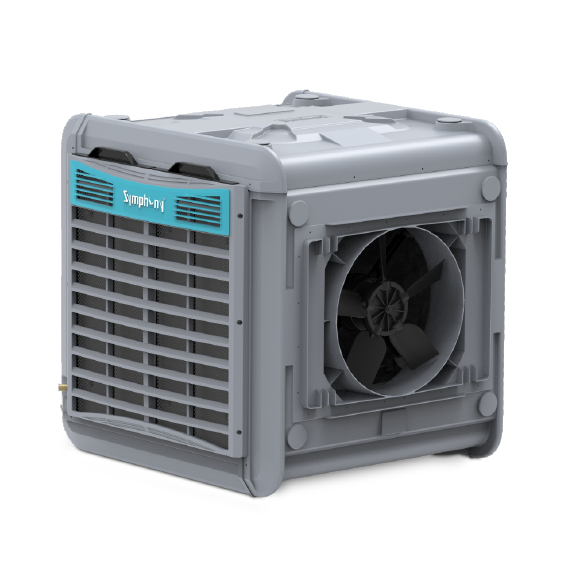
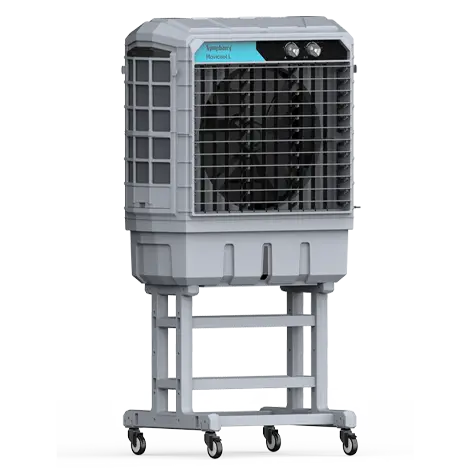
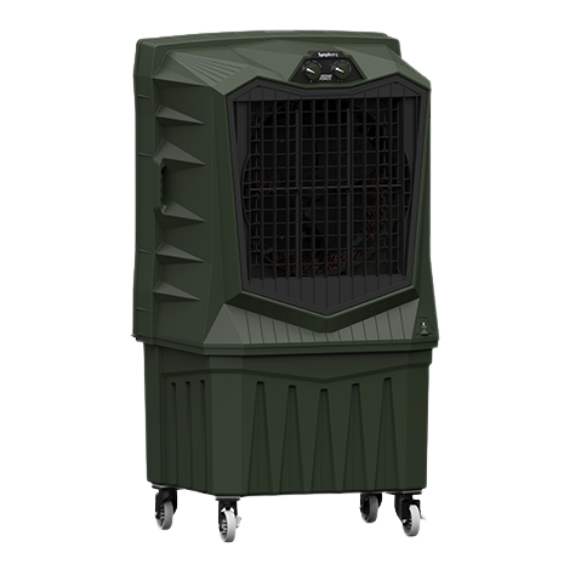
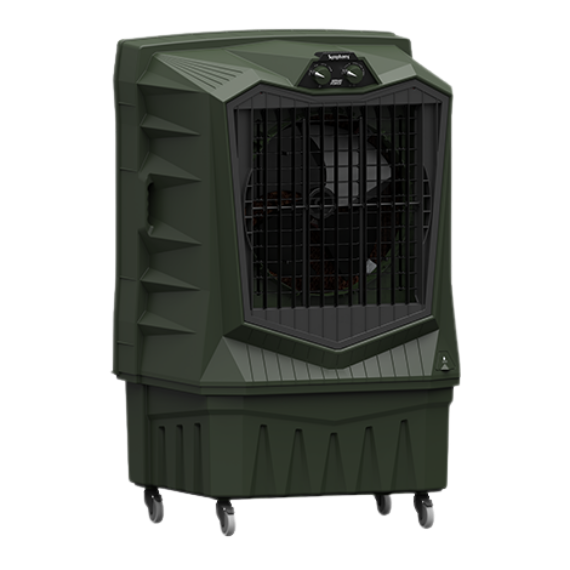
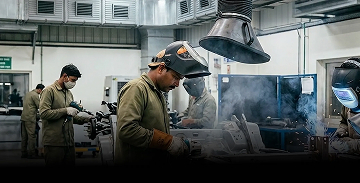
Furnaces, kilns, ovens and hot machinery concentrate heat around specific positions in a plant, and workers stationed there may not feel the benefit of general factory airflow. Cooling has to reach the actual workstation. A Heavy Duty Air Cooler can support this by delivering cooled air toward occupied positions, depending on airflow routes, operator locations, obstructions and process conditions. Ducting can help where the unit cannot stand close to the workstation. Selecting equipment requires a site-specific assessment rather than a standard formula.
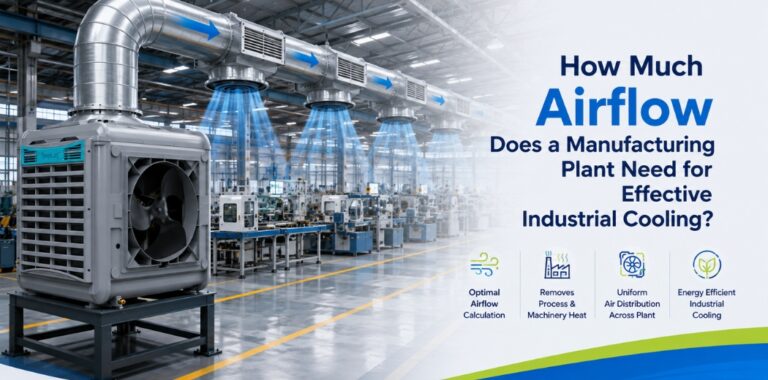
How Much Airflow Does a Manufacturing Plant Need for Effective Industrial Cooling?
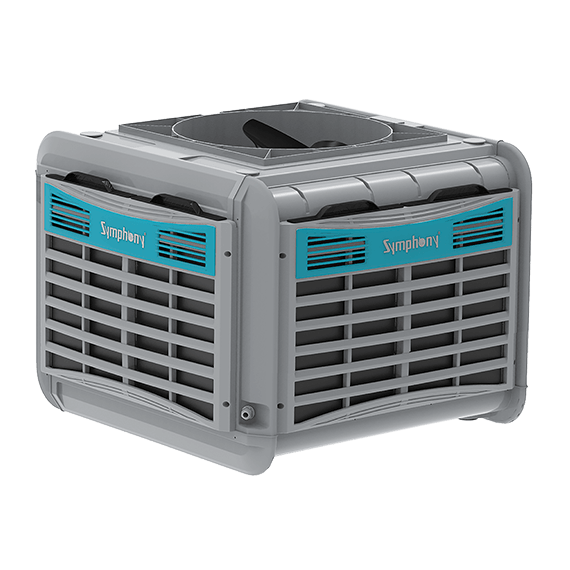
Manufacturing plants need enough airflow to remove process heat, machinery heat and body heat while keeping the environment safe and comfortable. Industrial airflow requirements depend on building volume, target Air Changes per Hour, process heat load and ventilation conditions, not floor area alone. Textile units, automotive plants, foundries, packaging lines and warehouses each generate different heat loads and need different cooling approaches. Selecting the right Symphony Venti-Cool configuration means evaluating actual site conditions rather than applying one fixed figure to every facility.
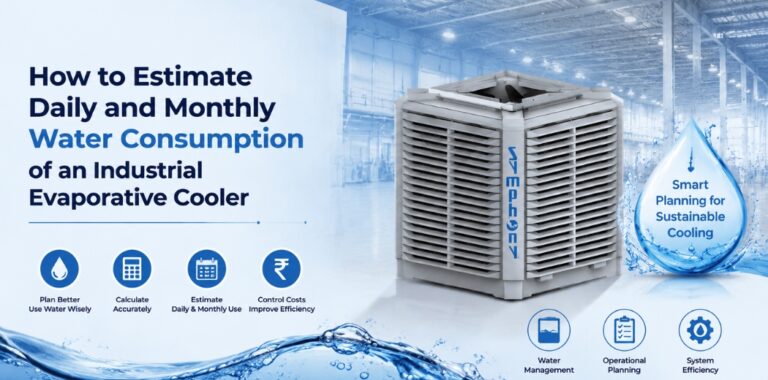
How to Estimate Daily and Monthly Water Consumption of an Industrial Evaporative Cooler
Estimating water consumption is essential when planning an industrial evaporative cooling system, since actual requirements depend on operating conditions, not just cooler capacity. Evaporation rate, bleed off, water quality, ambient temperature and relative humidity all influence how much water a unit uses. Calculating daily and monthly water needs helps industries budget utility costs and plan infrastructure accurately. Selecting the right Symphony Venti-Cool configuration requires evaluating these site specific factors so the cooling system matches real operating conditions and water availability.
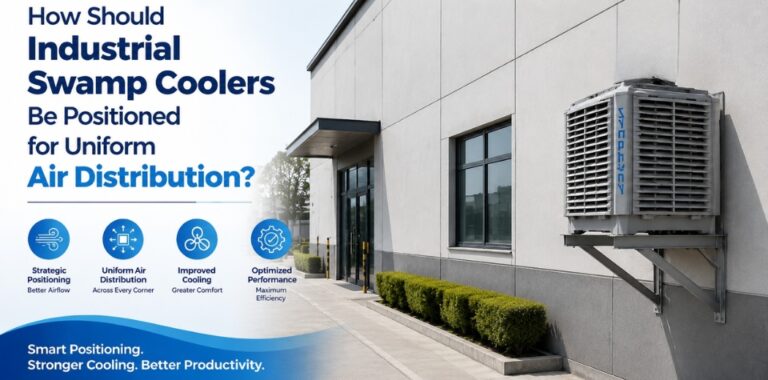
How Should Industrial Swamp Coolers Be Positioned for Uniform Air Distribution?
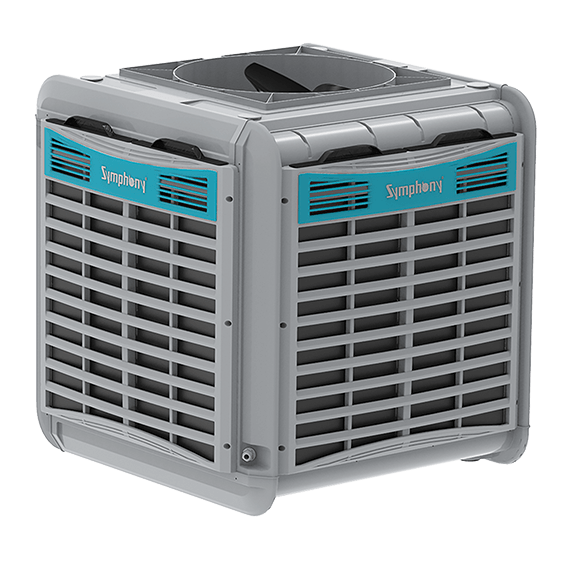
Uniform air distribution in industrial spaces depends on how swamp coolers are positioned, not just on cooling capacity. Discharge direction, unit placement, supply and exhaust openings, plant layout and obstructions all shape how cooled air moves through a factory or warehouse. Positioning determines whether cool air reaches every work zone or stays trapped near a few units. Selecting the right Symphony Venti-Cool configuration requires evaluating actual site conditions such as roof height, machinery layout and ventilation openings, rather than relying on capacity alone.
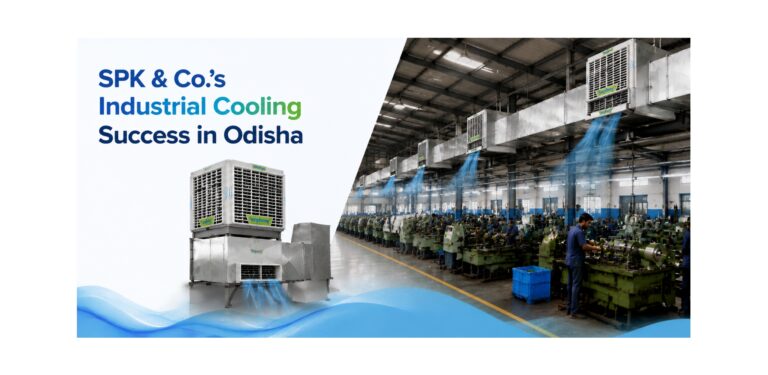
SPK & Co.’s Industrial Cooling Success in Odisha
SPK & Co., an HVAC dealership in Bhubaneswar, Odisha, joined Symphony’s industrial cooler dealer network in 2021. Proprietor Soumya Ranjan Vijay Singh identified a gap in the market: large open and semi open commercial spaces that conventional air conditioning could not serve effectively or affordably. By educating buyers, using a test unit approach, and leveraging Symphony’s support infrastructure, SPK & Co. built a growing portfolio of installations across restaurants, industrial kitchens, ceramic facilities, and large commercial spaces in Odisha. Each successful installation generated repeat orders and referrals, driving consistent year on year sales growth since the partnership began.
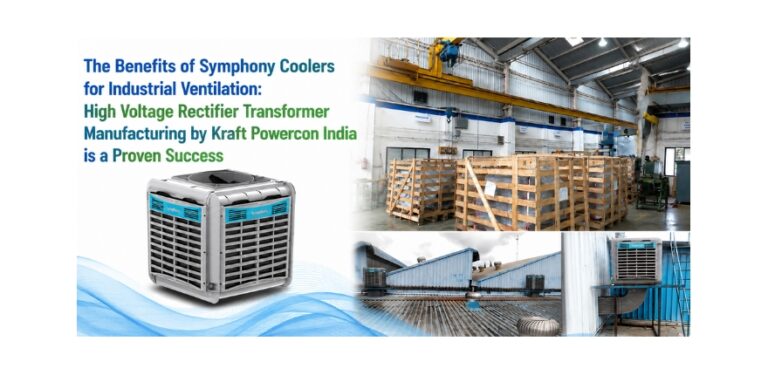
Symphony Coolers for a Dustproof Industrial Environment: Kraft Power Con India’s High-Voltage Rectifier Transformer Manufacturing Success
Kraft Power Con India Limited manufactures high-voltage rectifier transformers in Pune. Its manufacturing process faced temperature-related problems due to dust particles. The company installed Symphony Industrial Coolers, which not only control the temperature but also require significantly less maintenance and are more affordable than conventional air-conditioning systems. As a result, the manufacturing process improved, product quality increased and operational costs decreased.
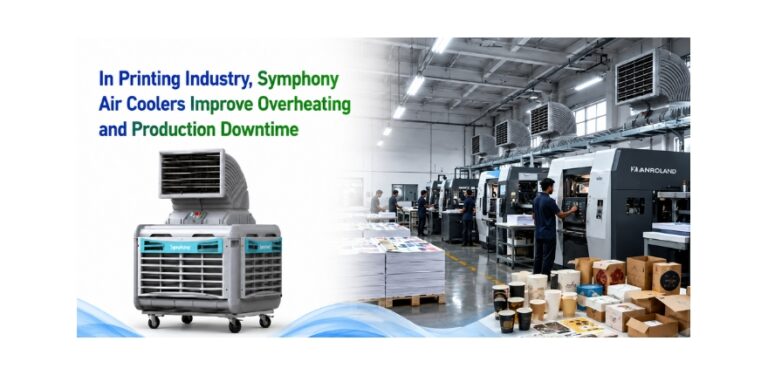
Solving Machine Overheating and Production Downtime in the Printing Industry with Commercial Air Coolers: Gopal Printers’ Symphony Air Cooling Success Story
Gopal Printers, which is engaged in printing, cup and box manufacturing, was struggling with machine overheating, declining production quality and workers’ health problems due to extreme heat. The company installed Symphony commercial air coolers based on evaporative air cooling technology. After approximately one year of use, the machine breakdown problem was reduced significantly, product quality improved, heat-related illnesses among workers decreased and Symphony’s service response remained excellent. According to Head of Operations Shubhojit Pal, this investment proved beneficial for both factory productivity and workforce health.
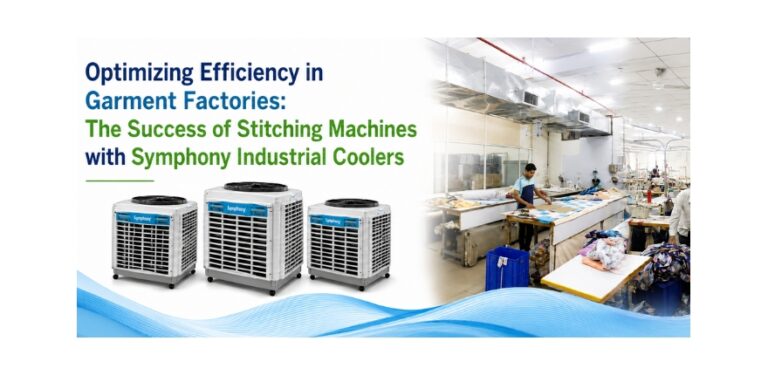
Solving Productivity Problems Caused by Stitching Machine Heat in a Garment Factory: The Success of Symphony Industrial Coolers
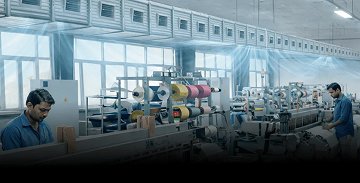
Suprint Textiles, a Jaipur-based garment manufacturer that makes garments for Tata, Reliance and Pantaloons, was facing the problem of workplace heat generated by stitching machines. The company adopted Symphony Industrial Coolers and installed them across multiple factories in a phased manner. Positive results were observed within the first month. After a successful one-year trial, the company installed Symphony coolers across all four factories. According to Prakash Singh, Supervisor at Suprint, Symphony Industrial Coolers have significantly improved worker comfort, productivity and long-term reliability.
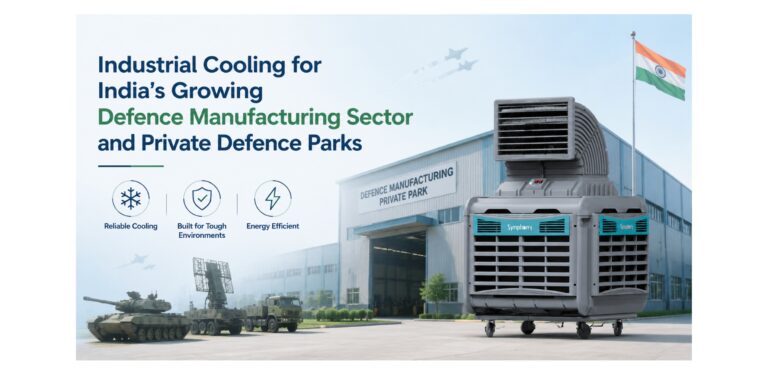
Industrial Cooling for India’s Growing Defence Manufacturing Sector and Private Defence Parks
India’s defence production ambition of Rs 3 lakh crore by FY2029 is driving rapid expansion of manufacturing capacity across two dedicated Defence Industrial Corridors in Uttar Pradesh and Tamil Nadu, as well as existing HAL and OFB facilities. Aircraft hangars, ammunition plants, composite fabrication units, precision machining shops, and large assembly bays all present demanding industrial cooling challenges that require heavy-duty, reliable, and in some cases intrinsically safe solutions. This article covers why the defence sector is a growing market for industrial air coolers, what the specific cooling challenges are at each facility type, how to approach hangar and ammunition plant cooling correctly, and where Symphony Venti-Cool’s LSV range fits in this environment.
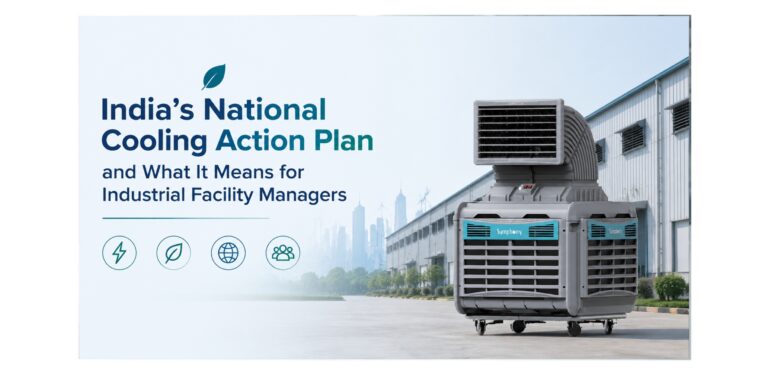
India’s National Cooling Action Plan and What It Means for Industrial Facility Managers
India’s National Cooling Action Plan (NCAP), launched by the Ministry of Environment, Forest and Climate Change, sets a 20-year roadmap to reduce the country’s cooling energy demand by 20 to 25 percent and phase out high-GWP refrigerants. For industrial facility managers, NCAP has direct implications: it shapes equipment procurement decisions, energy audit requirements, ESG reporting expectations, and the selection of cooling technologies for factory floors, warehouses, and commercial spaces. This article explains what NCAP requires, why evaporative cooling is the most naturally aligned industrial technology, how to conduct an energy audit of your cooling system, and what the Scope 2 emission savings from LSV adoption look like in practice.
Air Cooling Solution for Tier-2 and Tier-3 Industrial Cities: Why LSV Works Where AC Fails
This article explains why conventional HVAC systems fail in India’s Tier-2 and Tier-3 industrial cities and how Symphony’s LSV evaporative cooling solution delivers better performance, lower energy consumption, easier maintenance, and faster ROI in the dry, high-temperature conditions typical of these fast-growing manufacturing hubs.
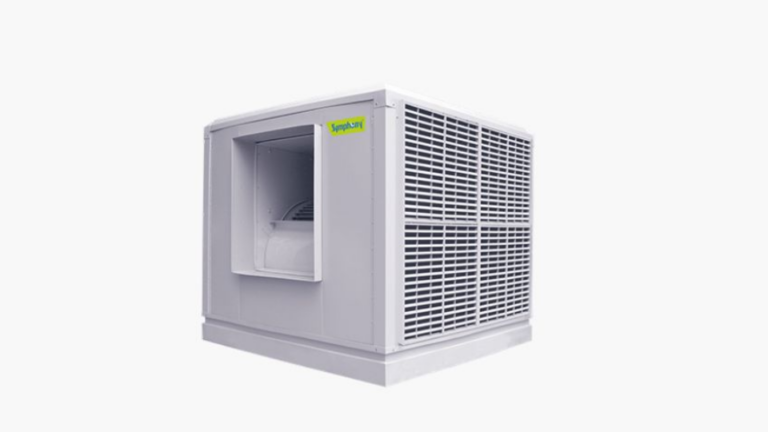
Cooling System for Factory: Ducted, Portable and Centralised – Which Architecture Fits Your Floor Plan?
This article introduces a Total Cost of Ownership (TCO) framework for industrial cooling systems, showing why the lowest-quoted commercial cooler price almost always costs more over five years – factoring in energy, maintenance, consumables, and downtime – and how to evaluate quotes based on true long-term value.