
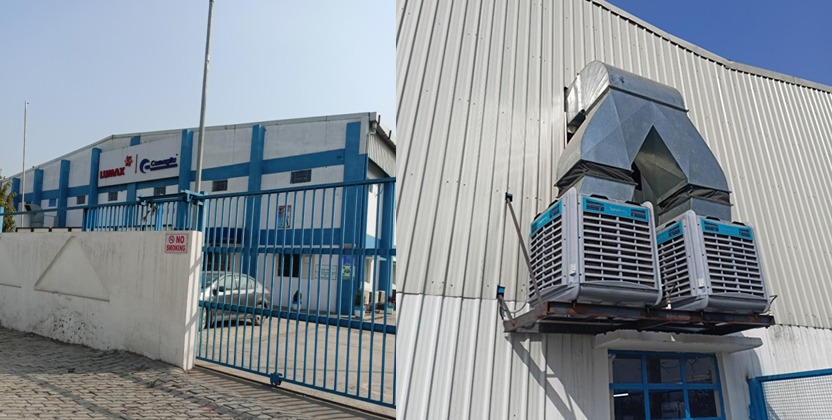




In industrial sectors across India, particularly in cities like Bhopal, Indore and Nagpur, maintaining a comfortable and controlled working environment is critical for operational efficiency. With the region’s hot climate, temperature control in large production facilities, warehouses and manufacturing plants is essential. Industrial air coolers have emerged as effective solutions in these cities to regulate temperatures and create a more productive environment. These cooling systems address the unique challenges faced by industries in Bhopal, Indore and Nagpur, from machinery overheating to maintaining ideal conditions for sensitive production processes. This guide explores how industrial air coolers are used across various key industries in these cities, driving productivity, reducing downtime and enhancing operational efficiency.
Table of Contents
Bhopal: Industrial Air Coolers in Action
Industrial Cooling Requirements in Agricultural Equipment Manufacturing
In agricultural equipment manufacturing facilities, several heat-intensive processes demand precise thermal management to maintain equipment integrity and process stability. Operations such as metal cutting, welding, forging, machining, and hydraulic system testing generate substantial localized heat. Without adequate cooling, these processes can lead to thermal expansion, material distortion, lubricant degradation, and premature equipment failure.
Industrial air coolers are specifically required in:
- CNC machining centers: to dissipate heat from spindles, motors, and electronic controls.
- Welding and fabrication zones: to prevent heat accumulation that can warp assemblies and compromise weld quality.
- Hydraulic test benches: to control oil temperatures and prevent viscosity breakdown.
- Assembly lines: to maintain stable ambient conditions for both machinery and workers.
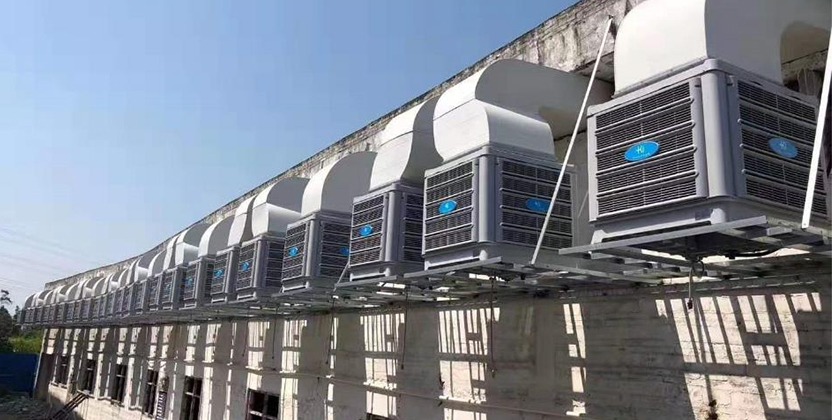
By providing high-volume airflow and rapid heat extraction, industrial air coolers maintain ambient temperatures typically between 28°C to 35°C, ensuring that critical tolerances and material properties are preserved. This results in improved machine uptime, reduced thermal cycling, lower maintenance intervals, and enhanced production efficiency.
Industrial Cooling Applications in the Biotechnology Sector
In Bhopal’s biotechnology industry, industrial air coolers play a critical role in maintaining controlled environmental conditions, especially in non-sterile production zones, support laboratories, and storage areas. Precise temperature and humidity regulation are essential to prevent thermal degradation, maintain equipment calibration, and support process stability. Industrial coolers help sustain ambient temperatures typically within 20°C to 25°C in these areas, minimizing the risk of heat-induced equipment malfunction and ensuring product integrity. Effective air cooling enhances airflow management, reduces the load on HVAC systems, and supports compliance with process control standards. By maintaining thermal stability, industrial coolers contribute to continuous, efficient operation across manufacturing and ancillary processes in the biotechnology sector.
Industrial Cooling in the Packaging Industry
Industrial Cooling in Wood and Furniture Manufacturing
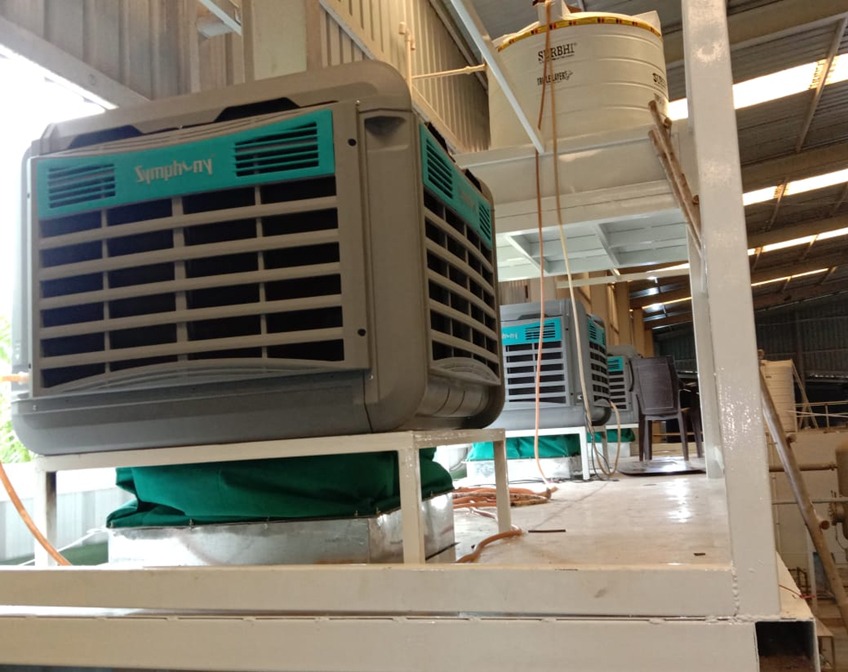
In Bhopal’s wood and furniture manufacturing sector, precise temperature and humidity control is vital to prevent material defects such as warping, cracking, or uneven finishes. Wood is highly hygroscopic and sensitive to environmental changes. Central Air Cooling Systems are employed to maintain controlled conditions, typically within 20°C to 30°C and 50% to 60% relative humidity, to stabilize wood moisture content throughout production. Effective air cooling not only protects raw materials and finished products from dimensional changes but also improves the performance of adhesives, coatings, and finishing processes. This leads to higher product quality, reduced rejection rates, and lower material wastage.
Industrial Coolers in Commercial Spaces in Bhopal
In Bhopal, commercial spaces like shopping malls, offices, and hotels can greatly benefit from industrial air coolers, especially during the city’s hot summers. Symphony industrial coolers are ideal for large retail stores and office buildings, providing efficient cooling while reducing energy costs compared to traditional air conditioning systems. These coolers also help maintain a comfortable environment in hotels and restaurants, ensuring guest satisfaction in expansive areas such as banquet halls and dining areas, where air conditioning may not always be feasible.
Indore: Industrial Air Coolers Driving Efficiency
Rubber Processing Plants
In rubber processing plants, particularly those involved in vulcanization and molding, the production environment is characterized by significant heat generation due to the chemical reactions and high temperatures required to cross-link polymers. Heavy Duty Industrial Air Coolers are strategically installed in these plants to control the temperature across various production zones, such as molding presses and curing chambers. These air coolers use evaporative cooling technology to lower the ambient temperature of the processing area, maintaining the cooling air between 22-28°C, an ideal range for both equipment performance and product consistency.
Given the high-precision requirements of rubber production, these air cooling systems are designed with multi-stage filtration to ensure clean, dust-free air circulation, which is critical to avoid contamination during curing. Additionally, advanced thermal load management algorithms are incorporated into the air coolers to dynamically adjust airflow and cooling capacity based on real-time production demands, ensuring energy-efficient operation while preventing machinery overheating. This optimization minimizes the likelihood of unplanned downtime caused by equipment failure, extends the operational lifespan of rubber molding presses and vulcanizers, and improves overall production throughput.
Lorem ipsum dolor sit amet, consectetur adipiscing elit. Ut elit tellus, luctus nec ullamcorper mattis, pulvinar dapibus leo.
Plastic Recycling Plants
Plastic recycling plants operate in environments where the extrusion and melting processes generate high amounts of heat, particularly when dealing with polymers like PET, HDPE, and PVC. Industrial Cooling Solutions are essential to regulate heat during the grinding, melting, and extrusion processes. These coolers are designed with counter-flow heat exchangers, which allow for the efficient transfer of heat from the air to the environment, keeping the temperature of critical equipment, such as extruders and granulators, within the required operational range.
To ensure high-quality recycled plastics, air coolers maintain the environment below 45°C, preventing plastic degradation due to excessive heat. The cooling units are equipped with precise moisture control systems to avoid condensation issues in sensitive machinery and material flows. Furthermore, dynamic load balancing features adjust cooling output based on the temperature fluctuations in the recycling area, offering flexibility in response to varying operational loads. This targeted cooling process reduces energy consumption, ensures uniformity in the recycled plastic’s physical properties, and reduces the risk of contamination, thereby enhancing product quality and operational efficiency.
Textile Dyeing and Finishing
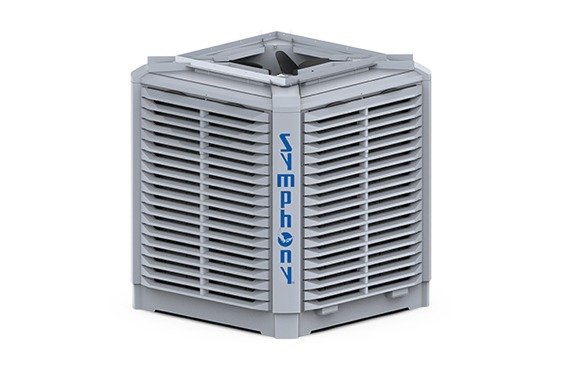
In the textile dyeing and finishing sector, maintaining a controlled environment is critical to ensuring the consistency and quality of dyed fabrics. Industrial Air Cooling Systems, often equipped with humidification and dehumidification functions, are employed to regulate both temperature and moisture levels during critical stages such as dye fixation and fabric curing. These cooling systems use high-velocity evaporative air flow to control the relative humidity (RH) levels in the range of 50-60% and temperatures between 18-22°C, both of which are essential for uniform dye absorption and setting.
To enhance the cooling process, integrated energy recovery systems are utilized, which capture excess heat from the drying zones and channel it to preheat the incoming air, improving energy efficiency. Additionally, automated environmental control systems are often deployed to monitor and adjust conditions in real-time based on fluctuations in humidity, temperature, and fabric type. This fine-tuned control ensures that the fabrics undergo consistent and uniform dyeing and finishing, reducing color variance and improving overall product quality, while also extending machine life by preventing heat stress on equipment.
Spices and Herbal Processing
Spices and herbal processing require extremely precise temperature and humidity control to preserve volatile compounds like essential oils, aromas, and active ingredients that are sensitive to heat and moisture fluctuations. In these facilities, industrial cooling units are employed to maintain specific temperature parameters within 15-25°C and humidity levels around 60-70%, which are ideal for preventing the degradation of these compounds during processing, drying, and packaging.
The cooling systems used in these facilities often feature integrated humidity sensors and variable speed fans to maintain a stable environment despite external temperature changes. Additionally, low-energy consuming air handling units are utilized to optimize energy use while providing continuous cooling. Advanced features like active moisture control in the cooling units ensure that excess moisture is removed from the air, preventing mold growth or spoilage during the processing and storage of herbs and spices. The cooling systems also help to maintain consistent airflow over drying racks or conveyer belts to avoid hotspots that could affect the product’s texture, aroma, or flavor integrity.
Industrial Coolers in Commercial Spaces in Indore
In Indore, a rapidly growing commercial hub, Symphony industrial air coolers are well-suited for retail shops, restaurants, and educational institutions. These coolers help create a comfortable environment in busy malls, retail stores, and cafes by providing effective cooling in large, open spaces without the high energy consumption of conventional AC units. In educational institutions and coaching centers, air coolers ensure that classrooms and study areas remain cool, enhancing student comfort and learning productivity even during peak summer months.
Nagpur: How Industrial Air Coolers Support Key Industries
Industrial Coolers for Cotton Ginning and Pressing
In cotton ginning and pressing operations, heat generation is a significant challenge due to the mechanical processes involved in separating cotton fibers from seeds. The ginning process involves intense friction and mechanical action, producing high amounts of heat that can adversely affect both machinery and workers. To mitigate these risks, Industrial Air Coolers are integrated into these facilities to regulate temperature and humidity levels across the production floor. These air coolers typically use high-efficiency evaporative cooling equipment, which lower the ambient temperature while also managing relative humidity.
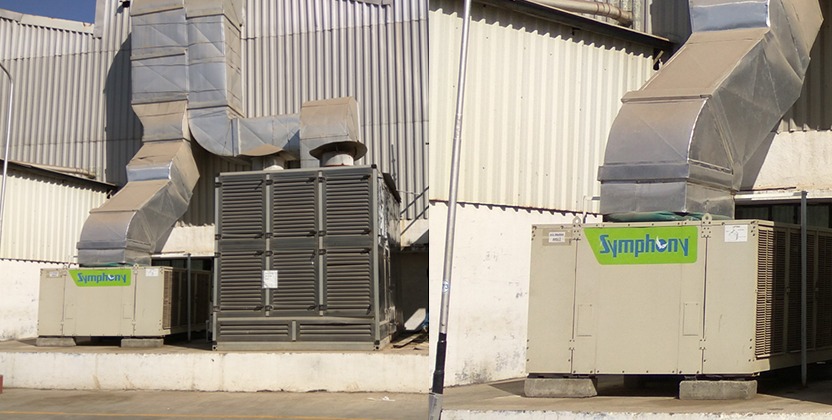
Additionally, the air coolers are equipped with advanced air filtration systems to remove dust and debris that could affect the quality of the cotton or clog machinery. As a result, the cooling systems help improve equipment performance, reduce maintenance costs, and create a comfortable working environment.
Cooling Solution for Sugar Manufacturing
The sugar manufacturing process, particularly during crystallization, requires precise temperature control to ensure the desired quality and consistency of the final product. During this stage, high temperatures are necessary to melt the sugar syrup, but if the cooling process is not effectively managed, it can result in inconsistent crystal formation and product defects. Industrial Air Coolers are used to regulate the ambient temperature in the crystallization units, cooling the surrounding environment and machinery to the required temperature range (typically between 20-25°C for optimal crystallization).
These coolers employ air-to-air heat exchangers or direct evaporative cooling methods, which are capable of rapidly lowering ambient temperatures without affecting the chemical composition of the sugar. By maintaining consistent cooling, the industrial air coolers help ensure uniform crystal formation, reducing the risk of batch-to-batch variations and improving overall production efficiency. Furthermore, these cooling systems contribute to reducing energy consumption by allowing the crystallization process to occur at a controlled, stable temperature, which is critical for maximizing sugar yield and minimizing waste.
Coolers for Tobacco Processing
In tobacco processing, temperature and humidity control are critical to preserving the quality of the tobacco leaves during the curing process. Curing, which involves drying the leaves to reduce moisture content, requires maintaining specific temperature and humidity levels to achieve the desired flavor and texture in the final product. Industrial air coolers are integrated into curing barns and processing areas to ensure a consistent climate. These coolers employ precision cooling systems equipped with both cooling and dehumidification functions, allowing them to regulate both temperature and moisture levels.
The cooling systems are designed with humidity sensors and dynamic control mechanisms that adjust cooling output based on real-time environmental conditions. By preventing excessive heat buildup and ensuring humidity levels remain within a narrow range (usually between 55-65% RH), these coolers ensure optimal curing conditions for tobacco. This controlled environment helps reduce the risk of tobacco degradation, ensures uniform curing, and contributes to a higher-quality final product. Additionally, these systems reduce the chances of mold growth and inconsistent drying, which can lead to product spoilage and loss of flavor profile.
Industrial Coolers in Commercial Spaces in Nagpur
Nagpur, known for its hot and dry climate, relies on industrial air coolers for its commercial spaces, including large retail outlets, hotels, and event venues. Symphony coolers provide efficient and cost-effective cooling for shopping centers, exhibition halls, and conference rooms, creating a pleasant atmosphere for visitors and staff. In Nagpur’s hotels and resorts, these air coolers maintain comfort in open-air venues, reducing operational costs while ensuring guest satisfaction during the sweltering summer months.
Conclusion
Symphony’s Industrial air coolers are proving to be invaluable tools for enhancing operational efficiency in key industries across Bhopal, Indore and Nagpur. Whether in agriculture equipment manufacturing, rubber processing, cotton ginning or tobacco processing, these cooling systems help regulate temperature and humidity, ensuring optimal working conditions for both machinery and employees. By addressing the unique challenges of each sector, industrial air coolers drive productivity, reduce downtime and enhance product quality. As industries continue to evolve, the role of air cooling systems in supporting efficient and cost-effective operations will remain crucial.
FAQs
How Industrial Air Coolers Drive Efficiency in Bhopal, Indore and Nagpur’s Key Industries?
How do industrial air coolers benefit agriculture equipment manufacturing?
Industrial air coolers regulate temperature around machinery and workers, preventing overheating and improving productivity.
What role do industrial air coolers play in the biotechnology industry?
They maintain optimal temperature and humidity levels in labs and production areas, ensuring smooth operations and product integrity.
Why are industrial air coolers important in the textile dyeing industry?
They help control temperature and humidity, ensuring consistent fabric treatment and reducing the risk of defects in products.

Maulik Solanki is a seasoned B2B Product Marketing professional specializing in Industrial and Commercial Coolers in the LSV (Large Space Venticooling) segment. With 13+ years of experience, he drives brand building and audience engagement for Symphony’s LSV solutions through integrated offline and online strategies. Backed by an MBA in Marketing and earlier experience as a Regional Marketing Manager in banking, Maulik brings strong skills in sales, advertising, and events. He enjoys exploring new marketing ideas and cooling technologies and writes to help readers understand Symphony’s offerings.

Sourav Biswas is a senior marketing leader heading the LSV (Large Space Venticooling – B2B) marketing function at Symphony Limited. He shapes the brand’s strategic narrative, strengthens market leadership, and ensures excellence across all B2B cooling solutions. With deep expertise in Strategic Marketing, Brand Management, Advertising, and PR, he reviews content with analytical precision and alignment to Symphony’s vision. Passionate about mentoring and tracking B2B trends, Sourav ensures every content piece reflects accuracy, relevance, and strategic depth.