
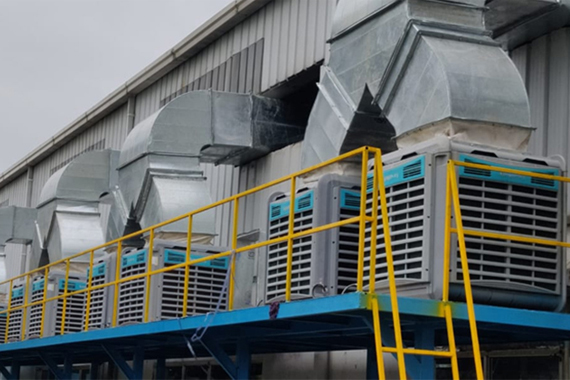





today’s factories, workers need to have a comfortable and efficient place to work. This is where the Industrial Cooling System with duct for the factory comes in. It’s like a super smart machine that makes hot factory areas much cooler and more comfortable. Let’s explore what these industrial ducting coolers are all about and see how they’re making factories better workplaces.
Table of Contents
Understanding the Need of Factory Cooling System
Factories: The Heartbeat of Production
Factories are the heartbeat of production, often bustling with activity and machinery generating significant heat. As temperatures rise, so do concerns about worker comfort and overall efficiency.
Challenges in Factory Environments
Temperature Regulation: Maintaining optimal temperatures in factory environments is crucial for worker productivity and well-being.
Energy Consumption: Traditional cooling systems can be costly to operate, especially in large factory spaces.
Air Quality: Poor air quality can lead to health issues and decreased productivity among factory workers.
How Industrial Cooling System Works?
Evaporative Cooling Mechanism
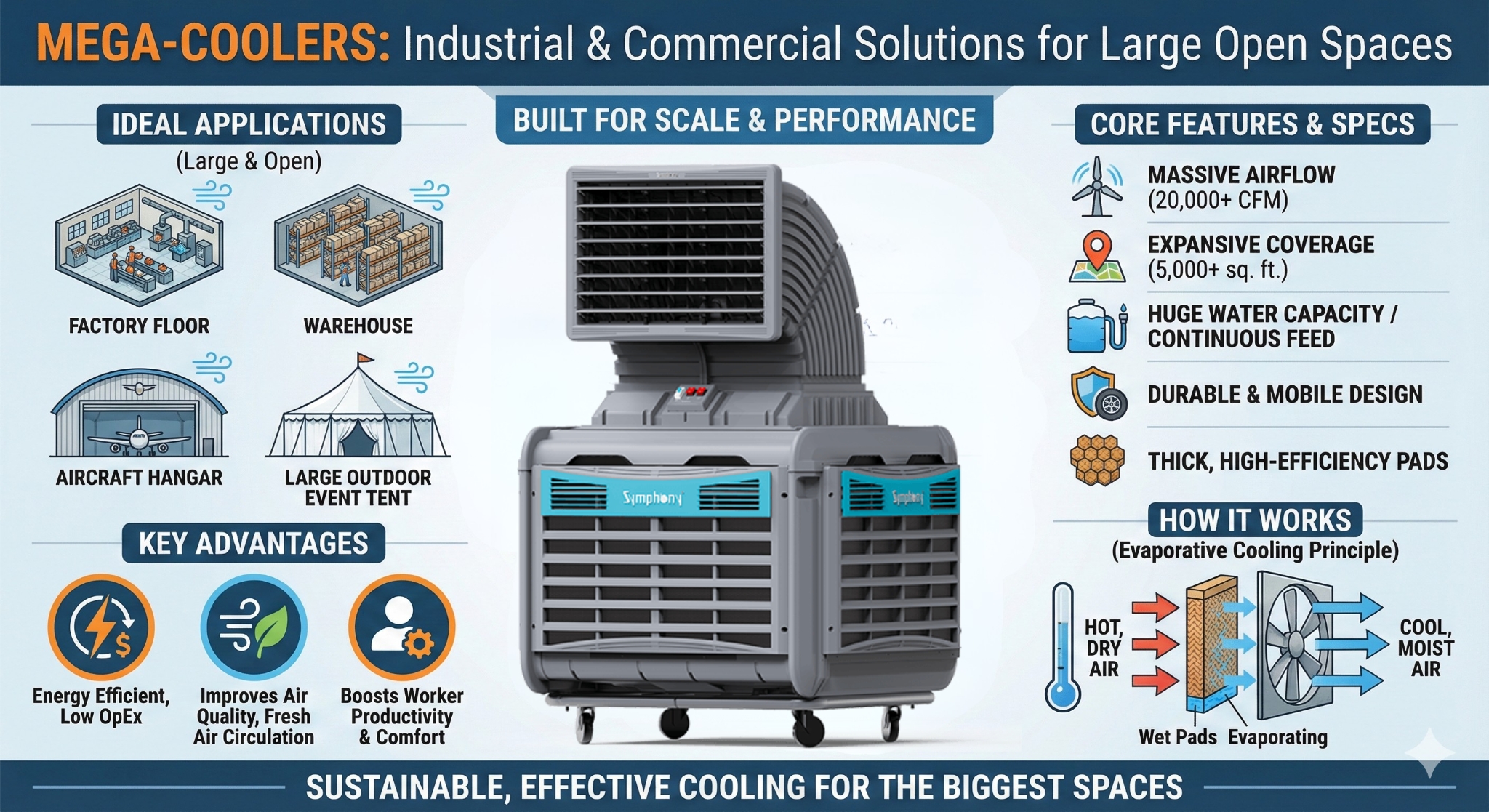
At the heart of these coolers lies a straightforward principle: evaporative air cooling. Just as a breeze feels cooler near a water body due to evaporation, these industrial coolers employ a similar mechanism. Warm air from the factory is drawn into the unit, passing through water-saturated pads. The air cools as water droplets evaporate, and the cooler air is circulated back into the factory.
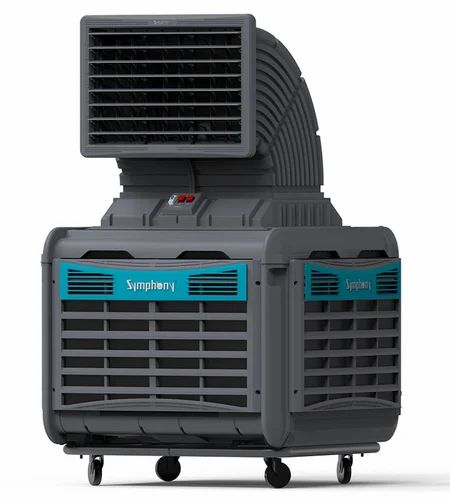
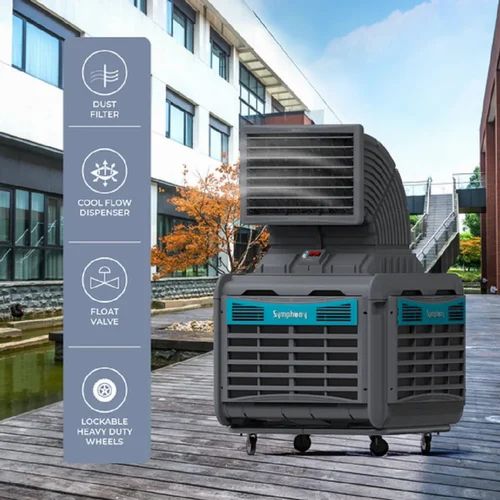
Components of Industrial Ducting Coolers
Water Pump: Responsible for circulating water through the cooling pads.
Cooling Pads: These pads are designed to absorb water and facilitate the evaporation process.
Fan System: Helps circulate cooled air throughout the factory space.
Control Panel: Allows users to adjust settings and monitor the cooler’s operation.
Benefits of Industrial Cooling System
Cost-Efficient Cooling
One of the most significant advantages of industrial ducting coolers is their cost-effectiveness. They consume considerably less energy than traditional air conditioning systems, which can result in substantial savings on energy bills.
Eco-Friendly Cooling
These industrial cooling systems are environmentally friendly since they use the natural process of water evaporation to cool the air. They don’t rely on harmful refrigerants or contribute to greenhouse gas emissions.
Improved Air Quality
Unlike air conditioners that recirculate indoor air, ducting coolers constantly bring in fresh outdoor air, enhancing indoor air quality by reducing pollutants and odors.
Low Maintenance
Industrial ducting coolers are relatively low-maintenance systems. Regular cleaning and occasional pad replacement are all required to keep them running optimally.
Easy Installation
Integrating these coolers with existing ductwork is a relatively straightforward process that minimizes factory downtime during installation.
Application of Industrial Ducting Coolers for Factories
Manufacturing Facilities
Automotive Plants: Keep assembly lines cool and workers comfortable during production.
Food Processing Units: Maintain hygiene standards while ensuring a comfortable working environment.
Textile Mills: Regulate humidity levels to prevent damage to delicate fabrics and machinery.
Warehouses and Distribution Centres
Temperature Control: Prevent heat-related damage to stored goods.
Employee Comfort: Create a conducive working environment for warehouse staff.
Commercial Spaces
Retail Stores: Ensure a comfortable shopping experience for customers and staff.
Office Buildings: Maintain optimal temperatures for employee productivity and comfort.
Conclusion
Industrial ducting coolers offer a cost-effective, eco-friendly solution for industrial cooling factory environments. By harnessing the power of evaporative cooling equipment, they provide comfortable working conditions while minimizing energy consumption and maintenance requirements.
FAQs About Industrial Ducting Cooling System
Industrial Ducting Cooling System for Factory Operations
How is the capacity of an industrial ducting cooling system determined for a factory?
The capacity of an industrial ducting cooling system is determined based on factors like total floor area, ceiling height, and heat load generated by machinery and workers. Airflow requirement (measured in CFM) plays a critical role in ensuring effective cooling distribution. Higher heat zones require more air circulation and additional units. Climate conditions, especially temperature and humidity, also influence system sizing. A proper heat load calculation helps avoid underperformance or oversizing. Professional site assessment ensures optimal capacity selection. This results in efficient cooling and balanced airflow across the facility.
What type of ducting is best for industrial cooling systems?
The choice of ducting depends on factory layout, budget, and cooling requirements. Pre-insulated ducts help reduce energy loss and improve efficiency in large setups. Flexible ducts are suitable for targeted or smaller zones. Proper duct design ensures uniform air distribution and minimal pressure loss. Leak-proof installation is essential to maintain airflow efficiency. Selecting the right ducting system enhances overall cooling performance and system longevity.
How does airflow distribution impact cooling efficiency in factories?
Proper airflow distribution is crucial for achieving uniform cooling across the factory floor. Uneven airflow can create hot spots and reduce overall system effectiveness. Well-designed duct layouts ensure that cooled air reaches all working zones efficiently. Air outlets should be strategically positioned based on workstations and heat sources. Maintaining adequate air velocity helps in better heat dissipation. Balanced airflow also improves worker comfort and productivity. Efficient distribution ultimately maximizes the performance of the cooling system.
What maintenance is required for industrial ducting cooling systems?
Industrial ducting cooling systems require regular maintenance to ensure consistent performance. Routine tasks include cleaning cooling pads, checking water pumps, and inspecting ducting for leaks or blockages. Dust accumulation in ducts and filters should be removed periodically. Water tanks should be cleaned to prevent scaling and contamination. Fans and motors need inspection for smooth operation. Scheduled maintenance helps avoid breakdowns and extends system life. Proper upkeep also ensures energy efficiency and reliable cooling output.
What are the key benefits of using ducting cooling systems for factory cooling?
Industrial ducting cooling systems offer several advantages for factory environments. They provide uniform cooling across large spaces at a much lower cost than traditional AC systems. These systems deliver continuous fresh air, improving ventilation and air quality. They are energy-efficient and reduce electricity consumption significantly. Installation and maintenance costs are relatively low. They are ideal for large, open, and semi-enclosed industrial setups. Overall, they offer a practical, scalable, and cost-effective cooling solution for factories.

Maulik Solanki is a seasoned B2B Product Marketing professional specializing in Industrial and Commercial Coolers in the LSV (Large Space Venticooling) segment. With 13+ years of experience, he drives brand building and audience engagement for Symphony’s LSV solutions through integrated offline and online strategies. Backed by an MBA in Marketing and earlier experience as a Regional Marketing Manager in banking, Maulik brings strong skills in sales, advertising, and events. He enjoys exploring new marketing ideas and cooling technologies and writes to help readers understand Symphony’s offerings.

Sourav Biswas is a senior marketing leader heading the LSV (Large Space Venticooling – B2B) marketing function at Symphony Limited. He shapes the brand’s strategic narrative, strengthens market leadership, and ensures excellence across all B2B cooling solutions. With deep expertise in Strategic Marketing, Brand Management, Advertising, and PR, he reviews content with analytical precision and alignment to Symphony’s vision. Passionate about mentoring and tracking B2B trends, Sourav ensures every content piece reflects accuracy, relevance, and strategic depth.