





Delhi’s soaring temperatures and prolonged summers create difficult conditions for industries operating in large or semi-enclosed spaces. From manufacturing plants and warehouses to schools and healthcare facilities, heat management has become a major operational concern.
Traditional HVAC systems often fall short in terms of cost, space requirements and adaptability to large open layouts. This is where industrial air coolers emerge as a smart alternative-offering efficient, scalable and cost-effective cooling without the need for heavy infrastructure.
Let’s explore how air coolers are addressing heat-related challenges across Delhi’s core industrial and institutional sectors.
Table of Contents
Why Industrial Air Coolers are a Game-Changer for Delhi’s Auto Sector?
Heat Challenges:
- Constant heat from running machinery
- Enclosed metal structures amplify indoor temperatures
- Worker fatigue and equipment strain in poorly ventilated spaces
Cooling Strategy:
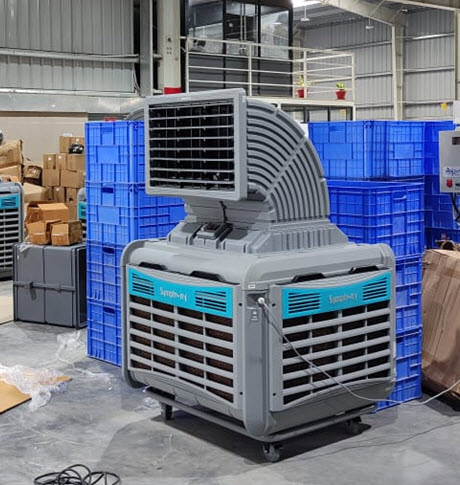
Evaporative air coolers such as top-discharge units with four-side cooling pads-are ideal for auto manufacturing environments. They maintain lower ambient temperatures across work zones, prevent machinery from overheating and provide thermal relief for staff.
By installing air coolers at strategic points, auto units can significantly extend equipment life and reduce downtime caused by heat-related inefficiencies.
Keeping the Assembly Line Cool in Delhi’s Manufacturing Zones
Challenges:
- High internal heat loads from continuous machinery operations
- Stagnant airflow in production halls
- Worker productivity drops during peak heat hours
Cooling Strategy:
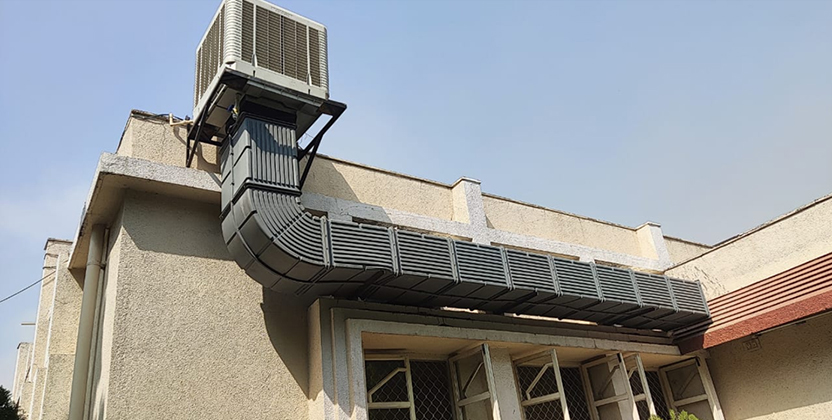
Industrial ducting air coolers are used to direct consistent airflow across manufacturing lines. Side-discharge units connected to long ducts help maintain temperature balance across large shop floors, while down-discharge models provide focused spot cooling.
Increased employee comfort, stable equipment performance and uninterrupted production even during Delhi’s hottest months.
From Classrooms to Campuses: Why Schools in Delhi Prefer Industrial Air Coolers?
Challenges:
- Overcrowded classrooms with minimal ventilation
- Extended teaching hours during extreme heat
- Limited budgets for centralized air conditioning systems
Cooling Strategy:
Industrial air coolers offer a budget-friendly and energy-efficient cooling option for educational institutions. These coolers operate quietly, making them suitable for classrooms, auditoriums and hostels.
Schools benefit from improved student concentration, fewer heat-related health issues and a more conducive learning environment across campuses.
Cooling Delhi’s Warehouses: The Logistic Sector’s Cooling Upgrade
Challenges:
- Poor ventilation in large storage units
- Heat accumulation affects storage of temperature-sensitive goods
- Lack of scalable HVAC solutions for high-ceiling facilities
Cooling Strategy:
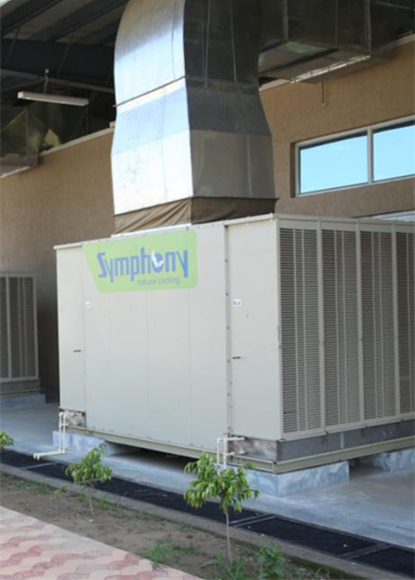
High-capacity industrial air coolers with long duct runs and multiple outlet points ensure even air distribution across warehouses. These coolers help maintain optimal conditions for stored goods and improve working environments for warehouse staff.
For logistics operations running 24/7 in India’s capital city, proper cooling is essential to prevent spoilage, reduce worker fatigue and maintain delivery efficiency.
Cooling with Care: The Role of Air Coolers in Delhi’s Healthcare Sector
Challenges:
- Requirement for precise ambient temperatures in labs and diagnostic centers
- Sensitivity to airborne contaminants and equipment overheating
- Need for low-noise cooling in clinical environments
Cooling Strategy:
Compact and targeted industrial cooling systems ensure that critical healthcare zones-like pathology labs and operating rooms-stay within safe temperature ranges. These coolers operate with minimal noise and do not disturb sterile environments.
In healthcare, maintaining controlled temperatures isn’t just about comfort-it’s vital for equipment accuracy and patient care quality.
The Unsung Need: Cooling Solutions for Delhi’s Military Facilities
Challenges:
- Aging infrastructure with limited ventilation
- Budget restrictions for large-scale HVAC installations
- Need for quick deployment in government-operated buildings
Cooling Strategy:
Ducted air coolers offer a plug-and-play cooling solution for defense buildings and administrative centers. These systems require minimal retrofitting and can be adapted to existing structures.
With fast installation and efficient coverage, industrial air coolers help maintain comfort and operational readiness without overburdening energy resources.
Conclusion
From automotive plants and manufacturing zones to classrooms, labs, warehouses and military sites-Delhi’s diverse workspaces share a common challenge: heat.
Industrial air coolers provide the scalable, economical and performance-driven solution required for such demanding environments. By improving air circulation, maintaining safer indoor temperatures and reducing energy consumption, these systems are helping Delhi’s sectors stay productive, efficient and future-ready.
As the capital continues to expand industrially and economically, adopting smart cooling strategies like industrial air coolers isn’t just a trend-it’s becoming an operational imperative.

Maulik Solanki is a seasoned B2B Product Marketing professional specializing in Industrial and Commercial Coolers in the LSV (Large Space Venticooling) segment. With 13+ years of experience, he drives brand building and audience engagement for Symphony’s LSV solutions through integrated offline and online strategies. Backed by an MBA in Marketing and earlier experience as a Regional Marketing Manager in banking, Maulik brings strong skills in sales, advertising, and events. He enjoys exploring new marketing ideas and cooling technologies and writes to help readers understand Symphony’s offerings.

Sourav Biswas is a senior marketing leader heading the LSV (Large Space Venticooling – B2B) marketing function at Symphony Limited. He shapes the brand’s strategic narrative, strengthens market leadership, and ensures excellence across all B2B cooling solutions. With deep expertise in Strategic Marketing, Brand Management, Advertising, and PR, he reviews content with analytical precision and alignment to Symphony’s vision. Passionate about mentoring and tracking B2B trends, Sourav ensures every content piece reflects accuracy, relevance, and strategic depth.