




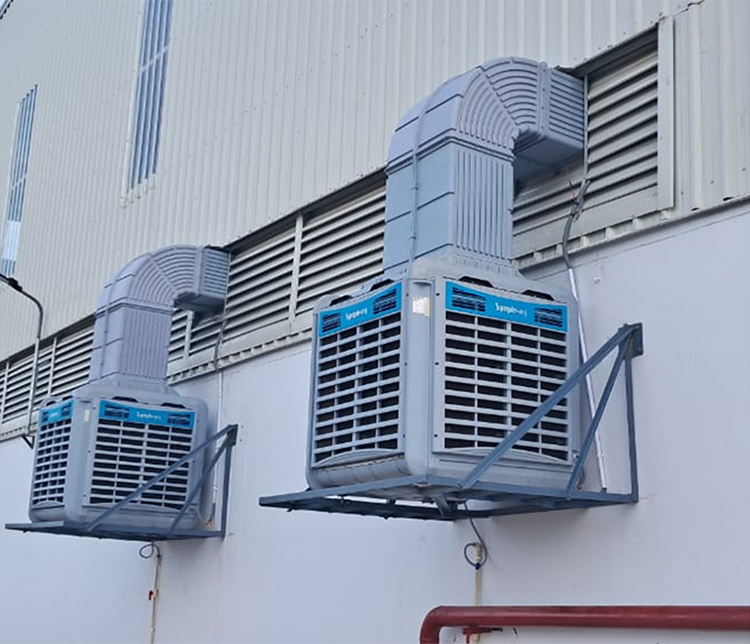

In the world of FMCG, efficiency doesn’t stop at packaging speed or distribution – it begins right at the production floor. As manufacturing units scale, internal heat increases. Without proper temperature control, quality drops, machinery overheats, and workers face discomfort.
That’s where industrial air cooling comes in – not just to beat the heat but to match specific production types, layouts, and regional climate challenges. Air cooling solutions transform FMCG operations across bakeries, dairies, snack units, and more using adaptable heavy duty coolers with smart ducting and purpose-built air-cooling machines.
Table of Contents
Why FMCG Facilities Need Custom Air Cooling Solutions
Every FMCG facility operates differently. For example, one plant focuses on baking, another handles dairy, while a third produces packaged snacks.
A bakery demands relief from oven heat, whereas a ghee unit needs consistent ambient temperatures to prevent fat separation. Even within the same plant, packing sections, fermenting zones, and ingredient storage require different air strategies.
Generic cooling doesn’t cut it. What’s needed is customized industrial air cooling that adapts to:
- Production type and process heat
- Facility size and ceiling height
- Zone-specific cooling needs
- Local weather and seasonal shifts
Production-Specific Industrial Cooling Solutions
Different food segments require specific solutions. Here’s how industries address those requirements using proven cooling models.
Bakery & Confectionery Industry
High baking temperatures generate intense internal heat. Sweets and bakery units can use Symphony’s VC 25U down discharge coolers with four-sided pads. These connect to ducts with various outlets, pushing air evenly across the targeted square footage area. The result is better air movement, less dough dehydration, and cooler working zones.
Dairy & Ghee Units in Industrial Cooling Systems
Ghee and dairy processing rely on air stability. Symphony Venti-Cool 20U with a duct setup and four-sided pads ensures consistent cooling and smoother product output.
Air Cooler Systems in Snacks Manufacturing
Snacks factories deal with both frying and fast-packing. A snacks producer can opt for Symphony Venti-Cool PAC 18 down discharge models with the required units to cool the entire plant. These coolers, with short ducts and direct grills, maintain cool air across frying and dry-packaging areas.
Bread & Rusk Production
Bread manufacturers can also implement Symphony’s PAC 20U top discharge units, effective for high-roof areas and multi-floor setups.
Facility Layout: Designing Symphony’s Industrial Air Cooling Around Space
A poorly ventilated corner or a high-heat ceiling zone disrupts operations. Let’s see how layouts influence cooling strategies.
Large-Scale Facilities
For plants over large areas, centralized air coolers with different models of Symphony Venti-Cool perform best. A large food factory uses different model units, connected through a duct system. This ensures uniform cooling even in complex floor plans.
This eliminates air dead zones that had been persistent for previous years.
Compact or Single-Zone Units
In smaller operations or specific rooms, targeted cooling works better. For example, the Monsoon Foods producer uses Symphony’s PAC 12 TC bottom discharge units over a large space with direct outlet grills. This type of focused, room-specific air cooling maintains temperature control without overspending on energy.
Multi-Zone or Mixed Use
Some facilities need hybrid solutions. A dairy processing plant deploys PAC 18i side discharge machines with different outlets, providing strong but non-intrusive air circulation throughout a large processing unit.
Climatic Conditions: Industrial Cooling Systems that Adapt to Nature
Climate is not just a location detail – it’s a technical factor. Air cooling adapts to the external environment.
High-Humidity Zones
High-Humidity Zones
In coastal or tropical areas, over-humidifying the air becomes counterproductive. Systems like PAC 12 TC with strong suction and direct grills, such as those installed in the Monsoon Foods facility, prevent dampness while keeping airflow steady.
Monsoon Adjustments
Seasonal rains bring lower outside temperatures but raise internal humidity. Adjustable ducting and variable-speed fans allow better seasonal tuning across duct networks.
Conclusion
FMCG facilities are fast-paced, dynamic, and highly sensitive to temperature changes. Whether it’s cooling a ghee plant or maintaining airflow across a large snacks unit, industrial air cooling forms the backbone of performance.
With tailored air cooling machines, facilities align their cooling strategies with production types, layout complexities, and regional climates – while cutting energy costs and improving output.
FAQs - Industrial Air Cooling for FMCG
Industrial Air Cooling for FMCG Facilities: Adapting to Production Types, Layouts, and Climate Demands
Which air cooler suits bakery units best?
Symphony VC 25U with down discharge and four-sided cooling pads handles oven heat efficiently. For more information about industrial coolers suitable for your type of industry, you can consult Symphony’s sales team.
What cooler works for high-roof factories?
Symphony PAC 20U top discharge units push air effectively across tall vertical zones.
Can one system handle several factory zones?
Yes, Symphony air cooler models like SPS 75, PAC 18, and SPS 45 together support factory-wide and zone-specific cooling.
Are these coolers energy-efficient?
Absolutely. These eco-friendly coolers reduce energy consumption and offer high performance for industrial use.

Maulik Solanki is a seasoned B2B Product Marketing professional specializing in Industrial and Commercial Coolers in the LSV (Large Space Venticooling) segment. With 13+ years of experience, he drives brand building and audience engagement for Symphony’s LSV solutions through integrated offline and online strategies. Backed by an MBA in Marketing and earlier experience as a Regional Marketing Manager in banking, Maulik brings strong skills in sales, advertising, and events. He enjoys exploring new marketing ideas and cooling technologies and writes to help readers understand Symphony’s offerings.

Sourav Biswas is a senior marketing leader heading the LSV (Large Space Venticooling – B2B) marketing function at Symphony Limited. He shapes the brand’s strategic narrative, strengthens market leadership, and ensures excellence across all B2B cooling solutions. With deep expertise in Strategic Marketing, Brand Management, Advertising, and PR, he reviews content with analytical precision and alignment to Symphony’s vision. Passionate about mentoring and tracking B2B trends, Sourav ensures every content piece reflects accuracy, relevance, and strategic depth.