







Big Cooler for Marriage Hall: What to Consider Before Planning Cooling for Banquet and Wedding Venues
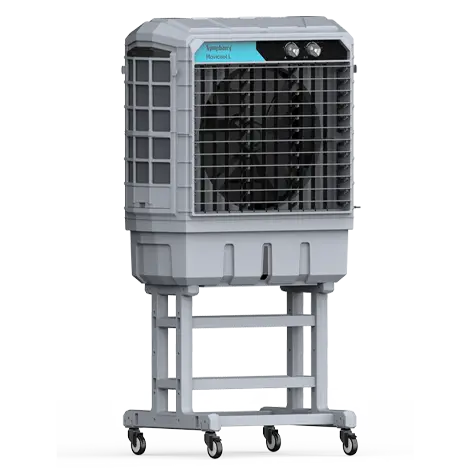
Planning cooling for a marriage hall or large wedding venue means looking past hall size and thinking about how the space is actually used. Guest density, event duration, stage areas, dining sections, entrance zones and seasonal demand can all shape the cooling arrangement. This guide explains what to assess before arranging a big cooler for marriage hall use and when temporary or permanent cooling may suit different venue layouts. It also explains what typically affects big cooler for marriage hall price, so budgeting discussions can begin with the right questions.
Common Office Cooling Mistakes That Reduce Air Cooler Performance
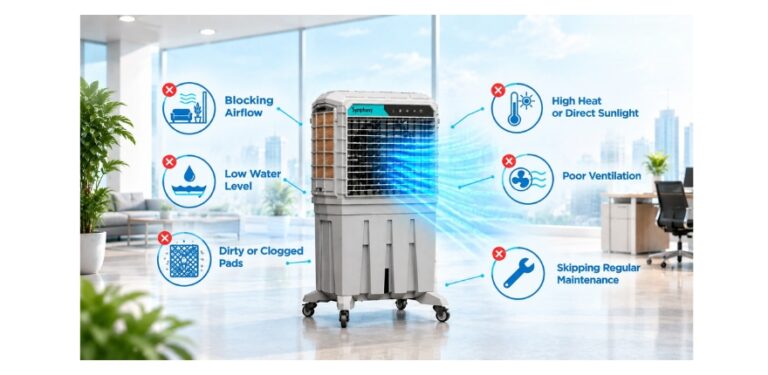
Why an Office Cooler May Not Deliver the Expected Cooling? Reduced cooling is rarely a single fault. It usually comes from conditions around the equipment, so diagnosing office cooling problems is a process of elimination rather than a search for one broken part. Each mistake below is set out in four steps: symptom, probable cause, […]
How Does Office Layout Affect the Performance of an Air Cooler for Office Use?
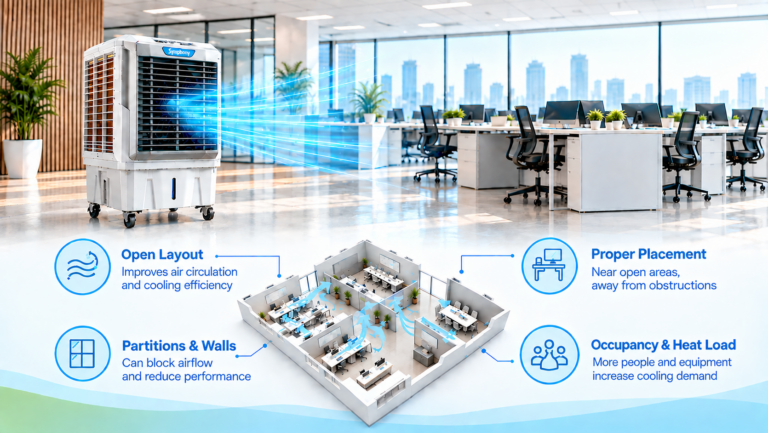
Office layout influences how well an air cooler for office use performs because walls, partitions, cabins, corridors, furniture and openings shape how cooled air is distributed, so the same office cooler can give very different results in two offices. This article covers open plan, cubicle, cabin, glass partitioned, corridor based and mixed layouts, workstation orientation and airflow zones, helping facility teams identify low airflow areas, troubleshoot uneven office cooling and plan cooler placement around the actual floor plan.
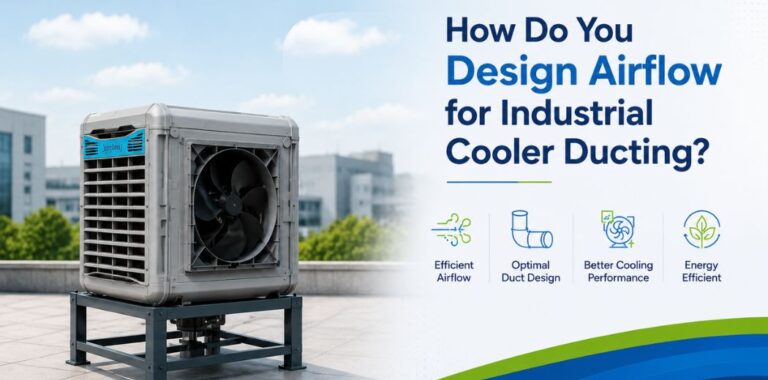
How Do You Design Airflow for Industrial Cooler Ducting?
Industrial cooler ducting design determines whether an industrial air cooling system actually delivers uniform airflow distribution across a factory, warehouse or manufacturing plant. A powerful industrial air cooler alone does not guarantee even cooling; duct sizing, airflow calculation, static pressure, bends, outlet count and airflow balancing all shape how air reaches occupied zones. Duct length, layout and diffuser selection further affect delivery efficiency. Choosing the right Symphony Venti-Cool configuration means evaluating actual site conditions, building layout and airflow requirements rather than relying on cooler capacity alone.
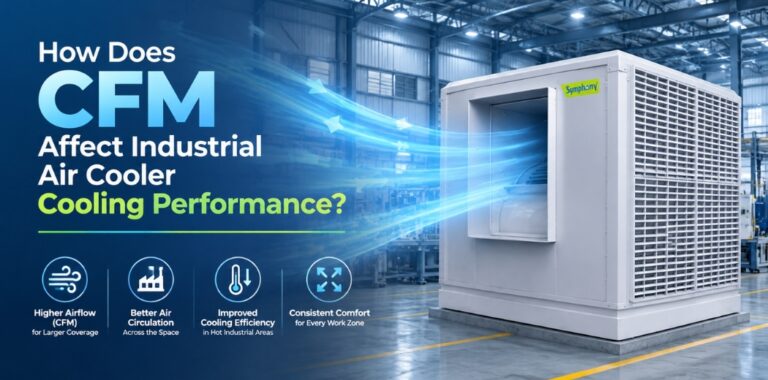
How Does CFM Affect Industrial Air Cooler Cooling Performance?
CFM (cubic feet per minute) measures how much air an industrial air cooler moves, and it directly affects cooling coverage, air circulation and Air Changes per Hour. However, higher CFM alone does not guarantee better cooling, because performance also depends on facility volume, ceiling height, machinery heat load, ventilation and duct layout. Choosing the right industrial air cooler, such as a Symphony Venti-Cool configuration, requires evaluating actual site conditions rather than airflow rating alone.
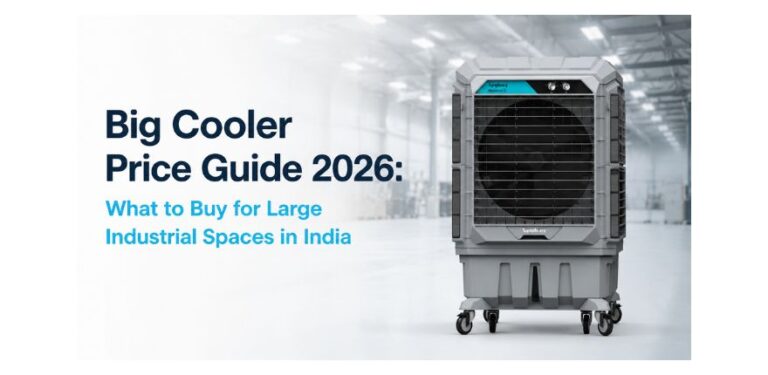
Big Cooler Price Guide 2026: What to Buy for Large Industrial Spaces in India
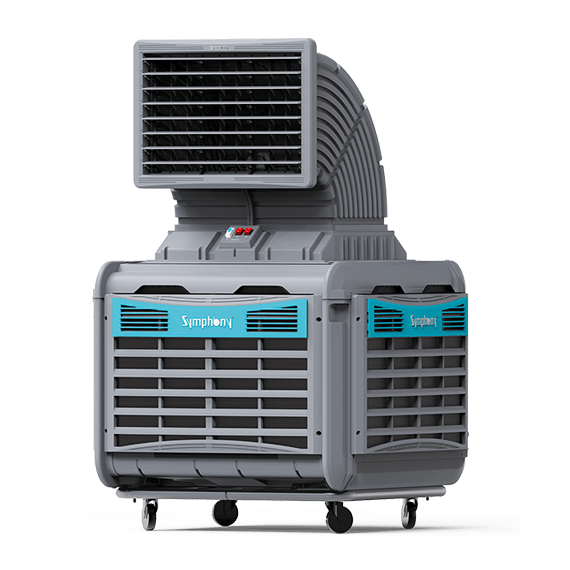
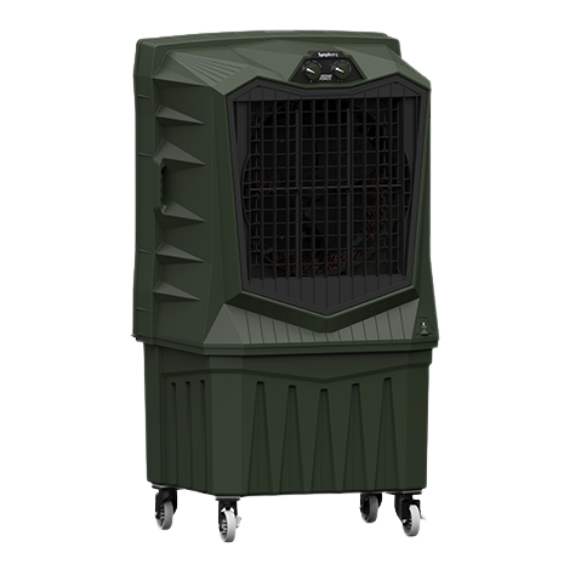
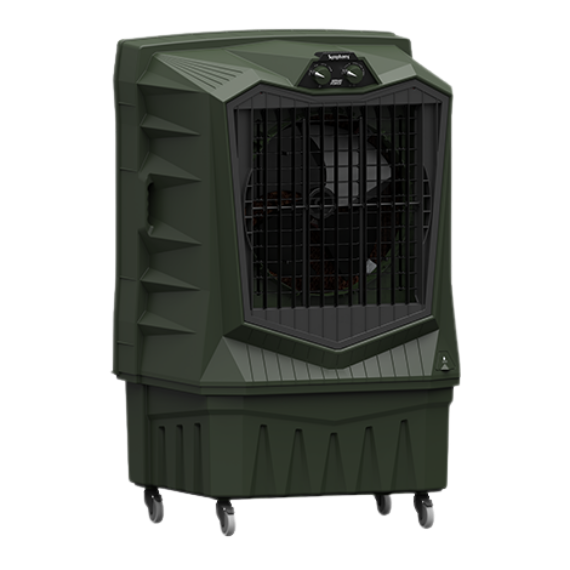
This comprehensive big cooler price guide for 2026 helps Indian industrial buyers – factory managers, procurement teams, plant heads, and warehouse operators – navigate the large industrial cooler market with clarity. It covers big cooler prices from ₹25,000 to ₹5,00,000+ depending on type, capacity, and brand, explaining the full range of industrial cooling solutions from jumbo portable coolers to central ducting systems and AHU-based LSV installations. Symphony Venti-Cool’s product range is detailed with specifications and price guidance. The guide covers key purchase parameters including CFM/CMH capacity, motor power, build material (plastic vs stainless steel), and total cost of ownership. Cities including Surat, Pune, Ludhiana, Nagpur, Gurgaon, Rajkot, Ahmedabad, and Jaipur are referenced. Include big cooler price, big size cooler, jumbo cooler price, heavy duty industrial air cooler, large cooler price, industrial air cooler price, commercial cooler price, and heavy duty cooler.
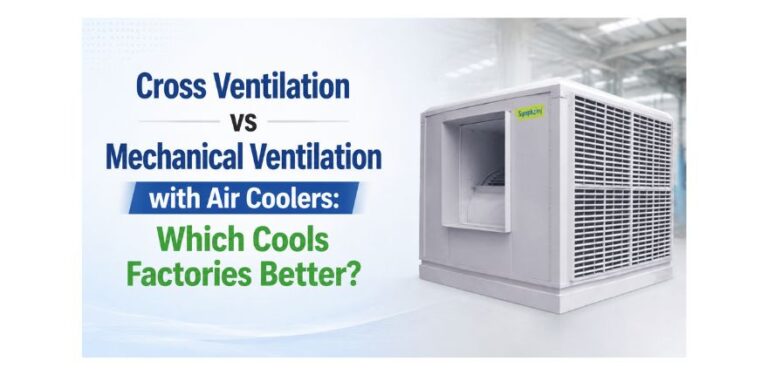
Cross Ventilation vs Mechanical Ventilation with Air Coolers: Which Cools Factories Better?
Factory ventilation strategy is one of the most impactful and least discussed decisions in industrial facility management. This article compares cross ventilation – the passive, wind-driven approach – with mechanical ventilation powered by industrial air coolers and LSV systems, across the dimensions that matter most to Indian factory managers: temperature reduction, air quality, worker health, energy cost, regulatory compliance, and scalability. Drawing on examples from textile units in Surat, auto plants in Pune, food processing facilities in Ludhiana, and pharmaceutical factories in Hyderabad, it explains when cross ventilation falls short and why mechanical ventilation with Symphony Venti-Cool’s industrial coolers is the superior strategy for most Indian factory environments. The article integrates key terms including ventilation cooling system, air cooler ventilation, industrial air cooler, HVAC, and cross ventilation cooler.
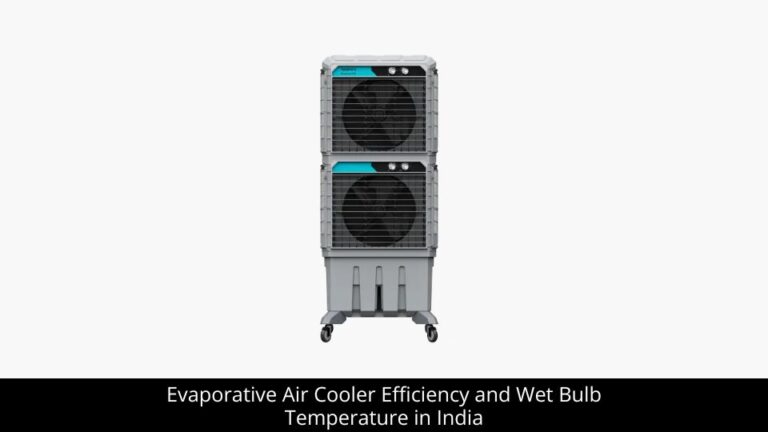
How Evaporative Air Cooler Efficiency Changes with Wet Bulb Temperature: A Practical Guide for India
Evaporative air cooler efficiency depends mainly on wet bulb temperature and humidity levels. In hot and dry regions like Rajasthan, Gujarat, and central India, evaporative coolers can deliver significant temperature reductions, while performance drops in humid coastal areas. The article explains how wet bulb depression, saturation efficiency, and regional climate conditions influence cooling effectiveness and system selection compared to HVAC solutions.
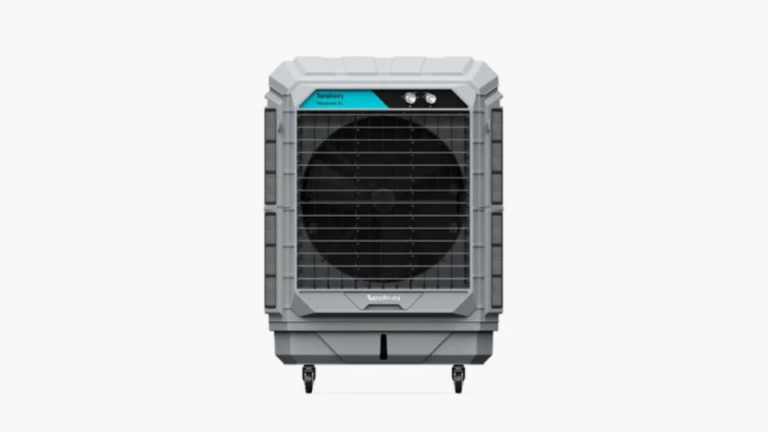
Evaporative Air Cooler for Large Spaces vs Individual Room Coolers: Why Scale Changes Everything
The article explains the key differences between domestic air coolers and industrial evaporative cooling systems for large spaces. While domestic coolers are suitable for small rooms and spot cooling, industrial systems are engineered for uniform cooling across factories, warehouses, and commercial facilities using high static pressure fans, large CELdek pads, ducted air distribution, and industrial-grade components. It also highlights why industrial evaporative coolers offer better long-term performance, reliability, and cost efficiency for large-scale applications.
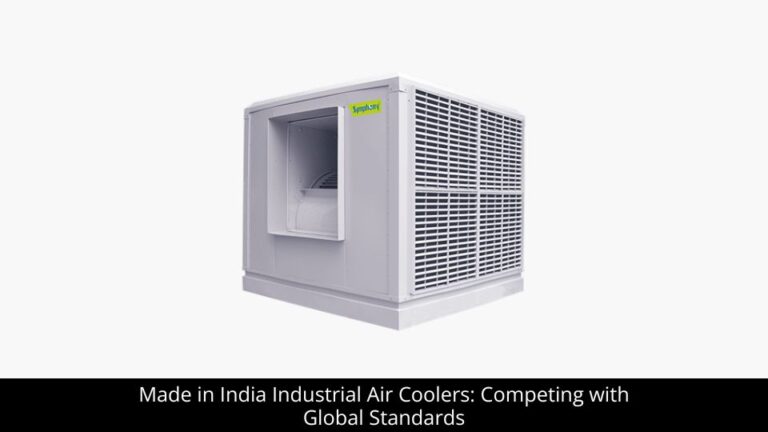
Made in India Industrial Air Coolers: Why Domestic Manufacturing Quality Now Matches Global Standards
Indian industrial air cooler manufacturers now match global quality standards through advanced engineering, BIS and ISO compliance, and modern manufacturing capabilities. The article explains how domestic brands like Symphony Venti-Cool offer reliable performance, faster delivery, easier customization, and strong service support tailored to Indian industrial conditions. It also highlights the cost and operational advantages of choosing Made in India industrial cooling solutions over imported systems.
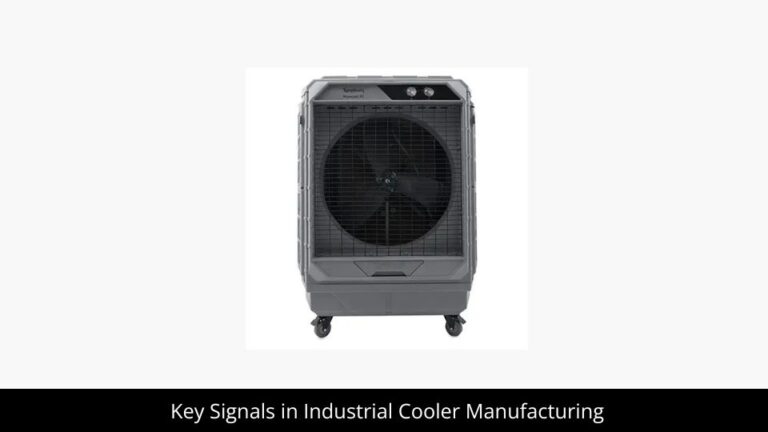
How to Evaluate an Industrial Air Cooler Manufacturer: 10 Quality Signals Beyond Price
The Indian industrial cooling market has more manufacturers than buyers know what to do with. From small regional fabricators to large national brands, the range of industrial air cooler manufacturers available to a procurement manager is wide – and the quality variation within that range is enormous. Commercial cooler price is the most visible differentiator, […]
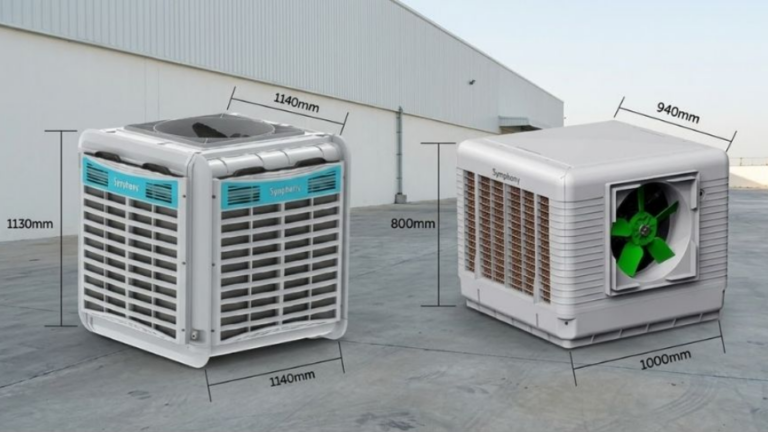
Top Discharge vs. Side Discharge Industrial Evaporative Air Coolers
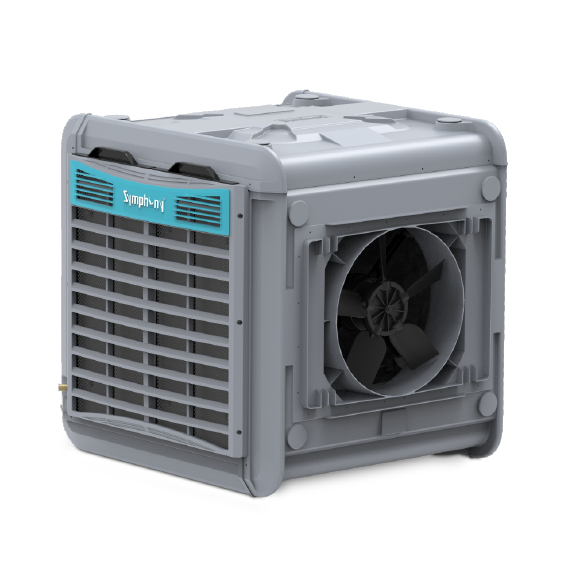
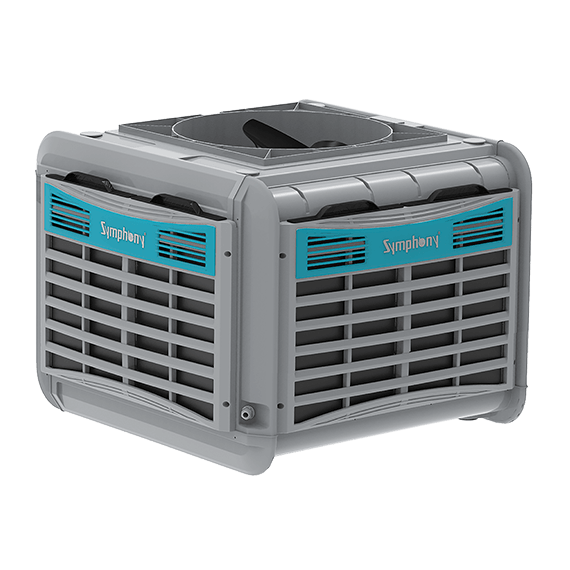
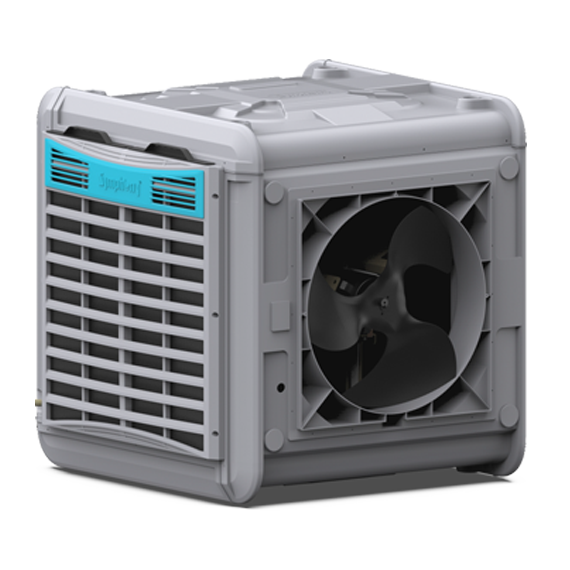
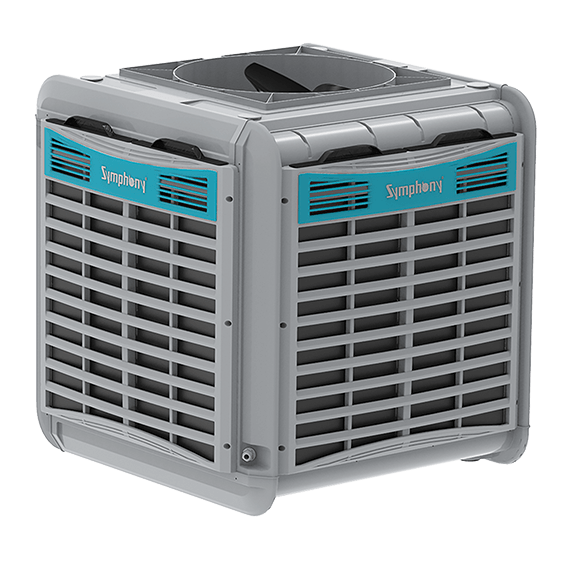
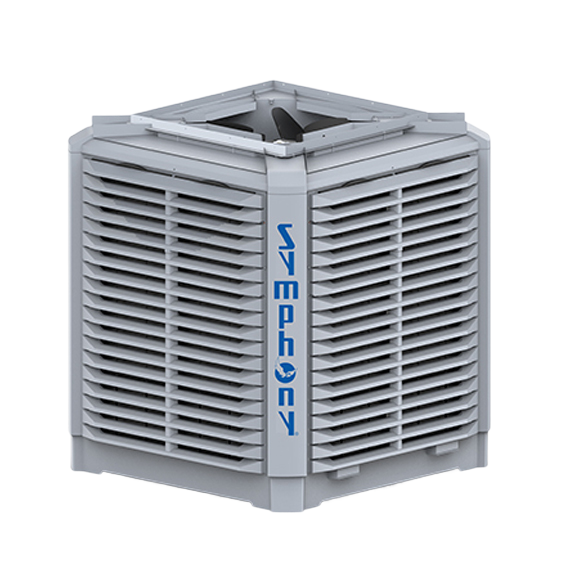
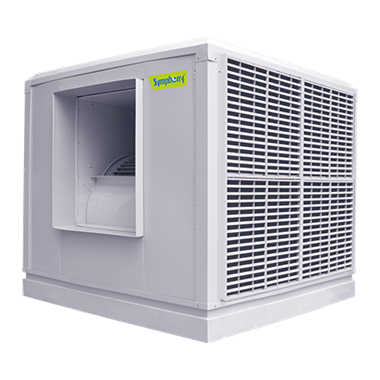
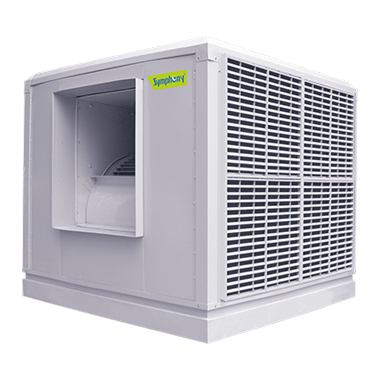
Top discharge and side discharge industrial evaporative air coolers mainly differ in how they deliver airflow and where they are best used. Top discharge coolers push air vertically (often into ducts), making them ideal for centralized cooling and large spaces requiring uniform distribution, while side discharge coolers release air horizontally, making them more suitable for direct cooling in open or semi-open industrial areas. Side discharge systems are typically easier to install and maintain with efficient airflow across wide spaces, whereas top discharge units are preferred when ducting and structured airflow planning are required. Overall, the choice depends on installation layout, airflow direction needs, and the size and type of industrial space.